





If you have recently purchased a HiBy R3 II, R3Pro II, or R1, you might be confused by the interface. Unlike the larger HiBy R6 or R8 series, the R1 and R3 lineup does not run the full Android operating system. Instead, it uses HiBy OS, a lightweight Linux-based system designed for pure audio performance and long battery life.
This distinction is critical because it changes how Tidal streaming works. You cannot simply open the Google Play Store and download the Tidal app. Instead, you have two distinct options: using the embedded "Stream Media" feature for WiFi listening, or playing local Tidal files from its microSD card slot. This guide covers the native setup and, importantly, how to play Tidal on HiBy R3 II, R3Pro II, and R1 offline.
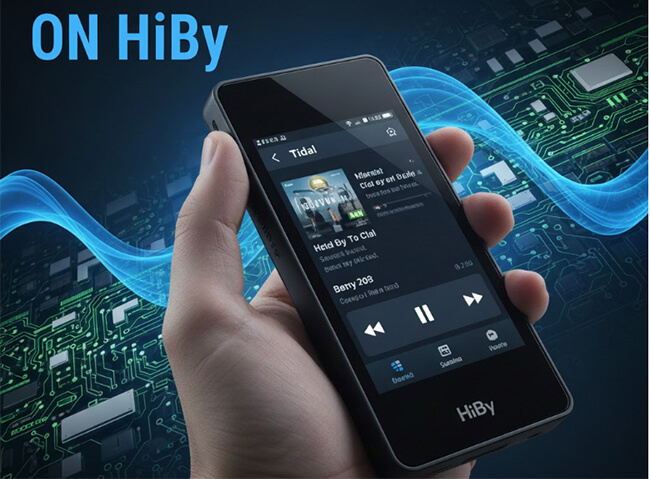
Part 1. How to Play Tidal on HiBy R3 II, R3Pro II, and R1 (WiFi Only)
The HiBy R1 and HiBy R3 series come with a stripped-down version of Tidal integrated directly into the operating system. This is the best method for listening at home where you have a stable internet connection, as it supports MQA unfolding (up to 16x on the R3 II) for the highest possible audio fidelity.
However, before you begin, you must understand a key limitation: The native app on HiBy R1/R3 does not support offline downloads. It is strictly for live streaming.
Step 1. Ensure your firmware is up to date. HiBy frequently patches API login issues. Go to "System Settings" > "Firmware Update" > via "WiFi" to check. If you have the "R3 II", ensure you are not downloading the firmware for the original "R3."
Step 2. Swipe across the main home screen until you find the "Stream Media" icon. Tap it, and you will see the Tidal and Qobuz logos.
Step 3. Tap the "Tidal" icon. You will be prompted to log in. On newer firmware versions, this will generate a QR code or a short alphanumeric code on the R3's screen.
Step 4. Scan the QR code with your smartphone, or visit link.tidal.com on your phone/PC and enter the code displayed on your HiBy player. Once authorized, the player will refresh and load your library.
Note:
Due to security tokens expiring, you may be asked to re-login every 24 to 48 hours. This is a known quirk of the Linux integration and not a defect in your device.
Part 2. How to Play Tidal on HiBy R3 II, R3Pro II, and R1 Offline
When streaming Tidal on HiBy devices, you are always dependent on a strong Wi-Fi signal. Fortunately, the HiBy R1, R3, and R3 Pro excel at playing local files, encoded in FLAC, WAV, MP3, AAC, and MQA formats from their microSD card slot. By converting your Tidal library into local files and loading them onto the player's microSD card, you achieve three key advantages:
-
True Offline Playback: Enjoy your music anywhere, on a plane, underground, or in a remote area, with zero reliance on a network connection.
-
Optimized Performance: Reduce battery drain and system resources by playing files directly, rather than running a constant Wi-Fi stream.
-
Maximum Quality Retention: Tools designed for this process ensure that HiFi and HiRes FLAC quality data are preserved and saved in formats the HiBy R3 Pro natively supports, like FLAC or WAV.
To transfer high-quality Tidal tracks to a local file, you can use DRmare Streaming Audio Recorder. It is the perfect companion tool for the HiBy R3 Pro, allowing you to convert any Tidal content into HiBy's supported high-resolution formats while maintaining all audio quality and metadata. This is the essential step for achieving true offline playback on the HiBy R3 Pro, circumventing the streaming service's DRM restrictions.
How to Download Tidal Music for HiBy R3 II, R3Pro II, and R1
This guide outlines the complete process, from conversion on your computer to final playback on the HiBy R3 Pro.
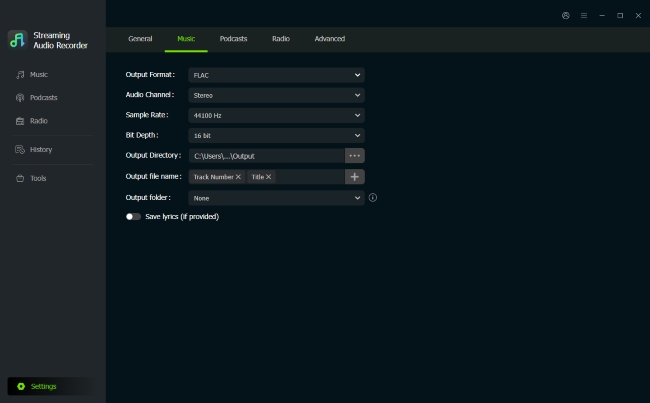
Step 1. Launch DRmare Streaming Audio Recorder and click the "Settings" icon and select "Music". You can choose FLAC or WAV as the output format to maintain the highest quality for your HiBy R3 Pro and adjust the Bit Rate and Sample Rate to match the quality of your Tidal source (e.g., 192kHz).
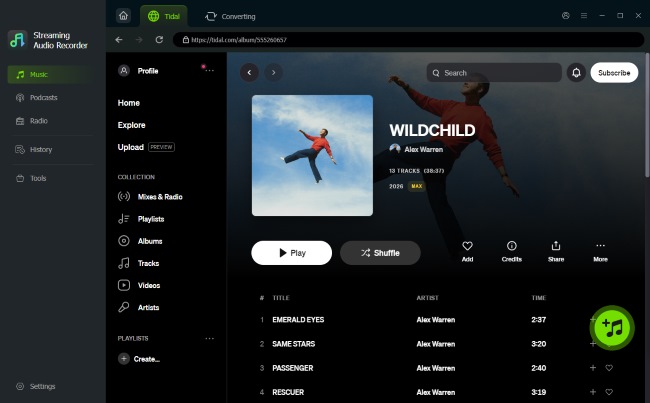
Step 2. Tap the "Tidal" icon to open the Tidal music downloader and log in to your Tidal account. Find the Tidal playlists, albums, or tracks you wish to download in the Tidal web player. Tap the "Add" > "Add to List" button to load them to the conversion list.
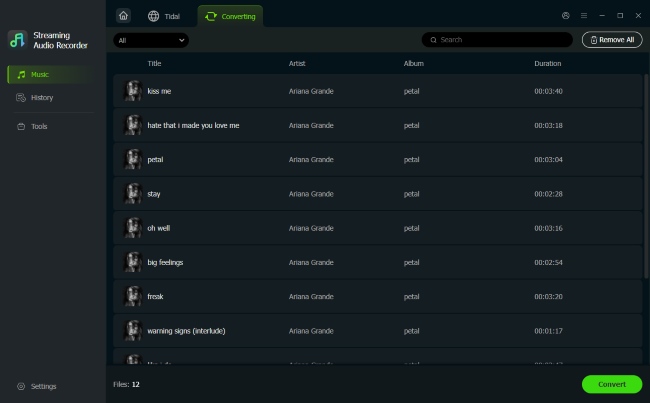
Step 3. Click the "Convert" button to begin the high-speed conversion process. Once finished, click the "History" tab to view the completed files. You can also click the "folder" icon next to a track to open the local folder on your computer. These are the HiBy-ready audio files.
How to Transfer Local Tidal Files to the HiBy R3 Pro for Offline Playback
With the high-res Tidal tracks now safely converted and saved as local files on your computer, the final step is transferring them to your HiBy R3 Pro's microSD card.
Step 1. Use the provided USB Type-C cable to connect your HiBy R3 Pro to your computer.
Step 2. Your computer should recognize the HiBy R3 Pro or its inserted MicroSD card as an external storage device.
Step 3. Open the output folder containing your converted Tidal files, select the music files, and drag-and-drop or copy-paste them into the music folder on your HiBy R3 Pro's microSD card.
Step 4. Once the transfer is complete, safely eject the HiBy R3 Pro from your computer and unplug the USB cable.
Step 5. Your HiBy R3 Pro will automatically scan and update its library. You can now access and play your entire converted Tidal library offline via the "Library" menu on the player, ensuring you get the full Hi-Fi experience anytime, anywhere.
Part 3. More Tips: How to Play Tidal on HiBy R6
The HiBy R6 series runs an open version of Android 12. Unlike the R1 and R3, which a closed systems, the R6 works exactly like a high-end Android smartphone but with audio circuitry that far exceeds any phone on the market. If you are using a HiBy R6 device, you can refer to the following steps to listen to Tidal online and offline via the Tidal app.
Step 1. Unlock your HiBy R6 and open the Google Play Store. You can search for "Tidal" and install the official app.
Step 2. Since Hi-Res Lossless files are massive (often 50MB+ per song), you must configure your storage correctly to avoid filling up the device. You can insert a MicroSD card (supports up to 2TB) and open the Tidal app to choose "Settings" > "Downloads" > "Download Destination" > "Memory Card".
Step 3. Now, you can open your favorite playlist or album on Tidal to stream directly or tap the "Download" button to download them for offline playback.
Part 4. In Conclusion
The HiBy R1 and R3 series offer excellent sound quality, but their lightweight HiBy OS means Tidal works differently compared to full Android players. While the built-in Stream Media feature lets you enjoy high-quality Tidal streaming over Wi-Fi, converting your Tidal music to local HiBy-compatible files is the best way to achieve true offline playback and maximum audio performance.
If you're using a HiBy R6 or newer Android-based model, you can simply install the official Tidal app for both streaming and offline downloads. With the right method for your device, you can enjoy your Tidal library anywhere with reliable, high-fidelity sound.

 Home
Home





User Comments
Leave a Comment