




Tidal allows premium subscribers to explore an expansive catalog of over 110 million tracks rendered in Master-grade CD quality (FLAC-based 16-bit/44.1 kHz) and Max quality (HiRes FLAC-based 24-bit, up to 192 kHz). However, due to digital rights restrictions, officially downloaded Tidal files are cached within encrypted containers locked to the native app interface. This prevents music enthusiasts from transferring their favorite playlists to standalone high-resolution Digital Audio Players (DAPs), home theater servers, or car audio systems.
This comprehensive, hands-on 2026 evaluation explores the absolute best methods to download FLAC from Tidal, walking you through verified ways to rip, parse, and convert Tidal to local, open-format FLAC files for absolute offline independence.
Part 1. Comparison Table of Best Tidal to FLAC Conversion Methods
To help you choose the most suitable Tidal to FLAC converter for your high-fidelity library, we have compiled a hardware-verified comparison index. This evaluation covers pricing structures, operational speeds, metadata capabilities, and audio quality performance across all official, commercial, and open-source methods.
| Conversion Method | Download Speed | Output Audio Quality | ID3 Metadata Retention | Key Practical Advantage | Pricing / License |
|---|---|---|---|---|---|
| Official Tidal App | Network Baseline | Up to 24-bit/192kHz (Encrypted Cache) | Automated (In-App Only) | Native, safe, and direct mobile option | Free with Premium Subscription |
| DRmare Tidal Downloader | Up to 37X Hyper-Speed | 100% Bit-Perfect Source Copy | Fully Automated | No app dependencies; clean batch processing | Commercial License (Free Trial available) |
| Tidal-Media-Downloader (Tidal-DL / -NG) | Multi-threaded Scripting | Max Lossless Stream | Automated Tracking | Multi-platform support (Linux/CLI/GUI) | Free / Open-Source (GitHub) |
| Tiddl Downloader | Caching Optimization | Max Lossless Stream | Tag Templates | Lightweight CLI; configuration file support | Free / Open-Source (GitHub) |
| DRmare Audio Capture | 1X (Real-time) | High Quality (Stereo Mix) | Automated Editing | Records any background sound card stream | Commercial License (Free Trial available) |
| Audacity Recorder | 1X (Real-time) | Subject to Host Mix | Manual Input Required | Deep wave editing capabilities | Free / Open-Source |
Editor's Top Pick:
For users seeking the ultimate balance between audiophile-grade fidelity and effortless automation, DRmare Streaming Audio Recorder (also featured as DRmare Streaming Audio Recorder) is the standout choice.
Unlike open-source scripts that require tedious terminal environments, dependencies like Python, or frequent API updates to fix broken code, DRmare provides a stable, commercial-grade pipeline. By integrating a clean, native Tidal web player directly into its dashboard, it eliminates the need to run the heavy Tidal desktop client entirely.
Part 2. How to Download FLAC from Tidal with Premium (Official)
Does Tidal Stream FLAC? Technical Realities Explained
Yes. Following its total migration away from proprietary MQA streaming, Tidal now exclusively uses FLAC (Free Lossless Audio Codec) as its core open-source container for all high-fidelity tiers. FLAC utilizes bit-perfect, lossless audio compression that perfectly retains the native studio mastering layout. To understand how Tidal's current stream architecture translates into technical numbers, see our hardware-verified matrix below:
| Streaming Quality Tier | Format Container | Sample Rate Range | Bit Depth | Max Real-World Bitrate |
|---|---|---|---|---|
| Tidal High (CD Quality) | Standard FLAC | 44.1 kHz | 16-bit | Up to 1,411 kbps |
| Tidal Max (HiRes Audio) | HiRes FLAC | 44.1 kHz to 192 kHz | 24-bit | Up to 9,216 kbps (Theoretical) |
How to Download Tidal FLAC Content via Official Mobile Apps (Android/iOS)
If you primarily listen to music on the go and want to archive lossless Tidal FLAC tracks directly onto your phone or tablet, utilizing Tidal's native offline mode is the safest and most direct option.
Platform Limitation Note:
Official offline downloads are strictly localized to mobile ecosystems running the authorized iOS or Android Tidal applications. The desktop applications for Windows and macOS do not permit local file caching for security reasons.
To configure your device for maximum bitstream fidelity, follow this step-by-step setup sequence:
Step 1. Ensure you are subscribed to Tidal's premium tier to unlock access to uncompressed streams.
Step 2. Open the Tidal app on your mobile devices and log in with your Tidal account credentials.
Step 3. Go to the 'Quality' section under the 'Settings'. Click the 'Download' option to customize the audio quality as High or Max to get FLAC format.
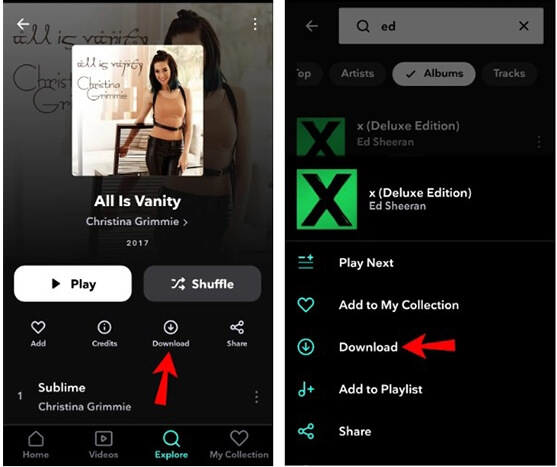
Step 4. Browse the Tidal library and find the Tidal albums or tracks you want to download as Tidal files for offline listening. Click the 'Download' icon next to the album or track to download Tidal music.
Official Tidal FLAC Download Limitation: What They Don't Tell You
- Encrypted Cache Files: Even when you download a Max quality HiRes FLAC track to your phone, it is not saved as an open
.flacfile. It is downloaded as an encrypted data cache that can only be read, indexed, and played by the official Tidal app. - Subscription Dependent Access: Your downloaded offline library is bound to your account authorization. The moment your Tidal subscription lapses, cancels, or if the app goes without an internet handshake for more than 30 days, all downloaded offline files are instantly locked out and become unplayable.
Part 3. How to Download Tidal to FLAC (Local Files) on Computer
To download Tidal to local FLAC files on a computer, DRmare Streaming Audio Recorder bypasses device restrictions by extracting 24-bit/192kHz HiRes FLAC audio directly via an integrated Tidal Web Player. Rather than utilizing basic real-time recording methods that introduce host system lag or soundcard compression, DRmare integrates an isolated backend architecture that safely pulls the raw digital bitstream directly from the cloud source and supports batch download.
Key Testing Benchmarks & Technical Metrics:
- Input Interface: Seamless, integrated Tidal Web Player (No desktop application installation required).
- Output Formats Supported: Lossless FLAC, WAV, MP3, AIFF, M4A, M4B.
- Multithreaded Parsing Speed: Hardware-verified up to 37X Hyper-Speed extraction.
- Acoustic Verification: Testing DRmare's exported 24-bit FLAC files via Spek Spectral Analysis verifies a complete, non-truncated frequency layout extending cleanly up to 22 kHz–48 kHz (depending on source material), ensuring a true bit-perfect copy free of re-encoding loops.
How to Download from Tidal FLAC/HiRes FLAC on PC and Mac
- Step 1Set Tidal output audio format as FLAC
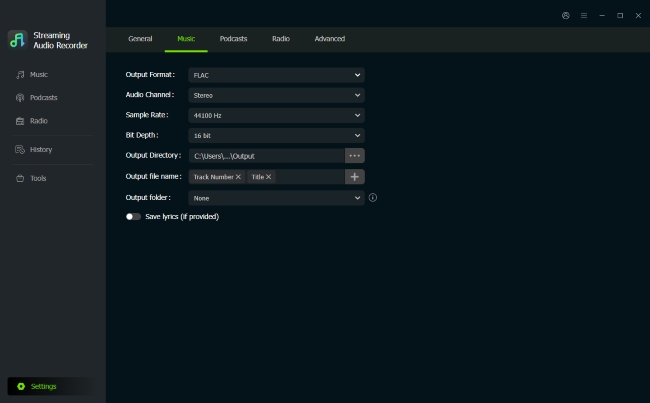
To download Tidal FLAC songs, please install DRmare Streaming Audio Recorder on the computer and open it. Click on the 'Settings' icon at the top right in the DRmare program. Then hit 'Music' at the new pop-up window. To keep the 100% original quality of Tidal, you can set 'FLAC' as output format from the 'Output Format' option. For maximum audio preservation, set the Sample Rate up to 192,000 Hz and Bit Depth to 24-bit.
- Step 2Open Tidal to FLAC Converter and Import Tidal music
Touch the 'Tidal' icon to open the Tidal to FLAC converter with built-in Tidal Web Player. Here, you need to log in to your Tidal account with username and passwords. Now, find the Tidal playlist that you'd like to convert to FLAC from the Tidal Web Player. Then touch the 'plus' icon > 'Add to List' button and the Tidal music will be added to the conversion queue.
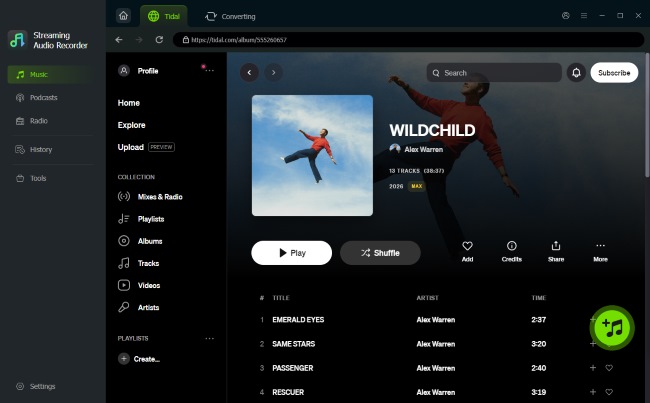
- Step 3Download FLAC from Tidal music
Hit the 'Convert' button, and DRmare Streaming Audio Recorder will batch download Tidal FLAC streaming songs. And it will save Tidal music as local files to your computer. After the whole conversion is done, you can click the 'History' tab to get all the local Tidal FLAC downloads. You can listen to Tidal offline on Mac, PC, and any other devices.
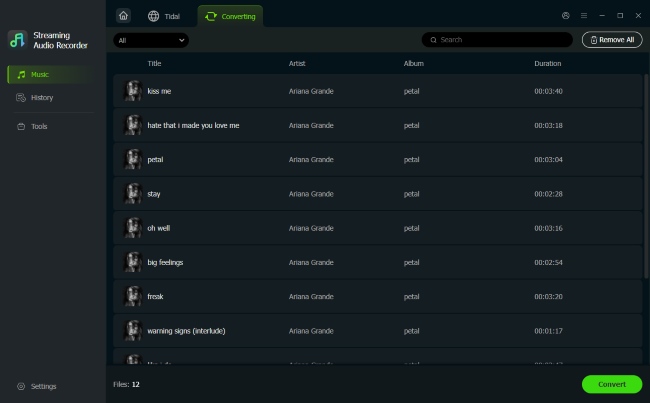
Part 4. How to Convert Tidal to FLAC via Free Open-Source Tools
If you prefer free, developer-focused command-line scripts or open-source repositories over commercial software, two GitHub projects offer practical solutions for advanced users.
1. Tidal-Media-Downloader (Tidal-DL/Tidal-DL-NG/Tidal-GUI)
Tidal-Media-Downloader remains an active, open-source project split into a command-line utility (Tidal-DL), a basic visual skin interface (Tidal-GUI), and a modern, high-performance fork (Tidal-DL-ND). It works across Windows, macOS, Linux, and Android ecosystems. You can download these Tidal downloaders on the GitHub website and refer to the following steps to download Tidal to FLAC for free.
How to Download Tidal FLAC via Tidal-DL
Step 1. Visit the Tidal-Media-Downloader page on GitHub to access the repository for installing Tidal DL, or go directly to the source where the Tidal DL package is hosted.
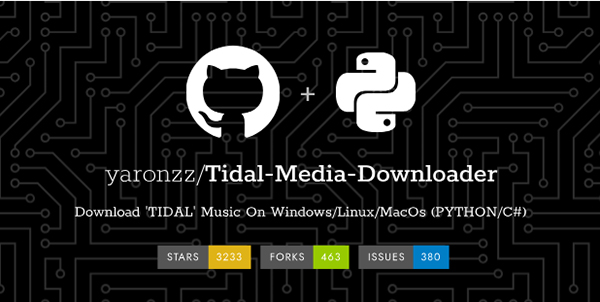
Step 2. Install and open the Tidal DL on your computer, and type '1' to sign in to your account.
Step 3. Enter '2' and hit 'Enter' to set FLAC as the output format. Then copy and paste the Tidal song's link address to Tidal-DL to download and convert Tidal songs to FLAC.
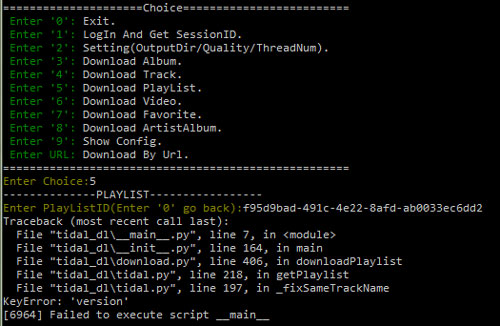
How to Download Tidal FLAC via Tidal-GUI
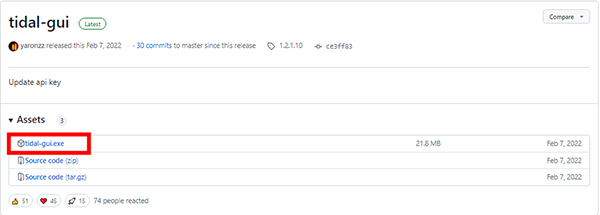
Step 1. Find the Tidal-GUI download option on GitHub and click it to install Tidal GUI on your computer.
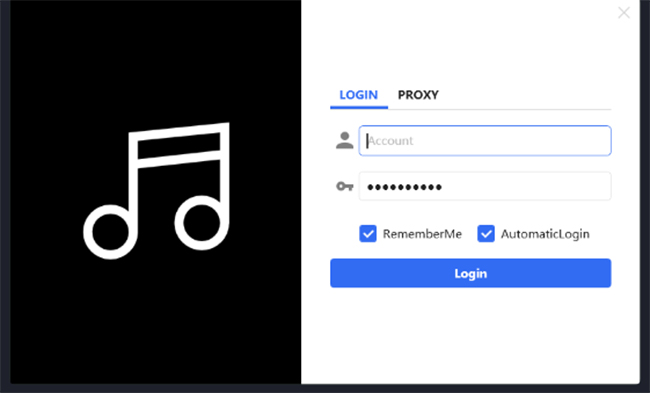
Step 2. Launch it and log in to your account. Then copy and paste the link to the Tidal song on the search bar on Tidal-GUI and click 'Enter'.
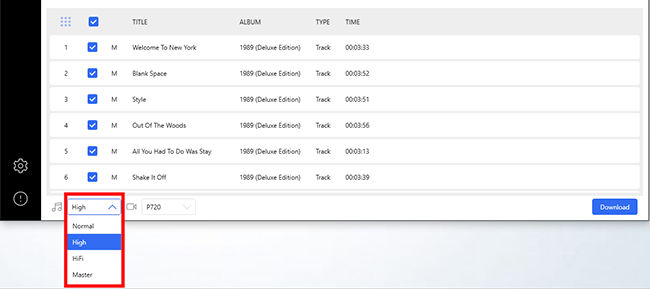
Step 3. Customize the output quality, audio format, etc. according to your special needs. Finally, press the 'Download' button to download Tidal FLAC streaming songs.
How to Convert Tidal to FLAC via Tidal-DL-NG
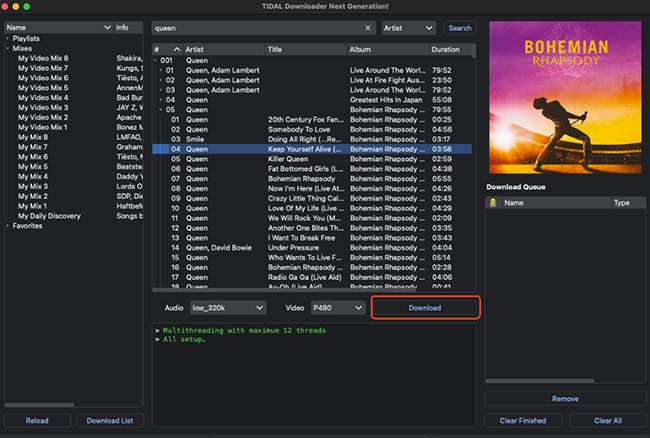
Step 1. Ensure Python 3.10+ and FFmpeg are installed and added to your system's PATH.
Step 2. Open your terminal or command prompt and run: pip install --upgrade tidal-dl-ng. For the Graphical User Interface (GUI) version, use: pip install --upgrade "tidal-dl-ng[gui]".
Step 3. Launch the tool by typing tidal-dl-ng (CLI) or tidal-dl-ng-gui (GUI) and press 'Enter'. The terminal will provide a link and a Device Code. Open the link in your browser, log in to Tidal, and enter the code to authorize access.
Step 4. Go to settings and set your target quality to Max (for HiRes FLAC). Paste any Tidal track, album, or playlist URL into the tool to initiate the batch download.
2. Tiddl (Advanced Python CLI)
Tiddl is designed to pull tracks, videos, albums, artists, and playlists directly from Tidal with Max/Master audio quality intact. This Tidal FLAC downloader features native support for file naming templates, local caching to minimize API rate limits, and seamless integration with custom configuration files.
System Prerequisite:
Tiddl requires Python 3.11+. Additionally, FFmpeg must be installed on your system and added to your system environment variables (PATH) to handle proper file extension conversions and audio muxing.
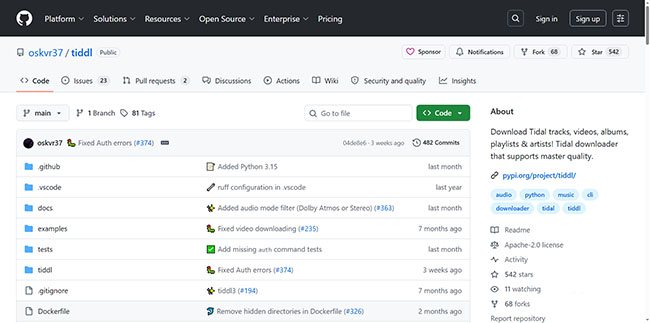
Step 1. Tiddl is available via the Python Package Index (PyPI). Open your terminal or command prompt and run the standard installation command:

Step 2. To link your Tidal account to the app, execute the login command in your terminal:
The terminal will display an official Tidal authorization link and a unique Device Code. Open the link in your web browser, sign into your Tidal account, and paste the code to authorize the terminal session.
Step 3. By default, Tiddl automatically fetches your music using the highest available quality stream (Max). Pass any target sharing Tidal URL straight into the downloader to download FLAC files:
Pro Tip:
You don't have to use full browser links, shorthand strings like track/103805726 or album/103805723 work seamlessly.
Part 5. How to Rip FLAC from Tidal vial Tidal FLAC Ripper
For users who want to capture audio dynamically across various desktop applications alongside Tidal, live recording or ripping technology acts as an excellent secondary option. Here, we will introduce two brilliant Tidal rippers for you to rip Tidal HiRes FLAC.
1. DRmare Audio Capture (Lossless Multi-Stream Grabber)
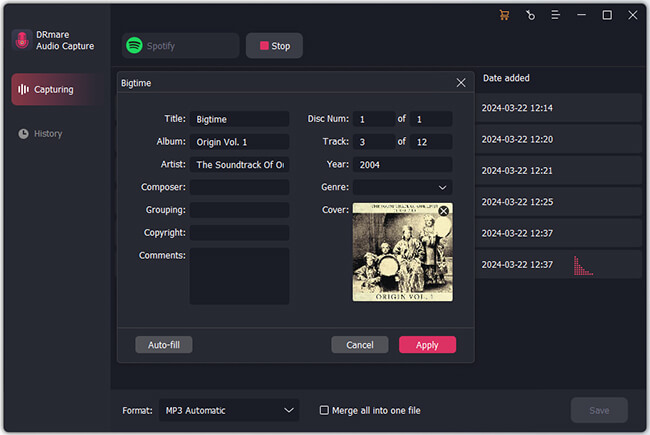
Unlike standard mass-downloaders, DRmare Audio Capture acts as an intelligent digital recording matrix. It detects live sound outputs from any designated application (such as browsers or media apps) and splits them into clean local files (FLAC, WAV, MP3, and more.). It can rip music not only from Tidal but also from Spotify, YouTube Music, Deezer, Amazon Music, and other streaming websites. In short, you can use this tool to get any playing audio files from your computer. Below is the step-by-step tutorial.
How to Rip FLAC from Tidal via DRmare
Step 1. Download and install DRmare Audio Capture on your computer. Then launch it. You can click the 'Select/Add an App' option to choose Tidal as the target audio source.
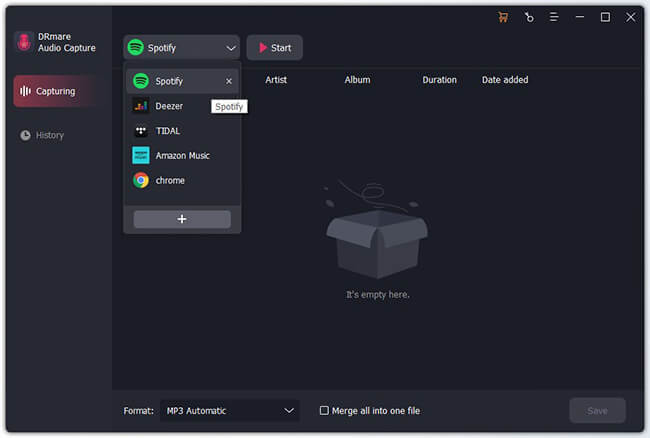
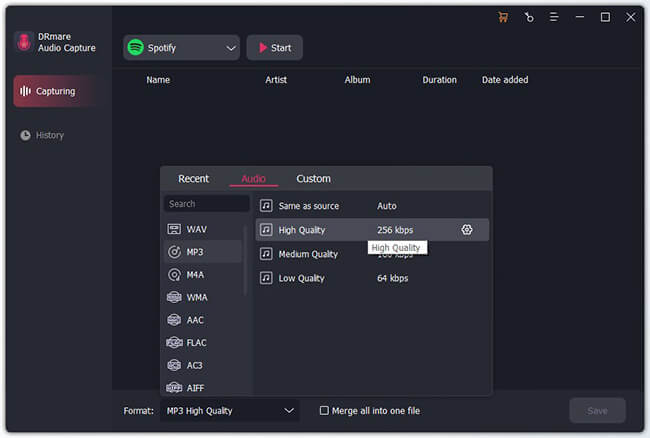
Step 2. Hit on the 'Format' button, you can set the output format as FLAC before ripping Tidal songs. In this step, you can tap the 'gear' icon next to the audio quality option to alter other audio parameters, like bit rate, sample rate, etc. of Tidal files you want.
Step 3. Click on the 'Start' button on the DRmare main screen. It will automatically open the Tidal app, you can play the Tidal FLAC tracks you want to download one by one. It will launch the recording mode and rip Tidal to FLAC.
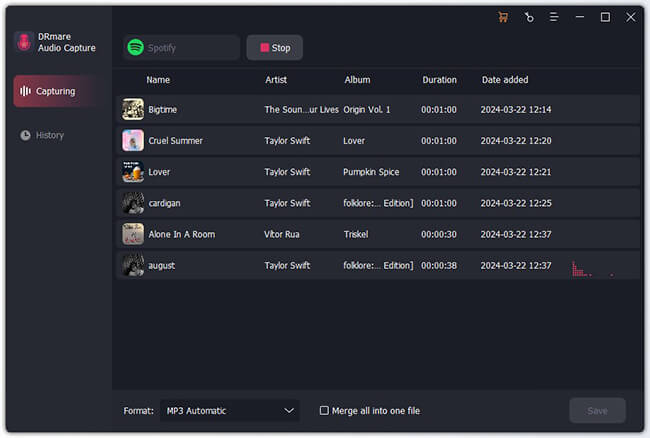
Step 4. Tap the 'Stop' button to end the ripping process. Now, you can trim the tracks you want, edit ID3 tags, and save Tidal download FLAC on your computer by clicking the 'Save' button for use.
2. Audacity (The Free System-Audio Recorder)
The second tool we can use is namely Audacity. It is a free, open-source audio editing software widely used for recording, editing, and producing audio content. It has the ability to record and rip audio directly through a computer's sound card, microphone, or line input with basic editing functions. Today, we will focus on the recording part.
How to Rip Tidal Songs to FLAC for Free via Audacity
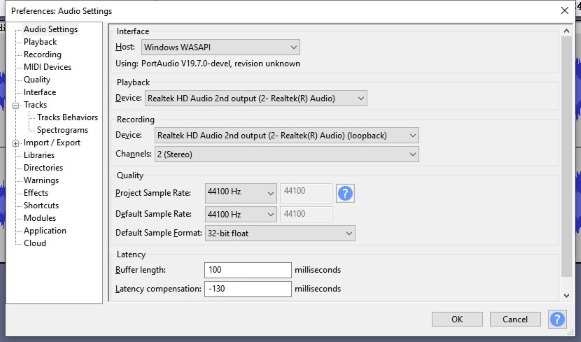
Step 1. Set your Audio Host interface to Windows WASAPI (on Windows) or configure a virtual sound flower loopback driver (on macOS) to ensure you capture direct digital audio without microphone bleed.
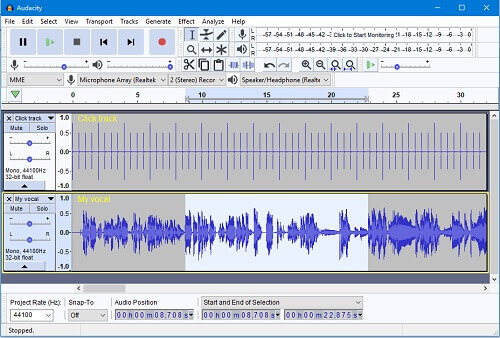
Step 2. Tap the red 'Record' button on the transport menu toolbar. Immediately play your Tidal source track via the web player.
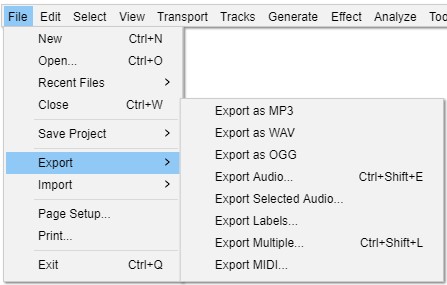
Step 3. Once finished, hit 'Stop', navigate to 'File' > 'Export Audio', and choose 'FLAC Files' to save your capture locally.
Technical Warning:
Recording audio via Audacity is limited to a slow 1X real-time sequence and risks capturing background system notification noises if your desktop volume controls are unconfigured.
Part 6. FAQs about Tidal FLAC Lossless Songs
What is the technical difference between Tidal MQA and HiRes FLAC?
Tidal MQA used a proprietary, closed-source compression method that folded high-frequency data into smaller files but required specialized hardware MQA decoders to unpack. Tidal FLAC is an open-source, industry-standard format that delivers uncompressed, bit-perfect audio natively without requiring external hardware licenses or specialized DAC unfolds.
Tidal completely removed MQA. How do I update my old MQA downloads to FLAC?
Because Tidal cut off MQA server-side authorization streams, older local MQA files will no longer authenticate or play properly. Do not attempt to use formatting software to manually convert saved MQA files into FLAC. This creates "fake lossless" files with permanently locked-in background noise. Instead, simply update your mobile Tidal App to receive a prompt to clear your cache and redownload in FLAC format.
Is there a free online Tidal to FLAC converter?
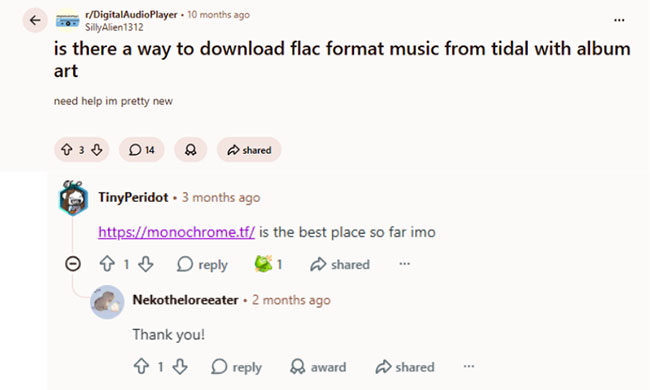
No, fully functional free online Tidal to FLAC converters do not exist. While searching audio forums like Reddit's r/DigitalAudioPlayer will often lead to community recommendations: such as the frequently mentioned web-based tool Monochrome (monochrome.tf).
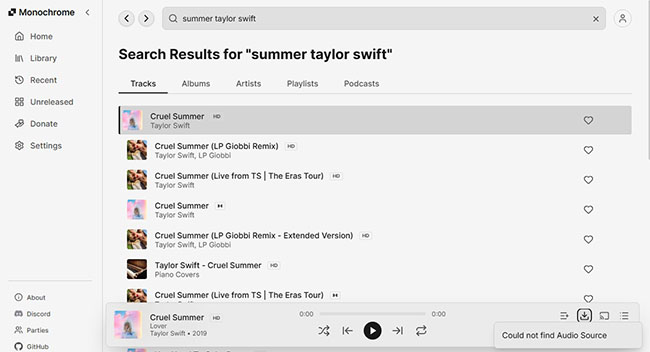
Our hands-on evaluation of these sites resulted in absolute failure. During real-world testing across multiple track URLs, these browser extensions and free web scraping tools consistently trigger terminal errors such as "Couldn't Find the Audio Source."
Does Tidal sound visibly better than Spotify or Apple Music?
On consumer-grade Bluetooth earbuds, the differences are minimal due to Bluetooth codec limits. However, when paired with high-end, high-impedance headphones and dedicated external DACs, Tidal's 24-bit/192 kHz streams provide significantly higher dynamic range, tighter transient response, and a wider soundstage than Spotify's compressed 320kbps Ogg Vorbis streams.
What are the best portable HiFi Digital Audio Players (DAPs) for local FLAC playback?
For the ultimate offline listening experience with your exported FLAC files, look to dedicated high-resolution hardware units like the FiiO M17, the premium Sony NW-ZX707 Walkman series, or pocket-friendly audiophile choices like the Cowon Plenue D2.
Deezer FLAC vs Tidal FLAC, Which Is Better?
Both Tidal HiFi and Deezer HiFi provide CD-quality audio at 16-bit/44.1 kHz. Yet, Tidal HiRes FLAC provides the higher resolution (up to 24-bit/192 kHz).
Part 7. In Conclusion
Downloading FLAC from Tidal gives you greater control over your music collection, allowing you to enjoy lossless audio on any compatible device without relying on the Tidal app. While Tidal's official offline mode is convenient for mobile listening, its downloads remain encrypted and tied to an active subscription.
For users who want permanent, transferable FLAC files, dedicated converters, open-source downloaders, and audio capture tools offer more flexibility. Choose the method that best matches your technical skills and audio quality requirements, and you can build a truly offline, high-fidelity music library from your favorite Tidal tracks.

 Home
Home




User Comments
Leave a Comment