





 My audio stutters badly, like skipping or pausing for half a second, but only when I'm doing something else on my computer (Windows 11). The thing is, this is a new high-end PC, and I play games with zero issues. But if I am opening or closing tabs in Chrome, Spotify will glitch at exactly that moment. I've already uninstalled and reinstalled it - nothing works.
— A frustrated Windows 11 user on Reddit
If this scenario sounds familiar, you are not alone. Spotify stuttering can turn an otherwise normal listening session into a series of pauses, skips, crackles, or delayed controls. Some users describe the same problem as Spotify glitching, while others notice the Spotify app lagging when opening playlists, switching tracks, or loading album pages.
These symptoms do not always have the same cause. Unstable streaming may point to a network or audio-quality issue, while stuttering in downloaded songs may be related to Bluetooth, system audio settings, device resources, or the Spotify app itself. In this guide, we'll diagnose the issue and walk through the exact fixes to stop Spotify from stuttering on all devices.
Why Is Spotify Stuttering, Glitching, or Lagging?
Spotify may stutter when the app cannot receive, process, or output audio smoothly. The interruption can happen at several points between Spotify's servers and your headphones or speakers. Common causes include:
- An unstable Wi-Fi or mobile-data connection.
- Streaming quality that is too demanding for the current network.
- Corrupted or oversized Spotify cache files.
- Battery-saving or background-activity restrictions.
- Bluetooth interference or an audio-device conflict.
- Outdated Spotify, system, graphics, or audio software.
- Hardware acceleration conflicts on a desktop computer.
- A temporary Spotify service or app-version issue.
Diagnose the Spotify Glitching Problem First
Before changing any settings, compare your affected playback situations. This simple table will help you pinpoint the issue:
| What you notice | More likely cause | First test to try |
|---|---|---|
| Only streamed songs stutter | Network or streaming quality | Play a downloaded song. |
| Downloaded songs also stutter | Bluetooth, audio driver, or device | Use the built-in device speaker. |
| App stutters but Web Player works | App cache or hardware acceleration | Open Spotify in a web browser. |
| Spotify and other audio apps stutter | System audio or output-device issue | Restart or change the audio device. |
| Music glitches only over Bluetooth | Wireless interference or profile conflict | Test wired headphones or speakers. |
| Spotify pauses or changes device | Spotify Connect or account activity | Check the active playback device. |
| Only the interface is slow | Device load or graphics issue | Close other apps / toggle hardware acceleration. |
Common Ways to Fix Spotify Stuttering on Mobile/Desktop
The following fixes are arranged from quick diagnostic checks to more disruptive steps. Test Spotify after each change so you can identify which setting made a difference.
1. Check for a Spotify Service or App Issue
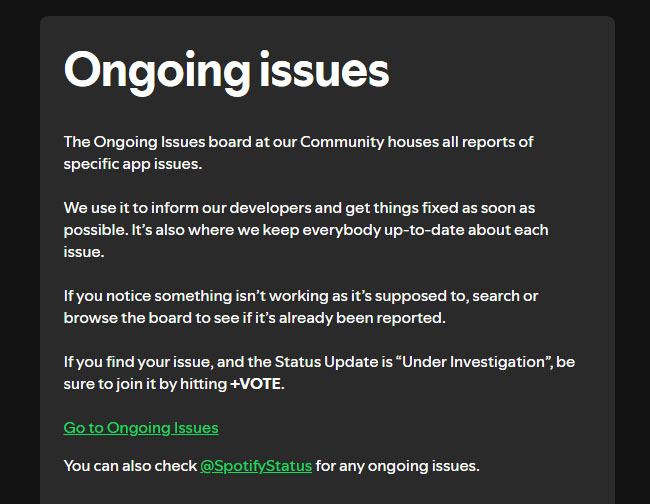
If Spotify is glitching on multiple devices simultaneously, the problem might be on their end. Check Spotify's Ongoing Issues board or official status accounts. If a platform-wide issue is confirmed (e.g., Spotify tracks skipping after 10 seconds), reinstalling the app won't help, you just need to wait for a developer patch.
2. Find Out Whether Streaming or Your Audio Device Is Failing
A short comparison can narrow down the source of Spotify stuttering.
- Play a downloaded song: If it plays perfectly while streamed songs cut out, focus on your internet connection and media quality.
- Switch audio outputs: Turn off your Bluetooth headphones and use the built-in speaker. If the glitching stops, troubleshoot your Bluetooth connection.
- Test another audio app: If YouTube or Apple Music also stutters, you have a system-wide audio issue, not a Spotify bug.
3. Restart and Update Spotify
Temporary app processes can sometimes become unresponsive after Spotify has remained open for a long time. Fully close Spotify rather than leaving it in the background, reopen it, and test the same track again.
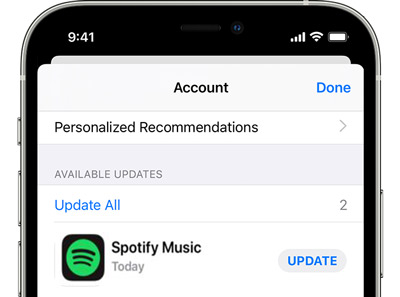
If that does not help, restart the phone or computer. This may clear temporary memory problems, reconnect the audio device, and restart system services used for playback. Besides, always ensure you are running the latest version of Spotify and your device's operating system.
4. Switch Networks Instead of Relying Only on a Speed Test
A speed test can show general download speed, but it may not reveal brief connection drops, packet loss, VPN interference, or problems on a particular Wi-Fi network. Try a direct comparison:
-
Switch from Wi-Fi to mobile data or a phone hotspot.
-
If Spotify becomes stable, restart the router and reconnect.
-
If mobile data causes the problem, return to Wi-Fi and check whether Spotify has permission to use cellular data.
-
Temporarily disable a VPN, proxy, or network-filtering app.
When Spotify stutters only on one school, office, hotel, or public network, that network may restrict or interrupt some streaming services. The Spotify Web Player may also behave differently on managed or shared networks.
Avoid changing advanced router options unless you understand their effect. A normal router restart and a test on another network usually provide more useful information than randomly altering multiple network settings.
5. Lower Spotify Audio Quality Temporarily
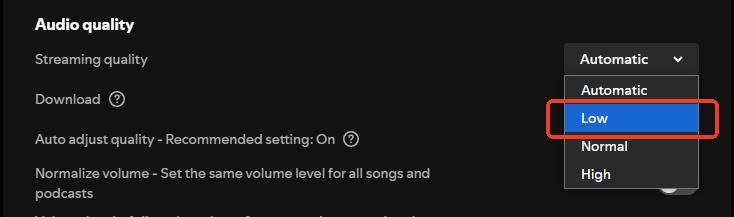
Higher audio settings use more data and may place greater demands on the connection and playback device. Lowering the quality for a few minutes can help determine whether Spotify lagging or buffering is connected to bandwidth.
Step 1. Open Spotify and go to: Profile picture > Settings and privacy > Audio Quality
Step 2. Temporarily change Wi-Fi and cellular streaming from Lossless or Very High to High or Normal, depending on the options available for your account and device.
Tips:
Spotify currently lists Lossless quality as equivalent to audio up to 24-bit/44.1 kHz. Its troubleshooting guidance for Lossless playback glitches and buffering recommends trying a lower audio-quality setting.
6. Clear the Spotify Cache Correctly
Spotify stores temporary files to reduce repeated loading. A damaged cache or limited storage space can sometimes contribute to Spotify glitching, slow menus, or playback errors. Clearing the Spotify cache should not be confused with removing all downloaded music.
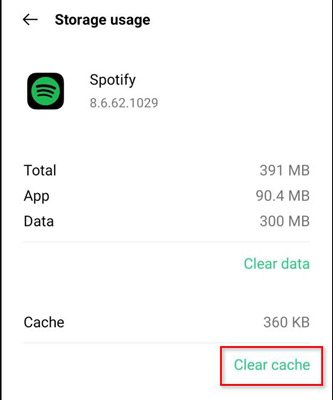
Clear Spotify Cache on Android and iPhone
Step 1. Open Spotify and tap your profile picture.
Step 2. Select Settings and privacy and tap Data-saving and offline.
Step 3. Find the Storage usage section and tap Clear cache.
Clear Spotify Cache on Windows and Mac
Step 1. Open the Spotify desktop app, click your profile picture, and select Settings.
Step 2. Scroll to Storage and click Clear cache.
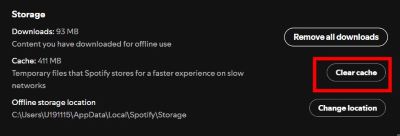
After clearing the cache, close Spotify, reopen it, and allow the album art and other temporary content to reload.
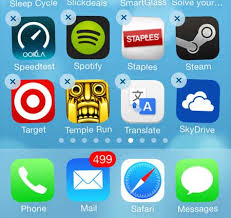
7. Perform a Clean Reinstall of Spotify
A normal reinstall replaces the application, while a clean reinstall also removes remaining Spotify data that may survive a standard uninstall. Because the clean procedure differs between Windows, Mac, Android, and iPhone, follow the instructions appropriate for your device.
Note:
Before reinstalling, remember that locally downloaded Spotify songs and podcasts may need to be downloaded again afterward.
Try a reinstall when:
- Spotify still stutters after the cache has been cleared
- The Web Player works but the desktop app does not
- The app started glitching after an update
- Spotify closes, freezes, or fails to load correctly
After reinstalling, test Spotify before restoring every previous setting. Start with the default audio quality and the built-in speaker, then reconnect Bluetooth devices and raise the quality gradually.
How to Fix Spotify Stuttering on Android
Android phones can restrict background activity when Battery Saver, Data Saver, or manufacturer-specific optimization features are enabled. These restrictions may be useful for battery life, but they can occasionally delay streaming or background playback.
Start by checking whether Battery Saver is active. On many Android devices, the setting appears under: Settings > Battery > Battery Saver
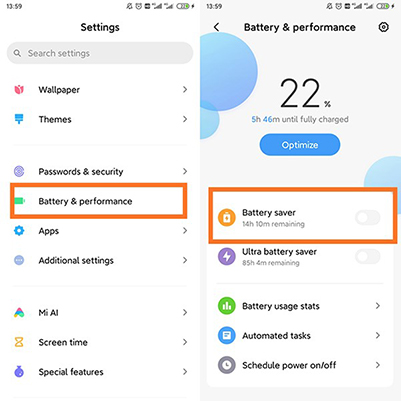
Battery Saver can limit background activity, network connections, and app performance, which may cause some apps to respond more slowly. You have to turn it off.
Note:
Android menu names vary by manufacturer, so Samsung, Google Pixel, Xiaomi, OnePlus, and other phones may organize these controls differently.
Next, open Spotify's app settings and confirm that it can use background data. You can also review App battery usage or Allow background usage. Avoid changing every optimization setting immediately; temporarily adjust Spotify, test playback, and restore the original setting if it makes no difference.
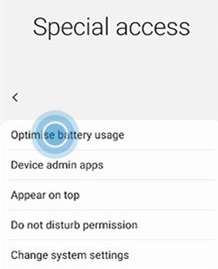
If Spotify lagging happens while the phone is low on storage, free some space and restart the device. Users storing Spotify downloads on an SD card can also test internal storage, since a slow or damaged card may interfere with file access.
How to Fix Spotify Glitching on iPhone
On an iPhone, begin by checking Low Power Mode. Depending on the iPhone model and iOS version, you may find it under: Settings > Battery or Settings > Battery > Power Mode
Low Power Mode reduces background activity and can turn off Background App Refresh. Temporarily disabling it can help determine whether power restrictions are contributing to delayed loading or background playback interruptions.
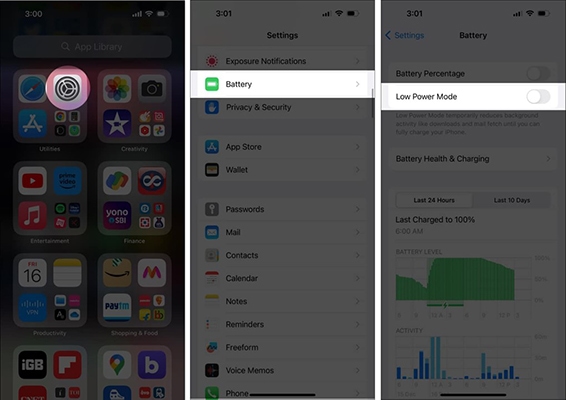
You should also check whether Low Data Mode is enabled for the current Wi-Fi or cellular connection. Low Data Mode can reduce background network use and streaming quality, although its effect may vary between apps.
If the Spotify glitching occurs only with AirPods, a car, or another Bluetooth device, disconnect that device and test the iPhone speaker. When the speaker plays normally, forget and re-pair the Bluetooth accessory before making more extensive Spotify changes.
How to Fix Spotify Lagging on Windows PC
Spotify lagging on Windows may affect the interface, the audio, or both. Comparing the desktop app with the Spotify Web Player is one of the fastest ways to determine whether the installed app is involved. If the Web Player works normally, try the following desktop checks.
Toggle Hardware Acceleration
Open Spotify's Settings, scroll to Compatibility, and look for Enable hardware acceleration. Depending on the current Spotify build, the wording or location may differ. If it is enabled, turn it off and restart Spotify. If it is already disabled, try enabling it and restart again.
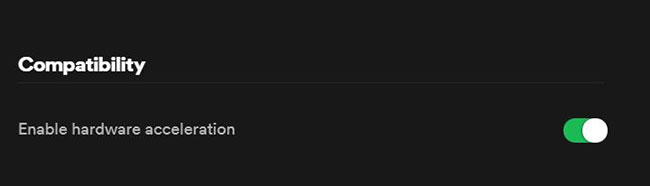
Hardware acceleration may improve interface performance on some computers, while graphics-driver conflicts may cause lagging or visual glitches on others. Treat it as a comparison test rather than a universal setting.
Check the Windows Audio Output
Go to Start > Settings > System > Sound and confirm that Spotify is playing through the intended speakers, headphones, USB DAC, monitor, or Bluetooth device. Disconnect unused audio outputs temporarily.
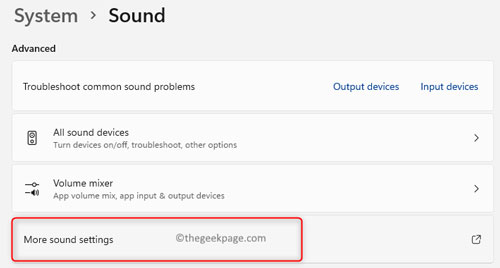
If you hear crackling or short audio gaps, select the output device and turn Audio enhancements off. You can also test a different default format and update the audio driver through Device Manager. Microsoft notes that enhancements, incorrect audio formats, and outdated or corrupted drivers can contribute to distorted or crackling playback.
Reduce the Device Load
Close high-resource games, video editors, browser tabs, virtual machines, and background recording software. Open Task Manager and check whether CPU, memory, or disk usage remains unusually high while Spotify is lagging.
If only the interface is slow but the music sounds normal, the problem may be more closely related to graphics rendering or system resources than to the audio stream.
How to Fix Spotify Stuttering on Mac
On a Mac, first compare the Spotify desktop app with the Web Player. If only the installed application stutters, clear the cache and update or reinstall Spotify.
You can also toggle hardware acceleration from Spotify's menu or settings when the option is available. Restart the app after each change rather than switching it repeatedly during playback.
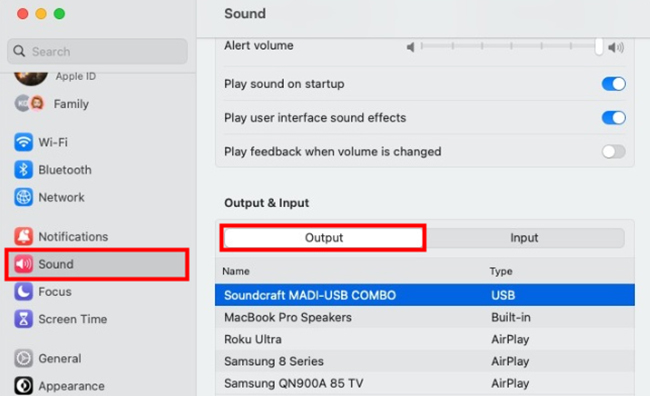
Next, open System Settings > Sound > Output and select the correct headphones or speakers. Disconnect unused AirPlay, Bluetooth, USB, or display-audio outputs.
Activity Monitor can help reveal whether another application is using unusually high CPU or memory. Browsers with many tabs, video calls, screen recorders, audio-production apps, and cloud-sync processes may compete for system resources.
When Spotify and every other audio app glitch on the Mac, restart the output device and macOS before reinstalling Spotify.
How to Fix Spotify Stuttering over Bluetooth or in a Car
Bluetooth-related Spotify stuttering often sounds like brief dropouts, popping, slowed playback, or repeated fragments of audio. The issue may involve wireless interference, a weak connection, a hands-free communication profile, or the playback device rather than Spotify itself.
Use this sequence:
-
Play the same Spotify track through the phone or computer speaker.
-
Move the device closer to the headphones, speaker, or car receiver.
-
Disconnect other Bluetooth devices that are not being used.
-
Forget and re-pair the affected accessory.
-
Restart both the playback device and the phone or computer.
-
Test another music or podcast app through the same Bluetooth connection.
If every app stutters through the same headphones or car system, focus on Bluetooth and device settings. If only Spotify glitches, clear its cache, update it, and compare downloaded playback with streaming.
Safety Tips:
In a car, avoid troubleshooting while driving. Park safely before changing Bluetooth, infotainment, phone, or Spotify settings.
Check Spotify Connect Separately
Spotify Connect problems often cause playback to switch devices, pause, or respond to controls from another phone, speaker, TV, console, or voice assistant. They are less likely to cause continuous crackling audio.
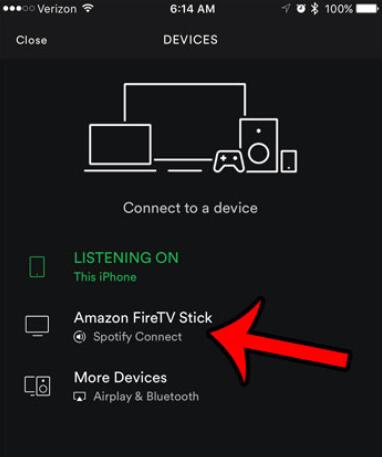
Open the device picker in Spotify and select This phone or This computer. Remove unfamiliar devices where the option is available, and unlink manufacturer apps such as Alexa if they continue taking control of playback.
Note:
Spotify allows an account to be installed on multiple supported devices, although one account normally plays on one device at a time. Therefore, being signed in on several devices is not by itself evidence that it is causing Spotify lagging.
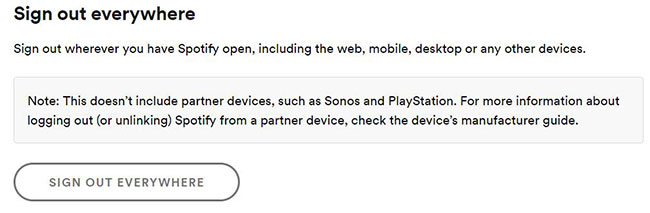
Use Sign out everywhere mainly when playback is being controlled by an unfamiliar device or when you suspect unauthorized account access. This option may not sign out partner devices such as TVs, consoles, and speakers; those connections may need to be removed separately.
Alternative: Avoid Spotify Streaming Stutters with Local Audio Files
If Spotify stuttering happens only while streaming or only inside the Spotify app, playing a separate local audio file may provide a more stable listening route. This is an alternative playback method rather than a repair for Spotify. DRmare Spotify Music Converter is designed to process selected Spotify music into local audio formats that can be played through compatible media players.
This approach may be useful when you want to:
- Listen through a local media player
- Transfer compatible files to another personal device
- Avoid relying on an unstable connection during playback
- Test whether the Spotify application itself is causing the interruption
Note:
It may not help when the actual cause is a faulty Bluetooth connection, speaker, audio driver, overloaded device, or system-wide sound problem.
How to Prepare Spotify Music for Local Playback with DRmare
- Step 1Load Spotify songs into DRmare
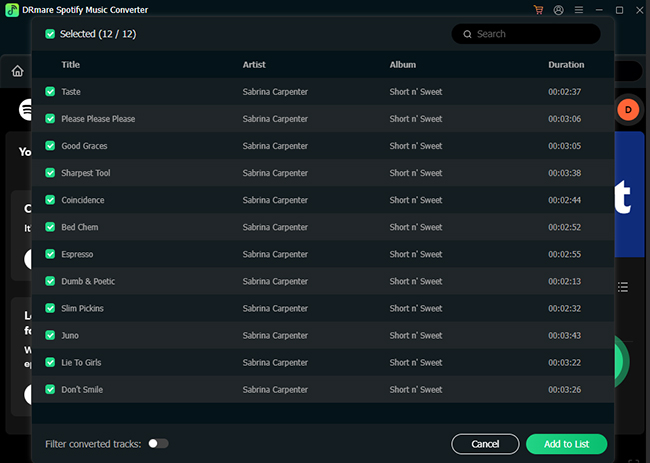
Open DRmare Spotify Music Converter on your computer. Then you can load the songs you want to listen to from the built-in Spotify Web Player to this software. You can do it by clicking the 'Add' > 'Add to List' button. Or, you can copy and paste the song's link and click on 'Download' to load it.
- Step 2Choose the MP3 output format for Spotify
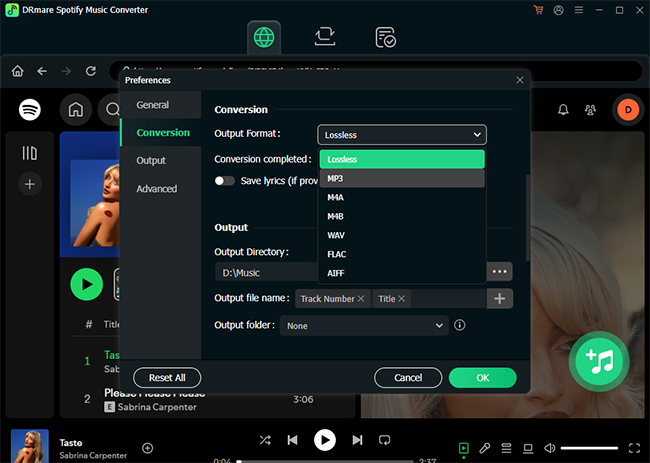
Go to 'Preferences' under 'Menu' in this software. Then click on the 'Conversion' tab to open the output settings window. The default output format is MP3 as it's the most common format. You can customize other parameters as shown above. Finally, don't forget to click on 'OK'.
- Step 3Download Spotify songs to fix Spotify stuttering
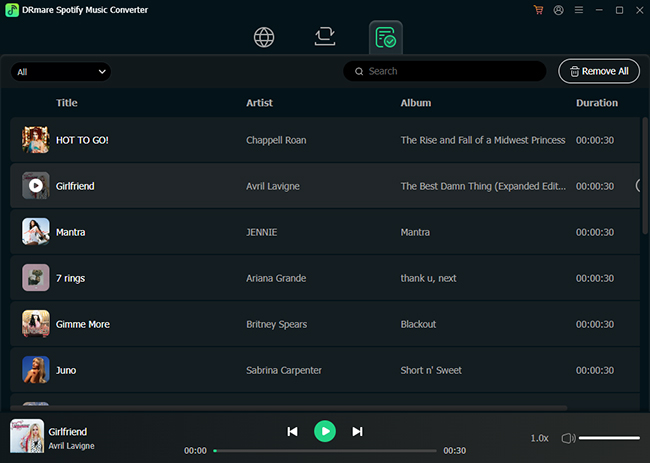
Click on the 'Convert' button and the software will automatically download your Spotify songs to your computer. Once downloaded, you can locate the files by following the red tip or finding them in your computer's local folder. You can then play your Spotify music offline using any music player on your device or transfer the files to other devices. This completely eliminates any Spotify stuttering issues.
FAQs About Spotify Stuttering, Glitching, and Lagging
Why is Spotify stuttering with a good internet connection?
Fast internet can still suffer from packet loss, VPN interference, or router congestion. Alternatively, the issue might not be the network at all. It could be a corrupted app cache or a Bluetooth audio driver conflict.
Why is Spotify lagging, but the music plays normally?
This is a hardware or graphics rendering issue. Close high-resource apps running in the background and toggle "Hardware Acceleration" inside the Spotify desktop settings.
Does clearing the Spotify cache delete my downloaded songs?
No. In current versions of Spotify, the Clear Cache and Remove all downloads buttons are entirely separate. Clearing the cache only removes temporary loading files.
Why does Spotify keep switching to another device?
This is caused by Spotify Connect. Your account is likely still linked to a smart speaker, TV, or console. Open the device picker icon in the app, select "This phone/computer," and remove unfamiliar connections.
Conclusion
Spotify stuttering, Spotify glitching, and Spotify lagging can describe several different problems, so the most effective fix depends on where the interruption begins. Start by comparing streaming with downloaded playback, the Spotify app with the Web Player, and Bluetooth with the built-in speaker. Then work through updates, network testing, media quality, cache clearing, battery restrictions, hardware acceleration, and system-audio settings.
A clean reinstall may help when the application data is damaged, while local audio playback can serve as an alternative when the issue appears limited to streaming or the Spotify client. Neither approach should replace checking the actual network, audio device, or operating system when those are the more likely source.

 Home
Home





User Comments
Leave a Comment