





There is a specific kind of freedom that comes from running without a phone. No heavy armband slipping down your bicep, no bouncing pocket, and no notifications interrupting your "zone". Just you, the road, and the rhythm.
But for many of us, leaving the phone behind means leaving our Spotify playlists behind, which is a dealbreaker. While Runkeeper and Spotify are the two giants of the fitness world, getting them to play nice—especially when you want to run offline or without a premium subscription—can be surprisingly complicated.
Here is how to master the Spotify Runkeeper integration and the workaround that finally allows for true phone-free running.
Part 1. The Standard Method to Connect Spotify to Runkeeper
If you run with your phone in your hand or strapped to your arm, the native integration is the first thing you should try. Runkeeper has a built-in "Music Grid" that acts as a bridge to your Spotify app.
Step 1. Open the Runkeeper app on your iPhone or Android.
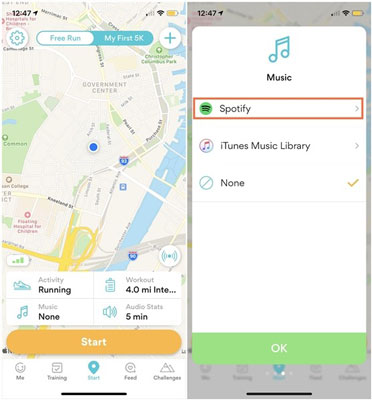
Step 2. Navigate to the Start tab (the main tracking screen).
Step 3. Tap the Music cell (it might say "None" or show a music note).
Step 4. Select Spotify from the list of available services.
Step 5. You will be redirected to authorize the connection. Once linked, tapping the music cell will jump you to Spotify to pick a playlist before you start your run.
The "Hidden" Problems with Native Integration
While convenient, this method has caused headaches for runners:
- ❌The "Silence" Bug: Frequently, when the Runkeeper voice coach chimes in to say "1 Mile, 9 minutes," it pauses your music or lowers the volume, but fails to bring it back up. You are left running in silence, fiddling with your screen.
- ❌Data Drain: Streaming high-quality audio while using GPS eats through battery life and mobile data rapidly.
- ❌The Watch Limitation: If you are a Spotify Free user, you cannot download music to an Apple Watch or Galaxy Watch for offline playback. You must carry your phone.
Part 2. The "Pro" Solution: How to Run Completely Phone-Free
This is the workaround that serious runners use. Instead of relying on a shaky internet connection or a buggy app integration, the secret is to move your Spotify playlist into the local music Library.
Runkeeper (and almost every GPS watch, from Garmin to Apple Watch) is incredibly stable when playing local MP3 files. It uses less battery and never buffers.
To do this without rebuilding your library from scratch, you can use a tool like DRmare Spotify Music Converter. It bridges the gap by downloading your Spotify tracks as actual files that you own, bypassing the need for a phone or a Premium subscription to listen offline.
Here is how to set up the ultimate offline running rig:
Get Your Music Ready
- Step 1Log In and Configure Output Format
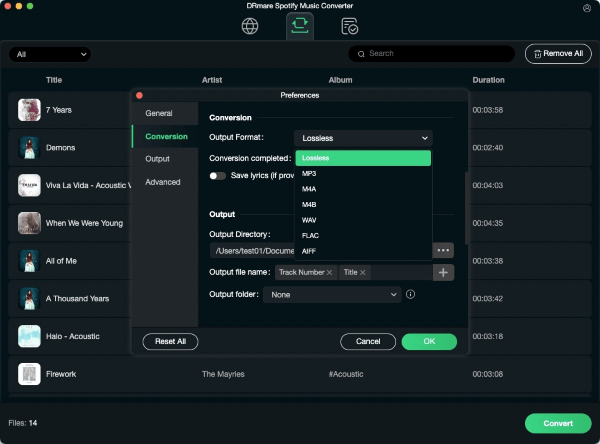
Open the DRmare Spotify Music Converter and sign in to your Spotify account using the built-in web player. Before adding any music, click the Menu icon (often three lines or a gear) and select Preferences or Settings. In the Conversion section, choose your desired output format, such as MP3, and adjust the quality settings (bit rate, sample rate) to ensure the converted files are compatible and high-quality for your running watch or phone's local music library.
- Step 2Select and Load Spotify Playlists
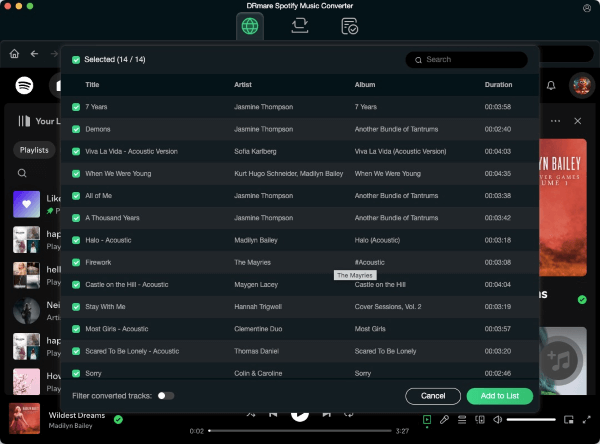
Find the Spotify songs, albums, or playlists you wish to convert within the built-in Spotify player. Drag the selected Spotify content directly onto the '+' button or green Music icon located near the bottom of the DRmare window. Confirm your selection to load all tracks into the conversion list.
- Step 3Start Conversion and Access Local Files
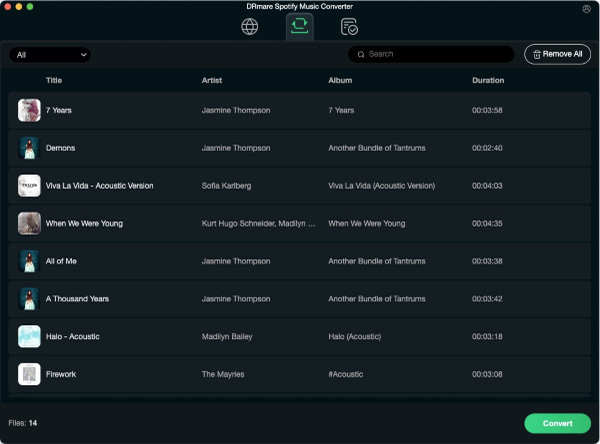
Once your music list is loaded and settings are confirmed, click the "Convert" button. The software will automatically download and convert all selected Spotify tracks to your chosen local format (e.g., MP3). After the process is complete, navigate to the "Converted" tab to access the final, offline audio files, which are now ready to be transferred to your watch, phone's local music library, or any other device.
Syncing to Your Running Device
Now that you have the files, you have total freedom. You can put the Spotify files on a lightweight MP3 player, an Android phone, or—most likely—your smartwatch.
Option A: For Apple Watch Runners
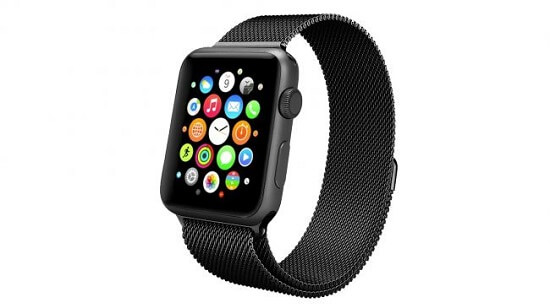
Step 1. Open iTunes (or the Music app on macOS Catalina+).
Step 2. Import your new MP3 files into your Library.
Step 3. Sync this playlist to your iPhone first.
Step 4. Open the Watch app on your iPhone > Music > Add Music. Select the playlist you just imported.
Step 5. Place your Watch on its charger; the Spotify music will sync to Apple Watch automatically.
Option B: For Garmin/Android Watch Runners
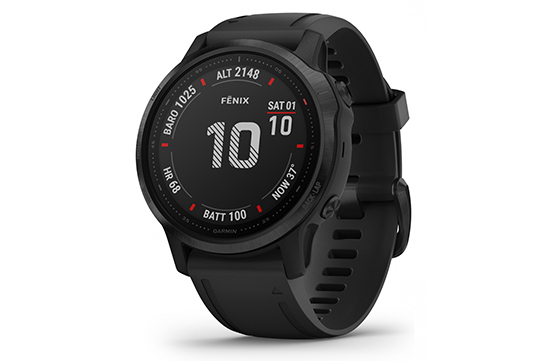
Step 1. Connect your watch to your computer via USB.
Step 2. Open the watch's storage folder (usually labelled "Music").
Step 3. Drag and drop your converted MP3 files directly into this folder.
Setting Runkeeper to "Offline Mode"
Now, you need to tell Runkeeper to stop looking for the Spotify app and start looking for the files you just synced. This is the setting that fixes the audio ducking bugs.
Step 1. Open Runkeeper and go to the Start screen.
Step 2. Tap the Music Grid again.
Step 3. Instead of selecting Spotify, select Music Library (on Android) or iTunes/Apple Music (on iOS).
Step 4. Select the playlist you transferred.
Step 5. Hit Start Run.
Final Tip: Tempo Matters
Since you are curating a specific offline playlist, try to order your songs by BPM (Beats Per Minute). Put your high-energy, fast-tempo songs (160-180 BPM) in the middle of the playlist where you usually hit "the wall," and save the slower tracks for your warm-up and cool-down. With your music now locally stored, you won't have to fumble with "Shuffle" mode ever again.

 Home
Home




User Comments
Leave a Comment