





For audiophiles on Android, the dream setup is combining Tidal's HiRes FLAC library with Poweramp's legendary audio engine. Poweramp offers arguably the best equalization, tone controls, extensive file support, and a high-fidelity audio engine on the market, while Tidal provides high-quality source material.
However, if you have tried to play Tidal music on Poweramp Music Player directly, you might hit a dead end. But that doesn't mean you can't use them together. There are two distinct ways to bridge this gap, depending on your goal: using the Poweramp Equalizer to process Tidal's audio, or using file conversion to import Tidal tracks into the Poweramp Player. Without further ado, let's see how to get Poweramp Tidal integration with ease.
Part 1. Why Can't You Play Tidal Music on Poweramp Directly?
The core reason for this incompatibility between Tidal and Poweramp is the digital rights management (DRM) encoding used by Tidal and format compatibility.
- Proprietary File Format: Tidal downloads, even those stored for offline listening within the mobile app, are encrypted and tied to your Tidal account. They are not common audio files.
- Poweramp's Focus: Poweramp is primarily designed as a local music file player. It excels at decoding and playing audio files in standard formats like MP3, FLAC, WAV, M4A, Ogg, and ALAC. It cannot decrypt the proprietary files from streaming services like Tidal.
To bridge this gap, you must convert the Tidal-protected tracks into a common, DRM-free file format that Poweramp can recognize and add to its local library.
Note:
You can officially use the separate Poweramp Equalizer app to apply Poweramp's advanced EQ features while streaming directly from the Tidal app.
Part 2. How to Play Tidal Music in the Poweramp Music Player
If you prefer the full experience, using Poweramp's actual interface, skins, visualizations, and library management, the Tidal music files must be stored locally on your device without encryption.
DRmare Streaming Audio Recorder is an all-in-one music downloading tool designed to download and convert music from various streaming services, including Tidal. While the native Tidal desktop app doesn't allow direct song downloads for offline use on third-party players like Poweramp, it acts as a specialized Tidal downloader to make this possible.
It addresses the compatibility issue by converting Tidal's encrypted tracks into unprotected formats like MP3, FLAC, WAV, and M4A that Poweramp recognizes and plays natively. This crucial step makes the Tidal songs fully compatible for seamless integration and playback within the Poweramp music player on Android devices. It runs at 37X faster conversion speed while preserving high-fidelity audio quality and ID3 tags. All converted Tidal tracks are perfectly organized and easy to find within Poweramp's library.
How to Download Tidal Music for Poweramp
- Step 1Configure DRmare and Set Tidal Output Format for Poweramp
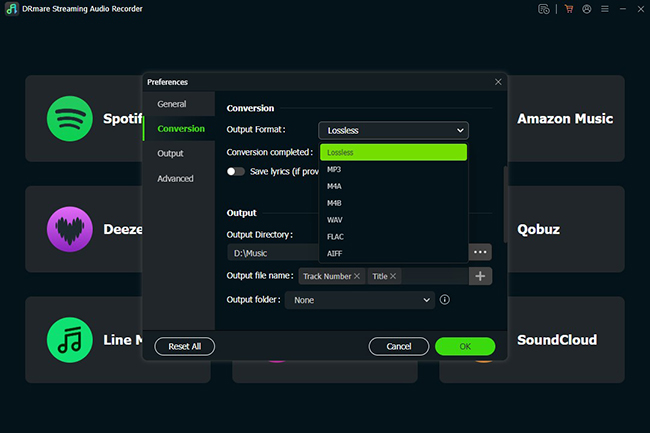
Launch the DRmare Streaming Audio Recorder, and you can access the "Preferences" menu (via the menu icon or Apple menu bar). Under the "Conversion" option, you can set the desired output format and adjust bitrate and sample rate for exporting Tidal songs. For the best quality and compatibility with Poweramp, MP3 or FLAC is recommended.
- Step 2Add Tidal Tracks to Use with Poweramp
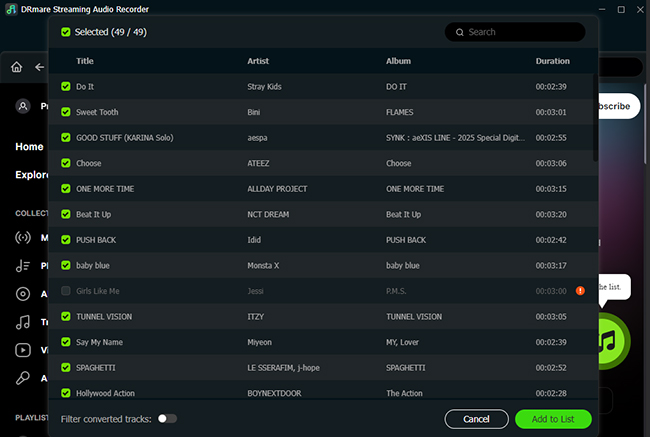
Click the "Tidal" icon on the main DRmare interface to open the built-in Tidal web player. You can click the "Log In" button to log in to your Tidal account. After that, you can browse to the Tidal tracks, albums, or playlists you want for Poweramp and click the "Add" button to analyze and load the track list. You can select the songs you wish to download and add them to the conversion queue by clicking the "Add to List" button.
- Step 3Download Tidal music for Poweramp
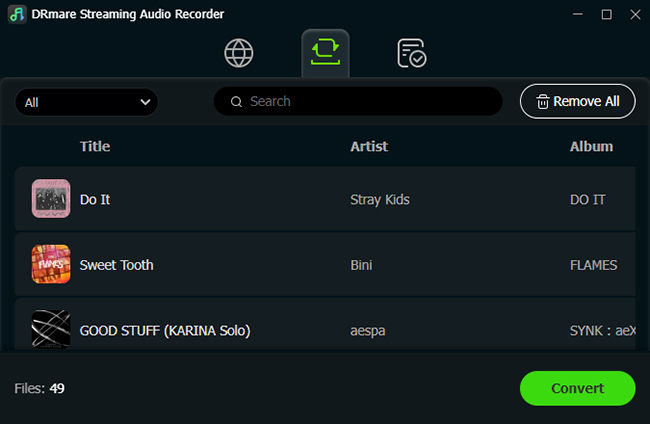
Go to the "Converting" tab and click the "Convert" button, DRmare Streaming Audio Recorder will download and convert added Tidal songs at a fast speed while preserving the original quality and ID3 tags. Once complete, you can go to the "Converted" tab and click the "folder" icon next to any track to open the output folder on your computer.
How to Play Tidal Music on Poweramp Offline
Once you have the unprotected Tidal audio files on your computer, the final step is to transfer them to your Android device and instruct Poweramp to scan the new location.
Step 1. Connect your Android phone or tablet to your computer using a USB cable. Copy the folder containing your Tidal music to your Android device's internal storage or SD card. Create a dedicated folder named "Tidal Music" to keep things organized.
Step 2. Open the Poweramp Music Player on your Android phone. Tap the "menu" icon (three lines) in the bottom right corner and select "Settings".
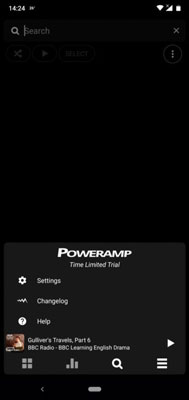
Step 3. Navigate to "Library" > "Import System Library Playlists". You will see a list of directories on your phone. Find the "Tidal Music" folder you just created and check the box next to it.
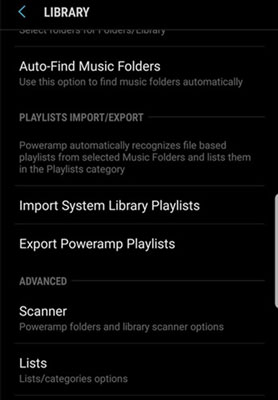
Step 4. Poweramp will automatically begin scanning, or you may need to tap the "Full Rescan" option to rebuild the library immediately.
Step 5. Once the scan is complete, your high-quality Tidal tracks will appear in your Poweramp library, complete with the original album art and metadata, allowing you to use Poweramp's advanced equalizer and audio settings to enhance your listening experience.
Part 3. How to Use Poweramp Equalizer with Tidal
If your main goal is to get Poweramp's bass, treble, and parametric EQ effects applied to your Tidal streams, you don't need to leave the Tidal app. Instead, you should use the standalone Poweramp Equalizer app. This is a separate application from the main music player. It runs in the background and processes audio coming from other apps, including Tidal.
How to Set Up the Poweramp Tidal Integration
Step 1. Download the Poweramp Equalizer from the Google Play Store. Do not confuse this with the main "Poweramp Music Player" trial; look specifically for the standalone equalizer tool.
Step 2. Launch the Equalizer app. You will need to permit it to access your device's audio session. In the settings menu, ensure the "MusicFX" or "Audio Effects" permission is enabled.
Step 3. Open your Tidal app. Navigate to "Settings" > "Audio & Playback". Look for an option labeled "Equalizer" or "Legacy Audio Mode." Ensure that Tidal is not set to "Exclusive Mode," as this bypasses Android's audio processing and will prevent the Equalizer from working.
Step 4. For the best results, you need to enable "Advanced Player Tracking". This often requires a slightly technical step using a PC (via ADB commands) or Root access to grant the DUMP permission.
Note:
Without this permission, the Equalizer might not detect when track metadata changes, meaning your presets won't switch automatically between songs.
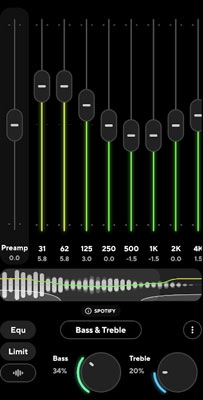
Step 5. Once configured, play a song in Tidal. Open the Poweramp Equalizer, and you should see the visualization reacting to the music. You can now use the preamp, bass knob, and tone controls to shape the sound of your Tidal stream.
Part 4. FAQs about Poweramp and Tidal
Can I use Poweramp's Equalizer on the official Tidal App?
Yes, but not directly. Poweramp has a separate Poweramp Equalizer app that works system-wide to apply EQ and effects to the output of other apps, including Tidal's official streaming app. This is an alternative to the conversion method if you only want the EQ features.
Is Poweramp a free application?
Poweramp offers a free trial for a full-featured experience. To continue using it permanently, you must purchase the Poweramp Full Version Unlocker key from the Google Play Store.
Part 5. In Conclusion
While there is no official integration between Poweramp and Tidal, you can still combine Tidal's high-fidelity audio with Poweramp's superior processing. Your choice simply depends on how you prefer to listen.
- Use Local Conversion with DRmare Streaming Audio Recorder: if you want the full Poweramp interface, custom skins, and offline reliability.
- Use Poweramp Equalizer: if you primarily stream music and want better sound quality without the hassle of managing files.
Ultimately, both methods unlock a better listening experience. Just remember to double-check that Hi-Res Output is enabled in your settings to fully enjoy Tidal's lossless quality.

 Home
Home




User Comments
Leave a Comment