





If you have spent any time archiving older digital media libraries, you have likely run into the challenge of Apple's legacy FairPlay DRM. Years ago, Requiem emerged as a go-to solution for music collectors and movie enthusiasts looking to unlock their legally purchased iTunes files. As a free DRM removal software, it gained a massive following because it didn't just convert files; it performed a lossless decryption of the underlying stream.
In this review, I will walk you through what Requiem DRM removal 4.1 actually does, how it performs under testing, its steep compatibility hurdles today, and what modern alternatives exist if you are trying to manage protected media files on current operating systems.

What Made Requiem 4.1 DRM Removal So Special?
The Core Mechanism of Requiem

Requiem was designed specifically to strip Apple's FairPlay DRM from songs, videos, and digital books purchased through the iTunes Store. Unlike conventional converters that transcode, re-encode, or record audio and video streams (which inevitably introduces quality loss), Requiem operated differently.
In my tests of legacy iTunes purchases, I found that Requiem authenticates with the local DRM library using the same cryptographic keys as iTunes. It then strips away the encryption directly. Because it avoids re-encoding, your original audio bitrates and video resolutions remain completely intact.
Besides, the speed difference was mind-blowing: because it wasn't re-rendering the video or audio, files were processed in a matter of seconds, leaving the underlying media streams totally untouched.
Highlights of Requiem's Feature Set:
- True Lossless Decryption: Unlocks compatible files directly without changing the original codec or bitrate.
- 100% Free & Open Source: No hidden subscriptions or watermarks.
- Automatic Library Scanning: It could scan your local iTunes directory and batch-process unprotected files automatically.
The Reality Check: Does Requiem 4.1 Still Work Today?
The short answer? Not on any modern setup. When I tried launching Requiem 4.1 directly on modern Windows 11 and recent macOS versions, it predictably failed to function. To give it a fair test, I had to fire up a virtual machine running a legacy setup (Windows 7 paired with iTunes 10.7 and Java running in the background). Here is what I found during my tests:
- Apple Music Subscription Tracks: Total failure. Requiem was abandoned long before Apple Music's subscription service existed. Modern encrypted AAC and ALAC files are protected by newer FairPlay schemes that Requiem simply cannot interpret.
- Modern iTunes / Apple TV Purchases: Incompatible. Anything bought or rented through recent versions of iTunes or the Apple TV app uses updated encryption protocols that break Requiem completely.
- Old Purchased iTunes Files (iTunes 10.7 Era): Success (with caveats). If you happen to have ancient, protected M4V movies or M4P songs lying around in an old archive, and you can source a functional iTunes 10.7 environment, Requiem can still strip the DRM nicely.
My Personal Note:
downgrading your main computer's iTunes version just to get Requiem working is a recipe for disaster. iTunes libraries upgraded by newer versions usually refuse to open on older releases, risking library corruption.
Requiem's Pros and Cons at a Glance
To help you quickly evaluate whether Requiem 4.1 is worth setting up, here is a breakdown of its primary advantages and major limitations.
Strengths
 Completely free with no registration required
- Lossless processing (no audio/video re-encoding)
- Swift processing speed for legacy files
- Preserves original quality and metadata
- Historically capable of handling music, videos, and iBooks (with version 3.3.6).
Weaknesses
 Discontinued since 2012 with zero official support
- Requires outdated dependencies (iTunes 10.7 & Java)
- Incompatible with Apple Music subscription tracks or current video rentals
- Unofficial downloads online may pose security risks
- Completely incompatible with modern versions of iTunes, Windows, and macOS.
How to Set Up Requiem 4.1 to Remove iTunes DRM (If You Really Want to Try It)
If you have an old backup of media files and want to experiment out of curiosity, here is the basic sequence I used to get it running safely:
- Set Up an Isolated Environment: Never do this on your daily workstation. Use a dedicated virtual machine (running Windows 7 or older macOS) to isolate legacy software.
- Install Legacy Dependencies: Install Java, followed specifically by iTunes 10.7. Ensure your legacy media files are downloaded locally to the iTunes media folder.
- Backup Everything First: Before pointing Requiem to your library, make a full copy of your original media files. Requiem historically moves decrypted originals straight to the Trash/Recycle Bin, so you want a safety net.
- Run Requiem: Launch Requiem 4.1. Upon startup, the program automatically scan your local iTunes directory to identify protected files. If compatible, it will un-encrypt the files directly in place.
- Verify Converted Files: Once the process completes, Requiem attempts to replace the protected files with decrypted equivalents. Afterward, you can verify playback using standard media players outside of the iTunes ecosystem.

Note:
If you encounter authorization errors, you must manually re-authorize your legacy iTunes account within that specific environment.
Modern Requiem Alternatives for iTunes Movie and Music Management
If your goal isn't historical tinkering but simply playing your media across different personal devices today, Requiem isn't practical. Depending on whether you are working with video or audio, specialized tools have largely replaced Requiem.
For Purchased iTunes Music Songs: Re-Download via Music App
Before looking at third-party software, check your iTunes Store purchase history. Apple transitioned its iTunes music store to DRM-free AAC years ago. In most cases, you can simply delete your old protected M4P files and re-download the DRM-free M4A versions directly from your account for free.

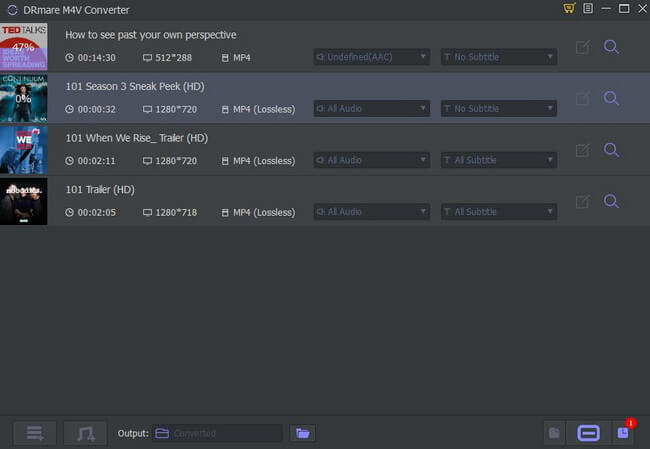
For Purchased/Rented iTunes Video Files: DRmare M4V Converter
If you are dealing with a library of purchased iTunes movies and TV shows and want to play them smoothly across non-Apple devices, modern desktop applications like DRmare M4V Converter are engineered for updated Windows and macOS environments. During my evaluation of video conversion workflows, it offered a much simpler drag-and-drop interface, avoiding the need to juggle virtual machines or vintage iTunes versions.
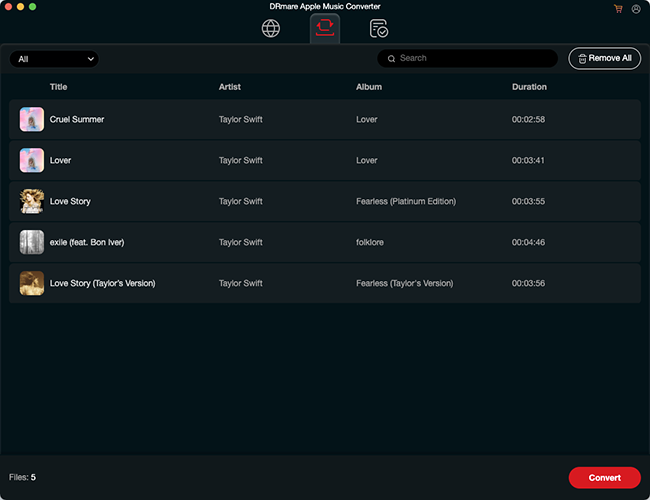
For Apple Music Files: DRmare Apple Music Converter
For protected iTunes songs and Apple Music conversion and organization across different devices, DRmare Apple Music Converter is a well-known option tailored for desktop users. It converts them to MP3, FLAC, M4A, AIFF, and WAV while retaining ID3 tags and metadata.
Even better, recent updates have integrated a built-in Apple Music Web Player directly into the software. This makes the whole process even simpler, as you can browse, select, and process your music in one place without needing the desktop iTunes or Apple Music app running alongside it.
For Apple TV Video Streams: DRmare Apple TV Downloader
For users looking to download Apple TV streaming shows and movies for offline viewing, DRmare Apple TV Downloader addresses modern streaming DRM constraints directly. It converts Apple TV videos into unprotected MP4 or MKV files, preserving original HD quality, AC3 5.1 surround sound, and multilingual subtitles. It provides a straightforward way to keep your favorite original series accessible long after streaming catalog updates or travel without Wi-Fi.

Is Requiem iTunes DRM Removal 4.1 Safe and Legal?
Because Requiem is no longer maintained by its original developer, downloading it today means relying on third-party software archives or file-sharing sites. During my search for the installation package, I encountered several sketchy download portals offering bundled adware. Always scan old executables carefully before opening them.
From a legal standpoint, circumvention laws (like the DMCA in the US) vary significantly depending on your jurisdiction and how you intend to use the files. Generally speaking, breaking DRM on media, even for personal backup, falls into a murky legal territory, and streaming services explicitly prohibit DRM removal in their terms of service.
Is Requiem 4.1 Still Worth It?
Requiem 4.1 holds a special place in software history as one of the few true lossless DRM removal utilities ever created. However, in 2026, it is primarily a nostalgic artifact. Unless you enjoy setting up virtual machines, retro-testing vintage software, or recovering an ancient hard drive filled with 2010-era iTunes purchases, Requiem is simply too fragile and outdated for everyday use.
For modern media management, stick to Apple's native DRM-free redownloads for music, or evaluate up-to-date third-party tools if you have specific desktop conversion workflows.

 Home



User Comments
Leave a Comment