





If you've ever spent hours editing a video in DaVinci Resolve, you know that finding the right soundtrack is important. Apple Music has an absolute goldmine of tracks, everything from niche indie beats to high-energy R&B, and it's only natural to want to drop those songs directly onto your editing timeline. I've been in that exact spot multiple times: I find a track I like on Apple Music, but when I open DaVinci Resolve, I discover that the software cannot recognize it.
 Can You Get Apple Music into DaVinci Resolve?
No. There is no direct integration between Apple Music and DaVinci Resolve. You also can't directly drag and drop songs from Apple Music into DaVinci Resolve. Apple encodes its streaming catalog with DRM (Digital Rights Management) protection in AAC format (.m4p), which video editors like Resolve simply cannot read.
However, after testing a few workarounds in my own workflow, I found a reliable way to add Apple Music to DaVinci Resolve. The trick is converting your Apple Music tracks into unprotected, high-quality audio files, like WAV or MP3, before importing them into your project. Here is how I usually get it done.

How to Convert Apple Music to Local Files fro DaVinci Resolve
To turn DRM-protected Apple Music into editable video assets, you need an audio converter. In my testing, DRmare Apple Music Converter handled the job smoothly without destroying the original audio fidelity.
What I really appreciate about DRmare is its simplicity. It strips away the DRM encryption and exports the tracks into formats DaVinci Resolve natively understands, such as WAV, MP3, FLAC, or AIFF. It also preserves all the ID3 tags (song title, artist, album), which saves you from losing track of your music inside Resolve's Media Pool.
How to Convert Apple Music for DaVinci Resolve
Here is how I convert and download Apple Music tracks into DaVinci Resolve-compatible audio files step by step.
- Step 1Launch the Converter and add Apple Music songs
Open DRmare Apple Music Converter on your PC or Mac and sign in with your Apple Account using the built-in web player. Browse your Apple Music library directly and click the "Add" > "Add to List" button to load desired track or playlist to conversion window.

- Step 2Set Apple Music output format for DaVinci Resolve
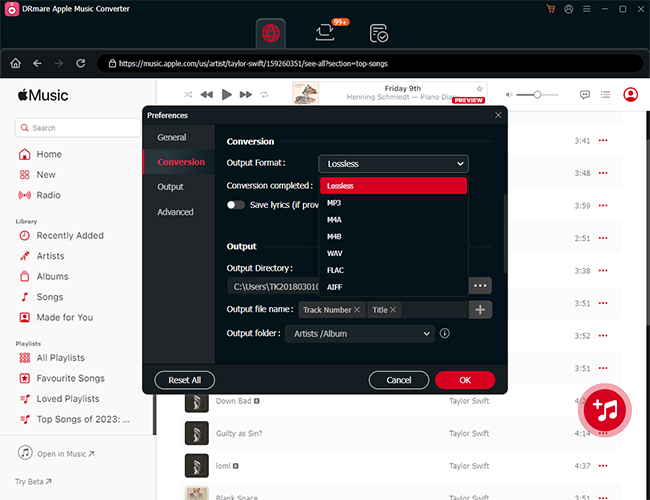
Click on the "Menu" > "Preferences" option to select DaVinci Resolve-compatible one from the available audio output formats and edit other audio parameters, such as Apple Music bitrate, sample rate, etc.
Quick Personal Tip Here:
While MP3 works fine, I highly recommend selecting WAV and setting the sample rate to 48,000 Hz (48 kHz). DaVinci Resolve handles 48kHz WAV files much better on the timeline, preventing small audio sync glitches during editing.
- Step 3Convert Apple Music to DaVinci Resolve-supported audio format
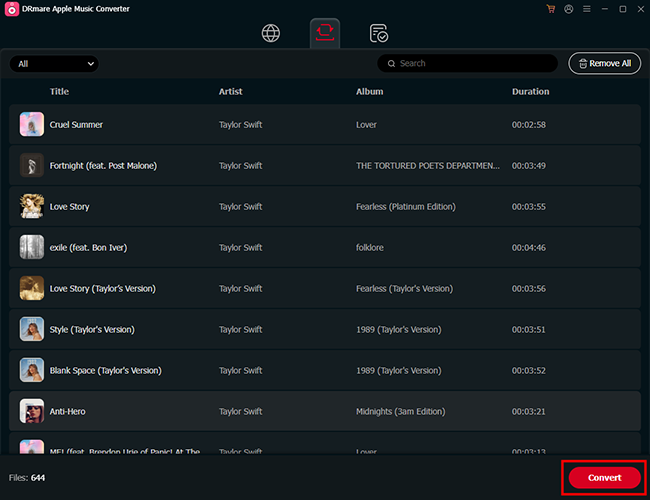
To download Apple Music to PC, move the cursor to the "Convert" button and click it. The songs will begin to convert at high speed. After the Apple Music songs are converted, you can click on the "Converted" option to locate them on the computer. The songs will be saved locally and will be ready to be transferred to DaVinci Resolve for use.
How to Add Apple Music to DaVinci Resolve
Once Apple Music files are sitting safely in a local folder on your computer, bringing them into DaVinci Resolve takes just a few seconds.
Import Apple Music to DaVinci Resolve
Step 1. Launch the DaVinci Resolve on your Mac or Windows computer.
Step 2. Click on the "File" option. This will allow you to add the converted Apple Music songs. From the drop-down menu, click on the "Import File" option on your Mac computer. For a Windows computer, click the "Import" > "Media" option.
Step 3. Browse through the folder where you have saved the converted Apple Music songs.
Step 4. Select the song, and it will be added to DaVinci Resolve.

Note:
You can also open the folder on your computer containing your Apple Music files. Simply drag the desired audio files directly from the folder into the Media Pool panel in DaVinci Resolve.
Snap Apple Music onto Davinci Resolve Timeline
Step 1. Once your music is imported into the Media Pool, click on the "Edit" tab at the bottom navigation bar to switch to your editing timeline.
Step 2. Click and drag your song from the Media Pool down onto the audio section of your timeline (e.g., Track A1 or A2).
Step 3. If you don't have an empty audio track available, Resolve automatically creates one for you as soon as you drop the file. From there, you can trim, fade, or align the beat markers directly to your video cuts.
How to Edit Apple Music Tracks in DaVinci Resolve
Once your converted Apple Music track is loaded into your Media Pool, you can refine and polish it using DaVinci Resolve's built-in editing and Fairlight tools:
Cut to the Beat with Transient Markers:
When editing a video to a track, getting your cuts in sync with the rhythm makes a massive difference. On the Edit page, double-click your audio clip to open it in the Inspector, or switch to the Fairlight page to turn on Transient Markers. During testing, I found this feature extremely handy. Resolve automatically detects beat hits, allowing you to quickly snap your video cuts directly to the song's rhythm.
Balance Dialogue and Music with Auto-Ducking:
Background music should enhance your story, not drown out spoken audio. To keep dialogue clear, head over to the Fairlight page:
- Open the Mixer panel and select your audio tracks.
- Set your dialogue track as the Send source and your Apple Music track as the Target.
- Enable Auto Ducking (or sidechain compression).
This automatically lowers the volume of your music whenever someone speaks and smoothly brings it back up during quiet moments.
Apply Smooth Fades:
To prevent harsh audio cuts at the start or end of your clip, hover over the top-left or top-right corners of the audio region on your timeline. Drag the white fade handles inward to create smooth, natural fade-ins and fade-outs for your track.
Note on Copyright:
Converting Apple Music tracks this way is ideal for offline personal viewing, offline video drafts, or private client previews. If you plan to post your video publicly on YouTube or Instagram, background music scanning (like Content ID) might still flag copyrighted tracks.
FAQs about Adding Music to DaVinci Resolve
Is DaVinci Resolve free?
Yes! Blackmagic Design offers a remarkably generous free version that covers 90% of what most creators need. If you ever need advanced neural engine AI tools or noise reduction, the Studio version is a one-time $299 upgrade.
Does DaVinci Resolve have free music?
No, DaVinci Resolve does not come with a built-in library of free royalty-free music. While it doesn't include pre-installed music tracks, Blackmagic Design provides audio tools and workarounds within the software to help manage your audio.
Why does DaVinci Resolve sometimes throw an error with MP3s?
During testing, I noticed that variable bitrate (VBR) MP3s can occasionally make Resolve stutter or refuse to import. If that happens, rename the file to remove special characters, or better yet, convert Apple Music to WAV.
Final Thoughts
While Apple Music doesn't offer native integration with DaVinci Resolve, taking a couple of minutes to convert your favorite tracks locally makes all the difference. Once your audio is converted to a clean WAV or MP3 file, editing to the rhythm of your favorite song becomes completely seamless.

 Home



User Comments
Leave a Comment