





Apple Music seamlessly integrates with your iPhone, offering an incredible library of lossless audio, curated playlists, and seamless Siri voice control. However, even with the latest software advancements in iOS 26, Apple Music can sometimes stop working properly to interrupt your listening experience.
You may experience problems such as Apple Music not playing songs, app won't open, playlists disappearing, songs stuck loading, playback stopping randomly, or the Music app crashing. This comprehensive guide will explain why Apple Music is not working on iPhone and provides practical fixes based on common troubleshooting scenarios.
Part 1. Quick Troubleshooting for Apple Music Not Working on iPhone
If you need a fast solution, identify your Apple Music problem in the table below for the most likely cause and immediate fix.
| Problem | Possible Cause | Quick Fix |
|---|---|---|
| Songs won't play | Network or app glitch | Force close the Music app and check Wi-Fi/Cellular. |
| Music app keeps buffering | Slow internet | Switch networks or reset network settings. |
| Library missing | Sync Library disabled | Turn on Sync Library in Settings. |
| App crashes | iOS bug or corrupted data | Restart iPhone and update to the latest available version of iOS. |
| "Not Available" error | Subscription issue | Verify Apple Account status and active subscription. |
| Issues after iOS 26 | System compatibility | Wait for reindexing or update iOS. |
Part 2. Why Is My Apple Music Not Working on My iPhone?
Understanding the root cause of your Apple Music not working on iPhone makes troubleshooting much faster. If your iPhone is not playing music, it almost always comes down to one of the following five reasons:
1. Network and Connectivity Issues
Apple Music relies heavily on a stable internet connection for streaming and syncing. If your Wi-Fi signal drops, or if you have accidentally restricted cellular data usage for the Music app, songs will endlessly buffer, skip, or fail to load album artwork.
2. Account Authentication and Subscription Lapses
Because Apple Music is a premium service tied to your Apple Account, any disruption to your account will stop playback. This includes an expired subscription, a failed payment method, or authorization glitches after logging out and back into your Apple Account.
3. iOS 26 System Glitches
Major software updates like iOS 26 change core system files. Immediately after an update, your iPhone often needs to reindex its music database in the background. Until this process finishes, the app might crash, run slowly, or fail to play downloaded tracks due to compatibility bugs.
4. Incorrect Device Settings
Many users accidentally disable key settings that Apple Music needs to function. For example, if "Sync Library" is toggled off, all of your saved cloud playlists will vanish from your device. Similarly, active Screen Time restrictions can block explicit tracks from playing.
5. Apple Server Outages
Sometimes, the problem isn't your iPhone at all. Apple's servers occasionally go down for maintenance or experience unexpected outages, which can temporarily break streaming, live radio, and library synchronization for all users.
Before trying advanced fixes, start with these simple steps to fix iPhone not playing music:
-
Fix 1. Check Apple's System Status page and look for the green dot next to Apple Music and Apple Account. If it is yellow or red, you simply need to wait for Apple to resolve it.
-
Fix 2. Force close and reopen the Music app.
-
Fix 3. Restart your iPhone.
-
Fix 4. Update iOS to the latest version by clicking the Settings > General > Software Update.
These solutions fix most Apple Music not working on iPhone issues within a few minutes.
Part 3. How to Fix Apple Music Not Working on iPhone
If the basic troubleshooting steps above do not solve the problem, try the following advanced fixes. These solutions address common issues related to Sync Library, iPhone settings, account authentication, and system configuration.
Fix 5. Check Network Connections & Permissions
Apple Music requires a stable connection unless you are playing downloaded tracks. A weak Wi-Fi signal, unstable mobile network, or restricted cellular access can prevent Apple Music songs from loading on iPhone. You can verify your internet connection:
- Wi-Fi: Go to Settings > Wi-Fi and ensure you are connected to a stable network.
- Cellular: Go to Settings > Apps > Music Cellular Data and verify that Apple Music is permitted to use mobile data.
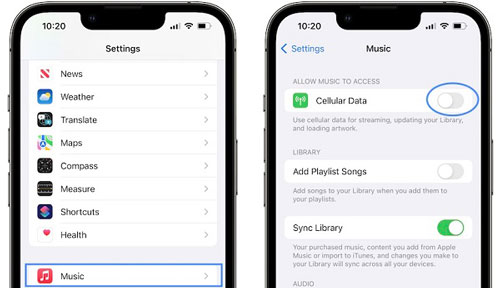
If the connection still appears unstable, you can reset your network settings to solve it: Go to Settings > General > Transfer or Reset iPhone > Reset > Reset Network Settings.
Note:
This will erase Wi-Fi passwords and other network settings, so you'll need to reconnect to your networks afterward.
Fix 6. Check Your Apple Music Subscription Status
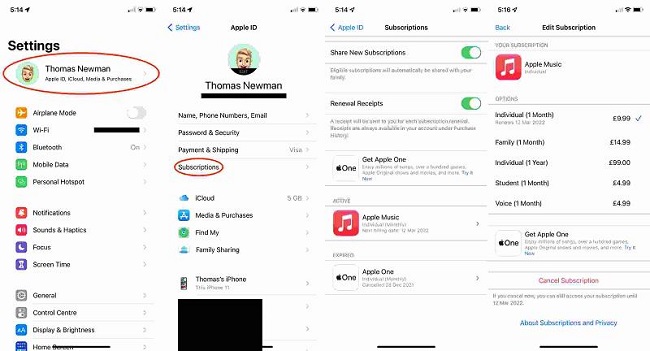
Apple Music requires an active subscription linked to your Apple Account. If your subscription has expired or payment method failed, Apple Music will immediately revoke streaming access. To check your subscription:
Step 1. Open Settings and tap your Apple Account (Your Name) at the top.
Step 2. Tap Subscriptions > Apple Music to check your Apple Music status and ensure it reads as "Active."
Fix 7. Re-Enable Sync Library on iPhone
If your Apple Music playlists or albums have disappeared, Sync Library is one of the first settings you should check. Apple Music uses Sync Library to keep your music collection available across devices signed in with the same Apple Account. To enable Apple Music Sync Library on iPhone:
Note:
Before turning off Sync Library, note that downloaded Apple Music songs will be removed from this iPhone. Try restarting the app and confirming the correct Apple Account first. Only toggle Sync Library if the library is still missing or not updating.
Step 1. Go to Settings > Apps and scroll down to choose Music.
Step 2. Find Sync Library and toggle it off, wait 10 seconds, and toggle it back On to force a refresh.
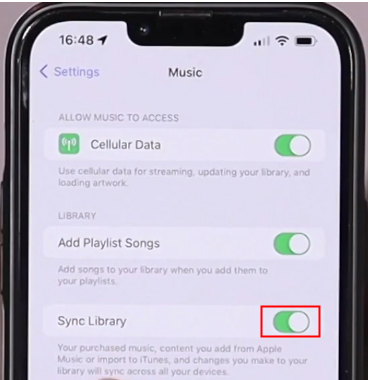
After enabling it, keep your iPhone connected to Wi-Fi while Apple Music rebuilds your library. Depending on the size of your collection, synchronization may take several minutes.
Fix 8. Sign Out and Back Into Your Apple Account
Authentication problems can prevent Apple Music from accessing your subscription or cloud library. Forcing a fresh login often resolves library loading errors.
Step 1. Go to Settings and tap [Your Name] (Apple Account) at the top screen.
Step 2. Select Media & Purchases and then tap Sign Out to sign out of Apple Music. Restart your iPhone, then sign back in.
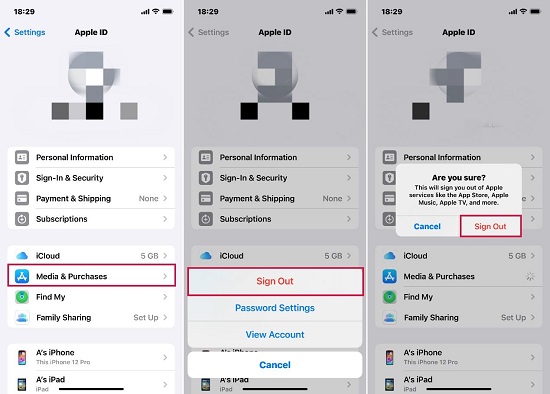
Note:
This will temporarily remove downloaded Apple Music tracks; you will need to re-download them for offline play.
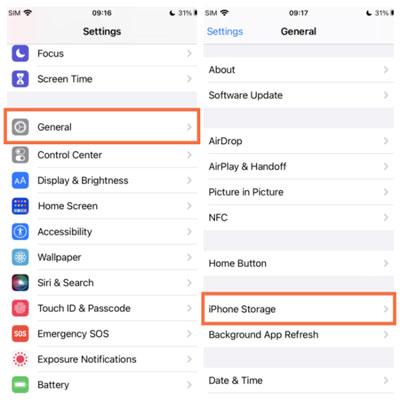
Fix 9. Clear iPhone Storage Space
Apple Music caches audio files to prevent buffering. If your iPhone storage is completely full, the app will struggle to play music. To check available storage on iPhone:
Step 1. Go to Settings > General > iPhone Storage.
Step 2. If your storage is almost full, you can delete unused apps or large videos.
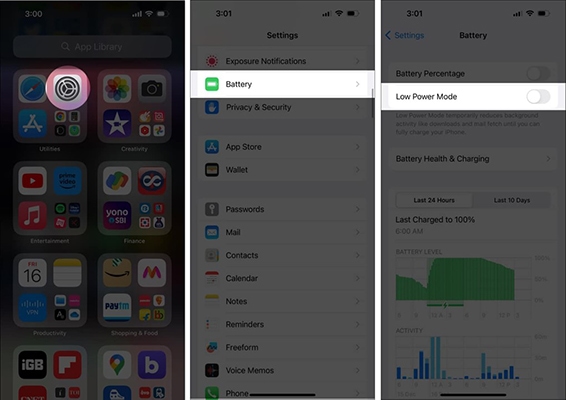
Fix 10. Disable Low Power Mode
Low Power Mode restricts background network activity to extend battery life, which can pause Apple Music syncing and background downloads. To disable it on iPhone:
- Go to Settings > Battery > Power Mode and turn off Low Power Mode.
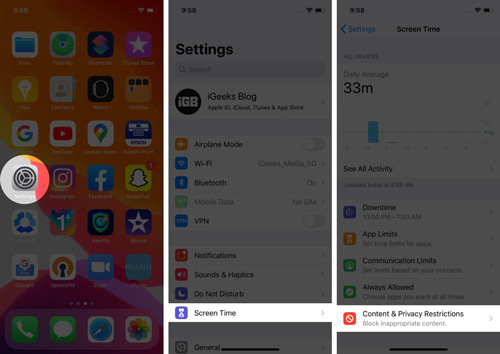
Fix 11. Review Screen Time Restrictions
iPhone restrictions can prevent music content from playing correctly. You can check restrictions:
Step 1. Go to Settings > Screen Time > Content & Privacy Restrictions > App Store, Media, Web, & Games.
Step 2. Review allowed content and app restrictions. You need to ensure music-related content and cellular data usage are not restricted.
Part 4. Apple Music Not Working After iOS 26 Update: Specific Fixes
Major system overhauls can sometimes trigger temporary compatibility hiccups. If your Apple Music app started acting up immediately after making the jump to iOS 26, these targeted solutions will help stabilize the app.
1. Allow Time for Music Library Reindexing
Right after a major iOS update, your iPhone works behind the scenes to rebuild its internal databases, including your Apple Music library. Until this background process finishes, you might experience:
- Missing album artwork or metadata.
- Unusually slow loading times when opening the app.
- Playlists that appear temporarily empty or incomplete.
The Fix: Plug your iPhone into a charger, connect it to a stable Wi-Fi network, and leave it idle for an hour or two (or overnight). This gives the iOS 26 system enough time and power to complete the library reindexing process.
2. Check for Subsequent iOS 26 Patch Updates
Early iterations of a major release often contain undiscovered bugs that can interfere with native apps. Apple typically deploys rapid follow-up patches to resolve these exact software conflicts.
The Fix: Navigate to Settings > General > Software Update. If a newer version (such as iOS 26.6) is available, install it to ensure you have the latest bug fixes and Apple Music stability improvements.
3. Re-Download Corrupted Offline Tracks
Sometimes, the transition to a new operating system can scramble the file structure of your locally stored music. If your previously downloaded offline songs refuse to play, skip continuously, or display an error:
The Fix: Open the Apple Music app, locate the problematic track or album, and select Remove Download. Once deleted from your local storage, tap the download icon again to fetch a fresh, uncorrupted audio file directly from Apple's servers.
Part 5. Alternative: Keep Local Files for Offline Listening on iPhone
For users who travel frequently, have spotty cellular service, or want absolute control over their Apple Music backups, keeping local audio files is a highly reliable alternative to streaming. Tools like DRmare Apple Music Converter allow you to save your Apple Music content in widely supported, unprotected audio formats so you aren't reliant on Apple's servers or internet availability.
How to Create an Offline Apple Music Backup:
Step 1. Download and launch DRmare Apple Music Converter on your Mac or PC. Use the built-in Apple Music Web Player to import favorite songs and playlists.
Step 2. Open the Preferences window, you can choose your preferred universal format (like MP3, FLAC, or WAV) and customize the bit rate for maximum quality.
Step 3. Press the Convert button. The software will process your Apple Music library into unprotected local files.
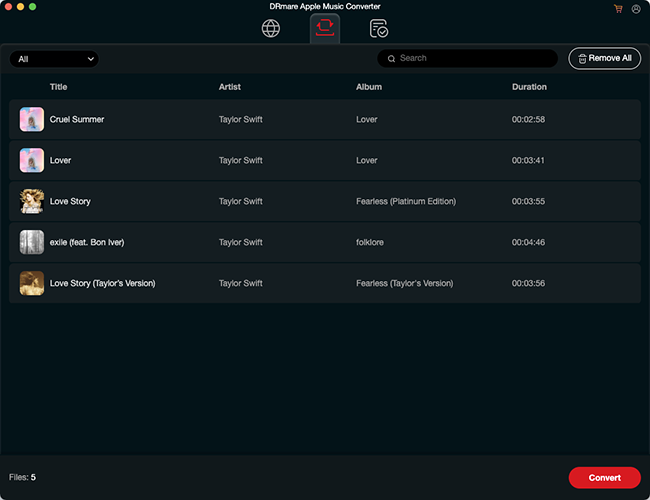
Step 4. Connect your iPhone to your computer. Open Finder (Mac) or Apple Devices app (Windows), drag the converted folders into your device, and click Sync.
You can now play these tracks through the native iOS Files app or any third-party music player, completely immune to network errors, server crashes, or playback restrictions.
Disclaimer:
Apple Music content is protected by digital rights management (DRM). Ensure that converting files complies with your local laws, Apple's terms of service, and is strictly for personal use.
Part 6. FAQs About Apple Music Stopping Working on iPhone
Why is Apple Music not working on my iPhone after updating to iOS 26?
Major iOS updates can temporarily disrupt background processes. The system usually needs time to reindex your music library. Try restarting your device, toggling Sync Library off and on, or plugging your phone into power overnight to let background indexing finish.
Why is my Apple Music library missing on iPhone?
This happens when "Sync Library" is turned off, which can occur accidentally after signing out of your Apple Account or performing a major software update. Turn it back on in Settings > Music.
Will reinstalling Apple Music for iOS delete my downloaded songs?
Yes. Deleting the Music app removes its related local data and downloaded content from the iPhone. Music stored in your synced cloud library should remain associated with your Apple Account, but offline songs will need to be downloaded again.
Part 7. Final Thoughts
Apple Music not working on an iPhone can happen for many reasons, from simple network problems to more complex account synchronization or iOS-related issues. By toggling your Sync Library, verifying your Apple Account, and keeping your iOS updated, you can get back to your playlists in minutes. For those who want ultimate peace of mind during travels or network outages, keeping a hard local backup of your favorite tracks is a smart, permanent solution.

 Home
Home





User Comments
Leave a Comment