





Apple Music has evolved far beyond a simple streaming app. It now combines high-resolution audio, spatial sound, smart recommendations, and social listening features into one ecosystem. Yet many users only scratch the surface of what it can actually do.
Most listeners run into the same issues: sound quality feels inconsistent, playlists get repetitive, or features like Dolby Atmos and AutoMix are never properly configured. The good news is that a few small adjustments can noticeably improve your listening experience. This guide walks through the most practical Apple Music tips and tricks that actually make a difference in day-to-day use.
Tip 1. Unlock the Best Apple Music Sound Quality (Lossless & Dolby Atmos Setup)
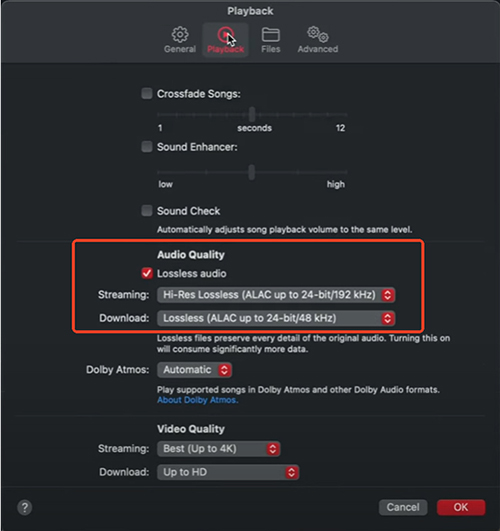
Apple Music offers an incredible catalog of High-Resolution Lossless and Spatial Audio tracks. But these settings are often disabled by default or misunderstood. To get the best sound experience, go into your device settings and adjust audio quality manually. Apple Music allows you to choose different quality levels for Wi-Fi, mobile data, and downloads.
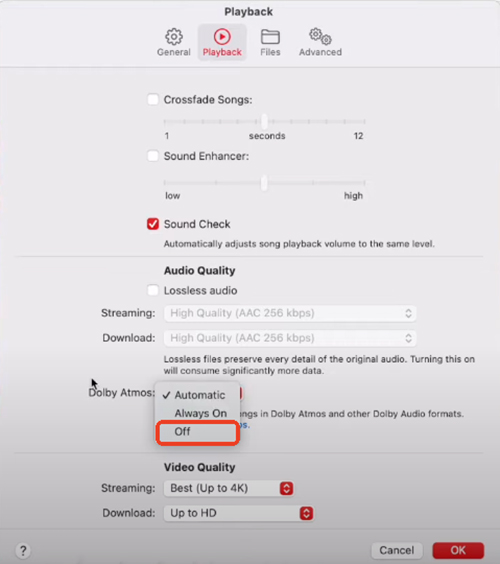
If you care about immersive sound, also enable Dolby Atmos on Apple Music. This adds spatial depth to supported tracks and creates a more cinematic listening experience, especially on AirPods or supported Apple devices.
Step 1. Go to Settings, tap Music, and select Audio Quality to restrict Lossless streaming to Wi-Fi only.
Step 2. Navigate to Dolby Atmos and set it to Automatic so it only triggers on supported Apple or Beats hardware.
Note:
Hi-Res Lossless requires compatible hardware, such as a wired headset or external DAC. Standard Bluetooth headphones usually cannot fully deliver lossless quality due to transmission limits. Besides, Dolby Atmos might muddy in older car speakers.
Tip 2. Use AutoMix for Seamless Apple Music Song Transitions
Listening to a highly curated electronic or hip-hop playlist can quickly lose its momentum if there are awkward gaps of silence between tracks. AutoMix is one of the newer Apple Music playback enhancements designed to create smoother transitions between songs. Instead of silence between tracks, it intelligently blends audio using tempo and beat matching.
This is especially useful for playlists during workouts, parties, or background listening sessions. To set this up and keep the energy flowing, you only need to adjust a single playback setting.
Step 1. Open the Settings app on your iPhone and navigate to the Music section.
Step 2. Scroll down to the Audio tab, choose the Song Transitions option, toggle it on, and then choose the AutoMix.
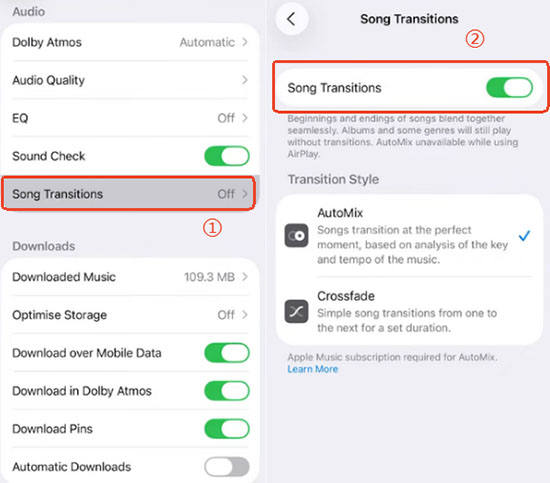
If AutoMix feels too aggressive for certain genres, you can switch back to Apple Music Crossfade, which offers a more predictable overlap between tracks. Both options improve continuity, but AutoMix feels more dynamic and "DJ-like."
Tip 3. Build Better Apple Music Playlists with Collaboration Features
Apple Music now allows shared playlist editing, which turns music selection into a group activity. You can invite friends to add, remove, and reorder songs in real time. This feature is surprisingly useful for events, travel planning, or shared study playlists. Here's a simple way to set up a collaborative playlist in Apple Music so others can add and manage songs with you.
Step 1. Open the Apple Music app on your iPhone, iPad, or Mac. Go to Library and Playlists, then create a new playlist or open an existing one.
Step 2. Tap Edit (or the three-dot menu) on the playlist page. Select Collaborate… and then Start Collaborators.
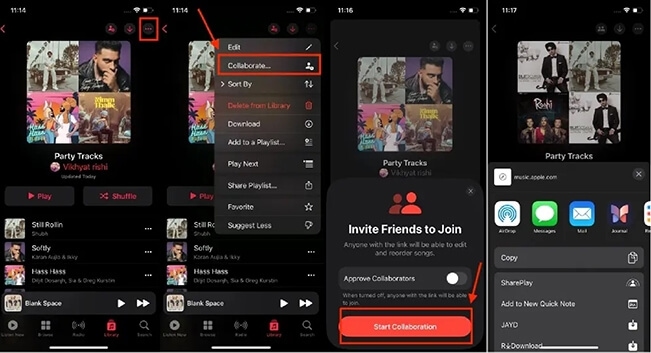
Step 3. Choose how to share the invite link (Messages, AirDrop, or other apps). You can send the link to friends you want to collaborate with.
Each participant can contribute freely, and the playlist owner can still control permissions. It feels less like a static list and more like a living music space.
Tip 4. Start Group Listening with SharePlay
Hosting a party used to mean passing an unlocked phone around the room or dealing with a messy Bluetooth queue. SharePlay has completely revolutionized local listening by allowing anyone in the room to add tracks to the queue directly from their own devices.
The best part is that nearby friends can scan a QR code or tap to connect without needing their own paid Apple Music subscription. This changes everything for road trips and house parties.
Step 1. Start playing a song on a connected HomePod, Apple TV, or Bluetooth speaker.
Step 2. Tap the SharePlay icon at the bottom of the Now Playing screen to display a join code for your friends to scan. After joined, everyone can control playback, skip tracks, and react in real time.
The synchronization is tight enough that everyone hears the same moment at the same time.
Tips:
SharePlay also lets you listen to music together even when you're not in the same location. It works especially well during long-distance hangouts or study sessions.
Tip 5. Turn on Music Haptics for Tactile Listening
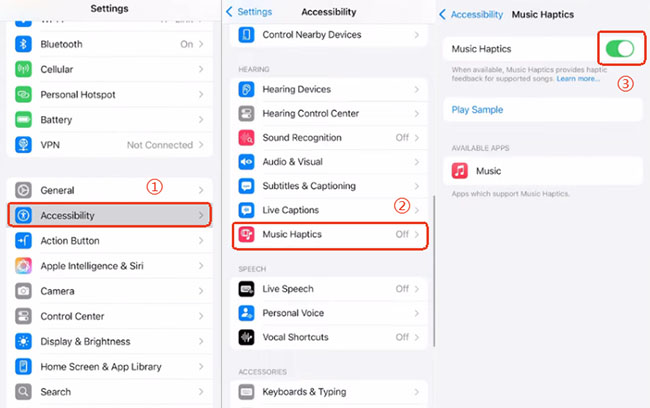
Music is meant to be felt, and the latest accessibility and immersion features take this quite literally. Music Haptics syncs the Taptic Engine inside your iPhone with the rhythm of the current track, creating a tactile listening experience. The device will physically tap, pulse, and vibrate in time with the bass drops and drum kicks. It adds an incredibly unique, physical layer to your audio experience.
Step 1. Open Settings on your iPhone, scroll down and tap Accessibility.
Step 2. Go to Hearing section, choose the Music Haptics, and toggle it ON.
Tip 6. Turn Your iPhone into an Apple TV Karaoke Mic
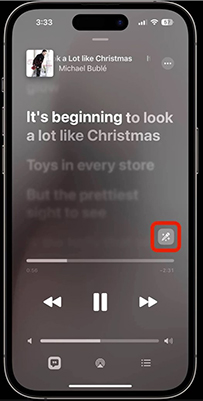
Apple Music Sing already strips the vocals out of your favorite tracks so you can belt out the lyrics in your living room. However, you can now take the karaoke experience further by using your iPhone as a dedicated, wireless microphone. When connected to an Apple TV, your phone captures your audio and mixes it directly into the TV's output stream, complete with visual vocal levels on the screen.
Tip 7. Generate AI Playlists with Natural Language Prompts
If you are tired of manually hunting for the perfect vibe, Apple Intelligence has drastically simplified playlist curation. You can now use the Playlist Playground to type out a natural language prompt, and the algorithm will instantly generate a tailored 25-song mix. Instead of searching for genres, you can simply tell the app exactly what you are doing and how you want to feel. Here are a few quick prompt examples to try:
- "Upbeat synth-pop for a rainy morning commute."
- "Aggressive instrumental metal for heavy weightlifting."
If you consistently interact with new tracks and genres, recommendations become noticeably more accurate over time.
Tip 8. Improve Discovery with Apple Music Replay and Recommendations
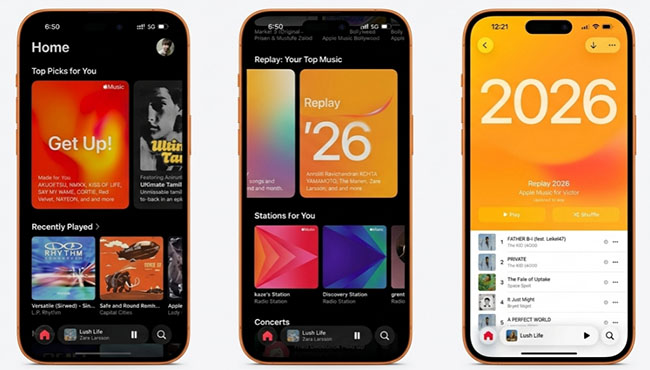
Apple Music Replay gives you a yearly and monthly breakdown of your listening habits, showing your most-played songs, artists, and genres. It's a simple feature, but it helps you understand your long-term taste patterns.
More importantly, Apple Music uses this data to refine recommendations over time. If your recommendations feel repetitive, spending more time exploring new genres manually can help retrain the algorithm.
Tip 9. Optimize Offline Downloads for Travel and Data Saving
Offline listening is essential for commuting, travel, or saving mobile data. Apple Music allows you to download entire playlists, albums, or your library at once.
However, download quality settings matter more than most users realize. High-quality downloads take more storage but significantly improve playback clarity. If storage is limited, consider lowering download quality while keeping streaming quality higher for Wi-Fi use.
Besides, you can use DRmare Apple Music Converter to download Apple Music to MP3, FLAC, WAV, M4A, and more. These downloads are stored on your local computer. You can transfer them to any device and listen to them via any media player offline without using your subscription and app.
Tip 10. Use Lyrics Features for a More Interactive Experience
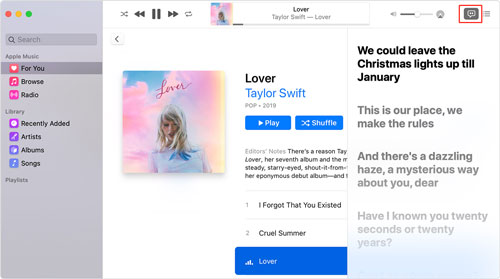
Apple Music's real-time lyrics feature is more than just a reading tool. It syncs line-by-line with playback, making it useful for learning songs or understanding meaning.
You can also tap and hold lyrics to share specific lines. This is especially helpful for language learners or anyone who enjoys analyzing songwriting details.
Tip 11. Add Songs to Multiple Playlists Simultaneously
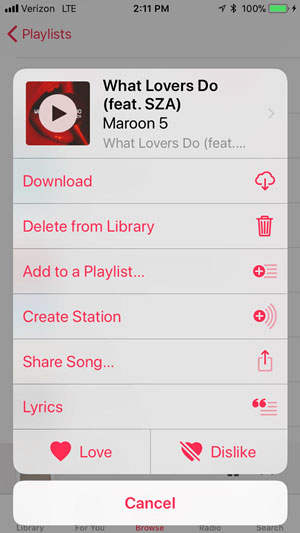
Library management is notoriously tedious, especially when you discover a track that fits perfectly into your workout mix, your driving mix, and your summer anthems playlist. Instead of navigating the "Add to Playlist" menu three separate times, the interface now features a bottom-right toggle system. This allows you to check off several playlists at once and distribute the track across your library in seconds.
Step 1. Long-press any track and select Add to a Playlist.
Step 2. Tap the checkboxes next to every playlist you want the song to appear in, then tap Done.
Tip 12. Utilize the Ambient Music Home Screen Widget
Sometimes you just want to trigger background noise without getting sucked into the main app interface. The new ambient music widget lives directly on your iPhone's Home Screen and is designed exclusively for focus, sleep, and relaxation tracks. With a single tap from your home screen, you can immediately launch a spatial audio rainstorm or a low-fi chillhop mix without ever looking at album art or reading lyrics.
Tip 13. Control Apple Music Hands-Free with Siri
Siri integration is one of the most underrated parts of Apple Music. You can control playback without touching your device, which is especially useful while driving or working.
Commands like "play something relaxing" or "skip this song" make everyday listening more fluid. When combined with CarPlay or HomePod, Siri becomes a full music control system rather than just a voice assistant.
In Conclusion
Apple Music is no longer just a streaming platform, it's a layered ecosystem built around sound quality, personalization, and shared listening experiences. The difference between a basic setup and an optimized one is often just a few settings away.
By adjusting audio quality, exploring social features, and taking advantage of newer tools like AutoMix and smart recommendations, you can completely reshape how Apple Music fits into your daily routine. The key is not using more features, but using the right ones in the right context.

 Home
Home





User Comments
Leave a Comment