





Changing Apple Music playback speed can be useful when learning a new song, practicing an instrument, studying pronunciation, or simply listening at a different pace. The problem is that Apple Music does not currently provide a native speed control feature for songs like the one available in podcast and audiobook apps.
That does not mean you are limited to normal-speed playback. Depending on the device, you can use an Apple Music-compatible speed changer, convert songs to standard audio files and listen to them at different speeds via the built-in music player, or play converted local music through an app such as VLC that supports variable playback speed. This guide walks you through how to slow down and speed up songs on Apple Music on iPhone, Android, Mac, and Windows, along with their limitations.
Quick Answer: Can You Change Playback Speed on Apple Music?
Apple Music does not currently include a built-in button for customizing playback speeds at 0.5x, 1.5x, 2x, or another custom speed. However, you can bypass this limitation using three practical ways:
| Use Case | Recommended Tool | Supported Devices | How It Works |
|---|---|---|---|
| Direct Streaming Control | Speedic | iPhone / iPad | Directly accesses and controls supported Apple Music library content. |
| Apple Music Conversion | DRmare Apple Music Converter | Mac / Windows | Download Apple Music tracks to MP3, FLAC, M4A, etc., and then change their speed in its built-in player or another media player. |
| Local File Playback | VLC / Windows Media Player / Music Speed Changer | All Platforms | Imports converted, standard audio files (MP3/WAV, etc.) for variable speed playback. |
Method 1. How to Change Apple Music Playback Speed on iPhone or iPad
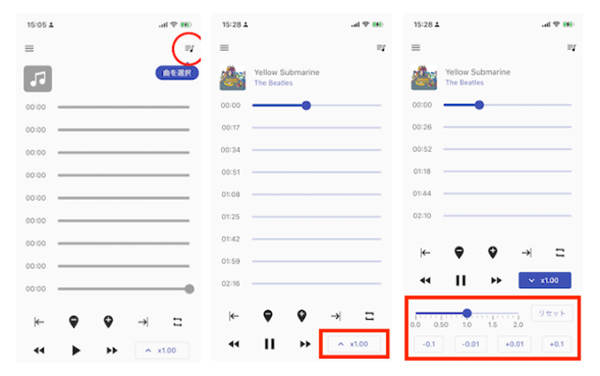
If the goal is to change the speed of Apple Music songs without first creating local audio files, iPhone and iPad currently offer one of the more convenient workarounds. Speedic is designed around music practice and supports Apple Music integration on compatible versions of iOS. Instead of exporting every song first, it can access supported Apple Music content and provide playback-speed controls inside the app.
Typical controls include slower and faster playback as well as functions such as A-B repeat, which can be useful when practicing a difficult section of a song.
How to Change Apple Music Speed with Speedic
Step 1. Install Speedic – Music Speed Control on the iPhone or iPad.
Step 2. Open the app and allow the required access to your Apple Music library.
Step 3. Find the Apple Music song you want to practice or play and start playback inside Speedic.
Step 4. Open the speed control and select a slower or faster playback rate.
Compatibility Note
Apple Music integration in third-party apps can change after iOS updates. Recent Speedic version notes have mentioned speed-control issues on some iOS 26 configurations, so it is worth checking the current app version if the speed slider does not respond as expected.
Method 2. How to Speed Up or Slow Down Songs on Apple Music on Mac or Windows
For desktop users seeking maximum flexibility, the best approach is to save Apple Music tracks as standard audio files. Because Apple Music subscription downloads are DRM-protected and cannot be dragged into standard players, you will need a specialized audio processing tool.
You can utilize DRmare Apple Music Converter. Recent updates to the software architecture mean it now features a built-in web player, allowing it to operate entirely independently without relying on external desktop client synchronization (like the Apple Music app).
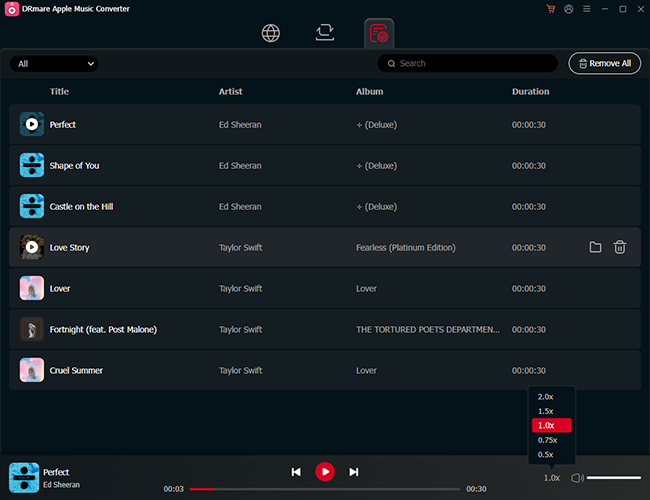
It seamlessly converts Apple Music into FLAC, MP3, WAV, M4A, AIFF, and M4B formats. Crucially, it retains lossless audio quality and preserves all ID3 tags, allowing you to keep metadata and edit lyrics. More importantly, you can directly use its built-in music player to play Apple Music at 2X, 1.5X, 0.75x, or 0.5X speed.
How to Convert and Adjust Apple Music Playback Speed with DRmare
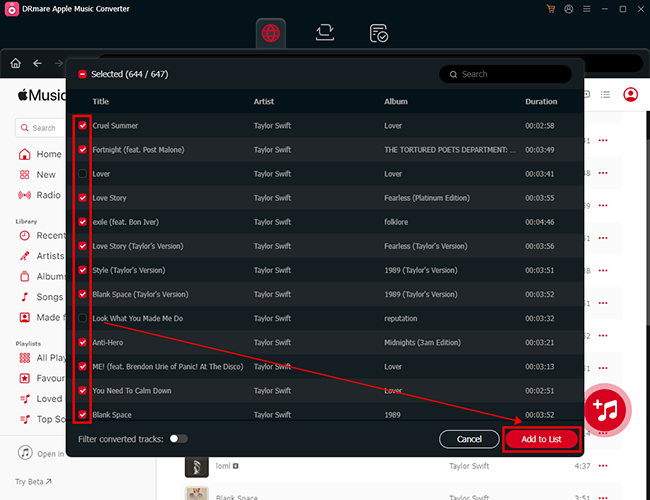
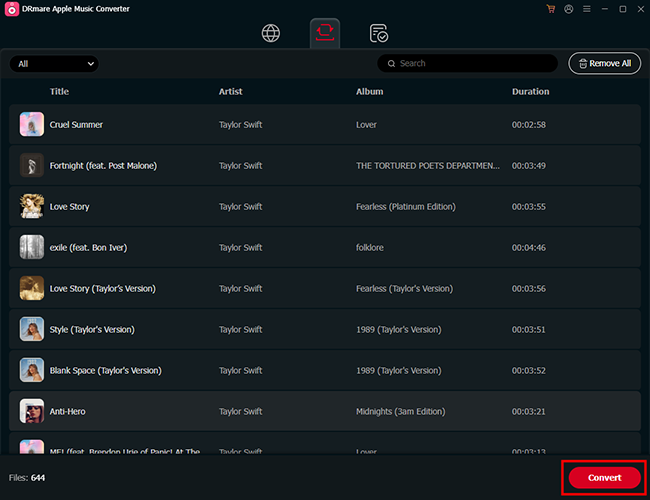
Step 1. Launch DRmare Apple Music Converter and sign in to the Apple Music account when required. Browse the Apple Music library, select the tracks, albums, or playlists you want to process, and add them to the conversion list.
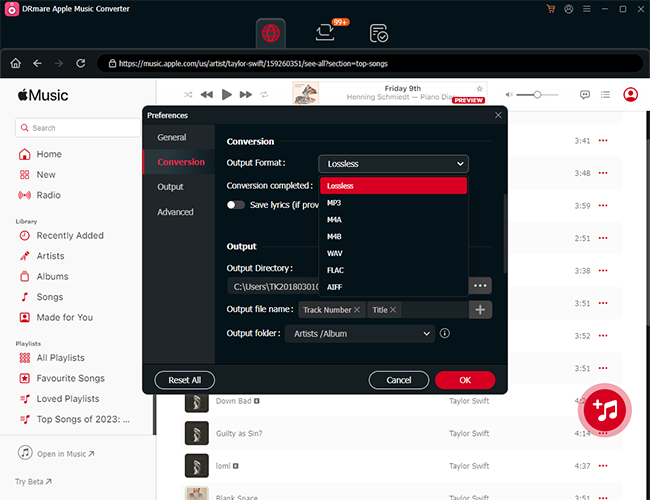
Step 2. Open Preferences and select a format such as MP3, FLAC, WAV, AIFF, M4A, or M4B. Other settings, including codec, sample rate, and bit rate, can also be adjusted depending on how you plan to use the files later.
Step 3. Touch the Convert button to start Apple Music conversion at a 30X speed. After a while, you can hit on the Converted icon with a red prompt to view the converted Apple Music songs on DRmare Apple Music Converter. These files behave more like regular local audio and can be opened in compatible media players.
Step 4. Play a converted song via DRmare's built-in player. Select the Speed control in the now-playing screen and choose the preferred playback rate. You can speed up a song on Apple Music at up to 2X or slow down music at 0.5X.
Tips:
You can also open the output folder and play the same files through another speed-capable player.
Method 3. How to Slow Down or Speed Up Music on Apple Music via Local Media Players (Cross-Platform)
Once you have obtained unprotected MP3, M4A, or WAV files via the method 2 above, you can open them in any media player equipped with variable speed controls.
1. Change Apple Music Speed with VLC (Android/PC/Mac)
VLC is useful when you already have the Apple Music track saved as a compatible local file. It offers more granular speed control than many basic music players and is available on macOS, Windows, Android, and iOS.
Step 1. Transfer the audio files to your Android device or directly open the VLC on your computer.
Step 2. Open the audio in VLC and start playback.
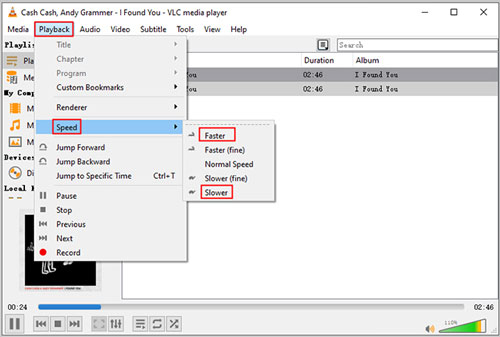
Step 3. Open the Playback menu (or tap the three-dot menu on mobile).
Step 4. Select Playback speed and adjust the slider to select a faster or slower playback speed.
2. Change Apple Music Playback Speed with WMP (Windows)
If you are a Windows user who doesn't need advanced instrument practice features, the native Windows Media Player is more than sufficient. It can also adjust playback speed with its built-in feature.
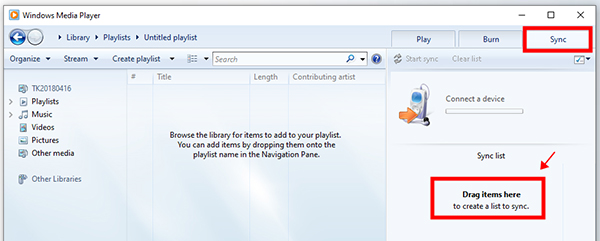
Step 1. Launch the Windows Media Player and enter the Sync option to drag and drop Apple Music tracks in the specialized area. Hit on the Add to button and select the target playlist to add Apple Music tracks.
Step 2. Play the Apple Music, and you will switch to the Now Playing mode. Right-click anywhere on the Now Playing screen. Choose the Play speed option to adjust the play speed to Fast or Slow.
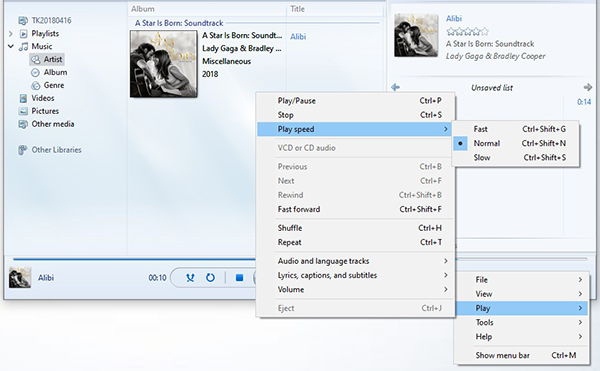
Tips:
For more precise speed control on Windows Media Player, you can use the buttons next to the slider:
Click the ">>" button to increase the speed incrementally.
Click the "<<" button to decrease the speed incrementally.
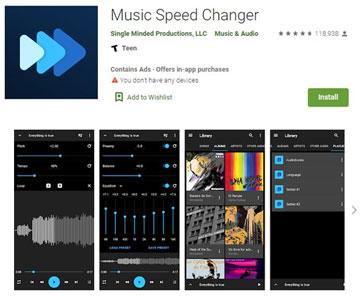
3. Change Speed on Apple Music via Music Speed Changer (iPhone/Android)
Music Speed Changer is another useful option, particularly for people practicing instruments, transcribing music, or repeating sections of a track. Once you import a local file, you can freely set loops and precisely control the beats per minute (BPM).
Step 1. Open Music Speed Changer on your device.
Step 3. Import the audio file from the device or supported music library.
Step 3. Start playback and adjust the playback speed or tempo.
Step 4. Use looping or pitch controls where needed.
Apple Music vs Apple Podcasts vs Apple Books Playback Speed
Apple's different media apps handle playback speed differently, which can easily cause confusion.
| Apple Service | Built-in Speed Control | App |
|---|---|---|
| Apple Music songs | No regular song-speed control | Apple Music |
| Podcasts | Yes | Apple Podcasts |
| Audiobooks | Yes | Apple Books |
How to Change Apple Podcast Playback Speed
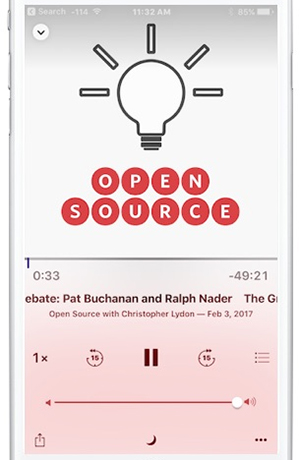
Podcast episodes have native speed controls in the Apple Podcasts app. You can play an episode, open the Now Playing screen, and use the playback-speed button to select the preferred rate (0.5x, 0.75x, 1x (normal speed), 1.25x, 1.5x, and 2x). The available options can vary slightly depending on the current app version.
How to Change Apple Audiobook Playback Speed
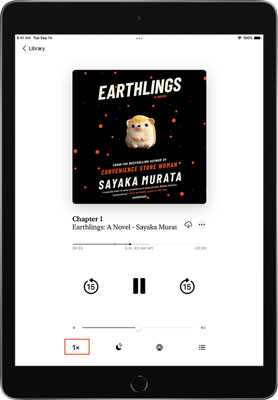
Audiobooks purchased or played through Apple Books also have built-in narration-speed controls. You can open the audiobook in the Books app, start playback, and tap the current speed indicator, such as 1x, to switch to another narration speed.
FAQs About Apple Music Playback Speed
Do any native Apple apps support playback speed controls?
Yes. While regular Apple Music songs do not have this feature, both the Apple Podcasts and Apple Books applications include native playback/narration speed controllers (e.g., 1.5x, 2x).
Can I use GarageBand on my iPhone to change Apple Music speed?
It is not recommended. While GarageBand can import unprotected local audio and adjust the project BPM, imported songs do not automatically snap to tempo changes the way native GarageBand regions do. The process is cumbersome and often inaccurate for simple playback.
Why is my Apple Music suddenly playing much too fast?
This is rarely an intentional speed setting and is usually caused by a system or hardware glitch (e.g., Bluetooth sample rate mismatches, external audio routing conflicts, or a temporary system bug). The best troubleshooting steps are to restart the Apple Music app, disconnect/reconnect your audio devices, or restart your device entirely.
Does Changing Apple Music Speed Change the Pitch?
It depends on the software you use. Basic speed adjustments will change the pitch, making the audio sound higher when sped up and lower when slowed down. However, advanced media players and dedicated music practice apps use "time-stretching" technology to adjust the tempo while keeping the original pitch completely stable.
Which Apple Music Speed Changer Should You Use?
Apple Music still does not offer the kind of song-speed control commonly found in podcast or audiobook players, but several practical alternatives can fill the gap.
- For iPhone and iPad, Speedic is worth trying when current iOS compatibility allows direct Apple Music access. It avoids the extra step of preparing local files.
- For Mac and Windows, converting the tracks first provides more flexibility. DRmare Apple Music Converter can handle the conversion and playback in one workflow, while the resulting files can also be used in VLC or other players.
- For Android, VLC is a straightforward choice once compatible audio files have been transferred to the phone.
The most suitable method ultimately depends on whether convenience, device compatibility, precise speed control, or long-term access to local audio matters most.

 Home
Home





User Comments
Leave a Comment