





Apple Music offers two built-in ways to create smoother transitions between songs: Crossfade and AutoMix. Both features are designed to eliminate abrupt silence between tracks, but they work in very different ways. Crossfade is the traditional option that simply overlaps the end and start of songs. AutoMix goes further by using intelligent analysis to create DJ-style transitions based on tempo and structure.
Today, we will focus on Apple Music Crossfade. If you've ever wondered how to make Apple Music sound more continuous, this guide shows you exactly turn on and turn off Crossfade Apple Music across iPhone, Android, Mac, and PC.
Part 1. What Is Crossfade On Apple Music?
Apple Music Crossfade is a playback feature that gradually fades out the ending of your current song while simultaneously fading in the start of the next one. Instead of an abrupt stop-and-start, the audio overlaps.
Because Crossfade does not analyze the underlying music structure, it simply overlaps the audio based on a timer, it is lightweight, predictable, and works consistently across your entire library. It is especially useful for:
- High-energy workout playlists.
- Party or Party or DJ-style listening
- Background music sessions.
- Listening to albums seamlessly.
This feature creates a seamless transition between tracks, eliminating silence and maintaining a continuous flow of music across all major platforms, like iPhone, Android, PC, and Mac.
AutoMix vs. Crossfade: What's the Difference?
Apple Music now provides two distinct transition styles to suit different listening habits. Here is how they compare:
| Feature | How It Works | Best For |
|---|---|---|
| Crossfade | Manually overlaps two tracks for a set duration (1–12 seconds). | Users who want smooth, predictable, and consistent transitions. |
| AutoMix | Analyzes tempo, beat structure, and track energy in real-time to blend songs. | Users who want a dynamic, DJ-style mix without manual configuration. |
Part 2. How to Crossfade Apple Music on iPhone (iOS 26)
Apple Music has finally added crossfades in the iPhone running iOS 26 and iPad running iPadOS 26. But Crossfade is disabled by default and must be turned on manually. You can follow the steps below to crossfade songs on Apple Music on iOS devices.
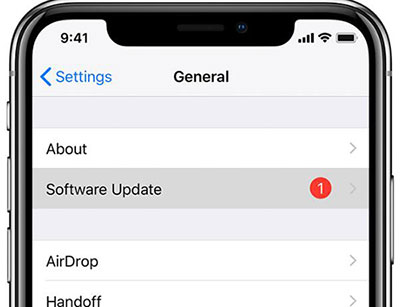
Step 1. Make sure your iPhone or iPad runs iOS 26 or iPadOS 26 version. Please go to the Settings app > 'General' > 'Software Update' to update it.
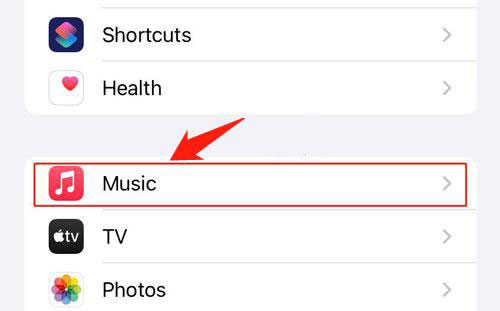
Step 2. Now back to the main screen of the Settings app. Choose the 'Music' option on the screen to access the Apple Music settings.
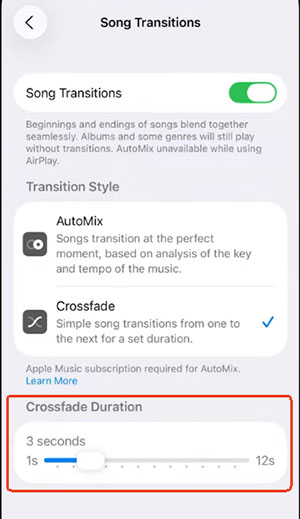
Step 3. Under the Audio section, you can click the 'Song Transitions' option and toggle the switch.
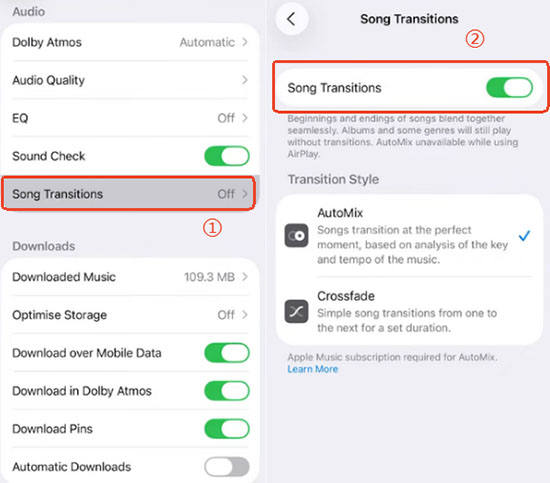
Step 4. Turn on crossfade on Apple Music on iPhone by selecting the 'Crossfade' option. Here, you can head to set the crossfade duration to make Apple Music seamless transition.
Tips:
The crossfade feature is not currently available on iPhones and iPads running lower iOS versions. If you'd like to crossfade Apple Music on iOS 16 or below, you can draw support from third-party apps, like Mixonset and Spotify.
You can directly load your Apple Music library to Mixonset and crossfade songs on Apple Music in Mixonset. Alternatively, you can use DRmare Apple Music Converter to add Apple Music to the Spotify library and set up a crossfade on Apple Music on your iPhone via Spotify.
Part 3. How to Crossfade Apple Music on Android
"Can you crossfade on Apple Music on Android devices?" Yes, you can! If you're using Apple Music on an Android device, you can also take advantage of the crossfade feature by following these steps:
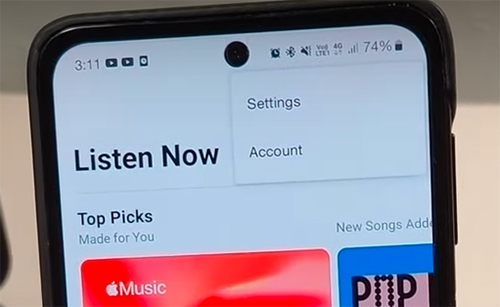
Step 1. Power on your Android device. Then launch the Apple Music app. Click on the 'three-dots' icon on the upper-right corner of the screen. And then choose 'Settings'.
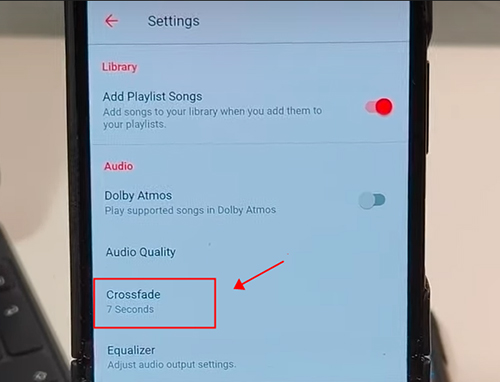
Step 2. Scroll down to the 'Audio' section and click the 'Crossfade' option to enable crossfade on Apple Music.
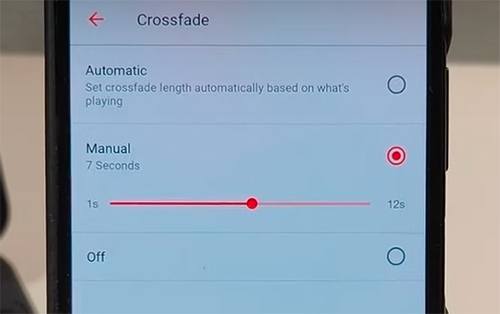
Step 3. Select the 'Automatic' option to set up the Apple Music crossfade feature. Or, choose the 'Manual' option to alter the fade in and fade out time. Use the slider to set the desired crossfade duration between 1 to 12 seconds.
Part 4. How to Turn On Crossfade on Apple Music on Mac
If you're using a Mac, this section is for you. Here, you'll learn how to add transitions to your music by enabling the crossfade feature in Apple Music on your Mac computer.
Step 1. Open the Apple Music app on your Mac computer.
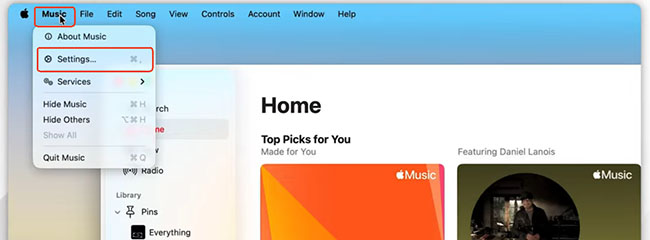
Step 2. Click on 'Music' in the top-left corner of your screen, then select 'Settings' from the drop-down menu.
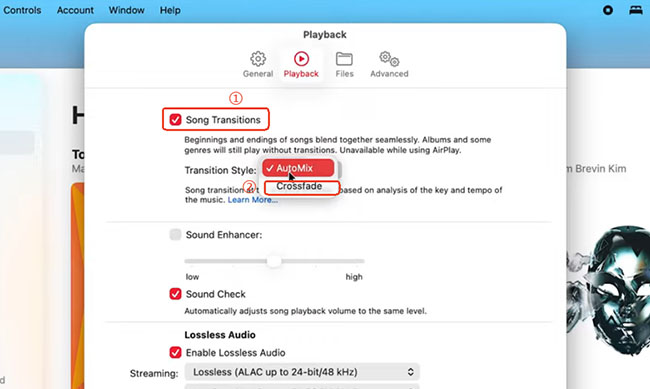
Step 3. Click on the Playback tab and check the box next to 'Song Transitions'. Now, you can select the 'Crossfade' option under the Transition Style section
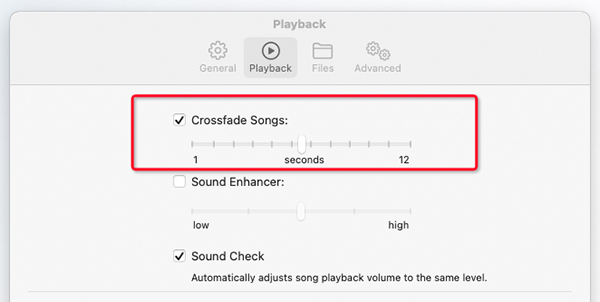
Step 4. And then you can alter the transition time by dragging the slider.
Note:
When playing consecutive tracks from the same album, Apple Music crossfade feature is turned off automatically. Also, if you don't want to fade songs while playing, just turn off the 'Crossfade' option.
Part 5. How to Crossfade Songs on Apple Music on Windows PC
How to make Apple Music crossfade on Windows? It is easy to do that. You can use crossfade in the Apple Music app for Windows Store. Here's how to:
Step 1. Install the Apple Music app for Windows from the Windows Store and then launch it. Authorize your Apple Account and click the 'three-dots' icon at the top-left corner to choose the 'Settings' option.
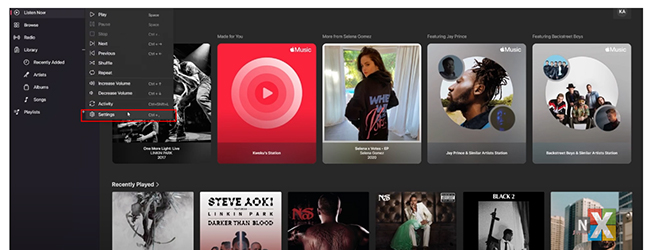
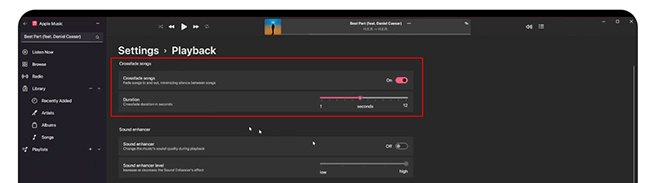
Step 2. In the setting window, you can choose the 'Playback' option. You will see the 'Crossfade songs' option in the 'Playback' section.
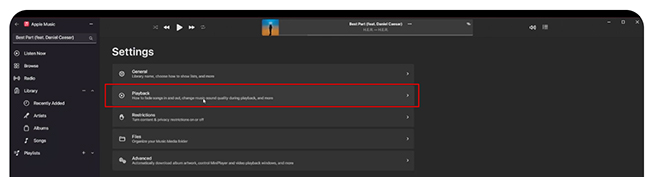
Step 3. Toggle the 'Crossfade songs' on. Adjust the slider to set the desired duration of the crossfade effect under the 'Duration'. You can choose anywhere from 1 to 12 seconds depending on your preference.
Part 6. Apple Music Crossfade Not Working? Quick Fixes!
If Apple Music Crossfade is not working properly, the issue is usually related to settings, audio mode, or app version. If your songs are still ending abruptly, try these troubleshooting steps:
1. Ensure Crossfade Is Enabled.
Before diving into more complex solutions, make sure the Crossfade feature is actually enabled on your device.
2. Restart Your Device.
Sometimes, a simple restart can resolve issues with the app. Restart your iPhone, Mac, PC, or Android device to see if the Crossfade feature starts working.
3. Update or Reinstall Apple Music.
If you are using an iOS device, then you need to check which operating system you are using and update or reinstall it to the latest version. The Crossfade feature on Apple Music won't work if it's iOS 16 or lower.
4. Adjust Crossfade Settings.
You can turn off the crossfade feature in settings, wait a few seconds, and then turn it back on. This may help refresh functionality and resolve any temporary issues. Furthermore, if crossfade is enabled but not functioning as expected, adjust the duration slider.
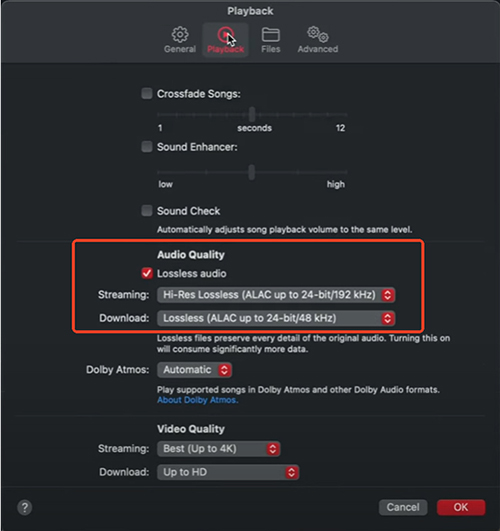
5. Disable Lossless Audio.
Crossfade may not work properly with Apple Music's lossless audio feature. Try disabling it: Go to "Settings" > "Music" > "Audio Quality" on iOS. Toggle off "Lossless Audio".
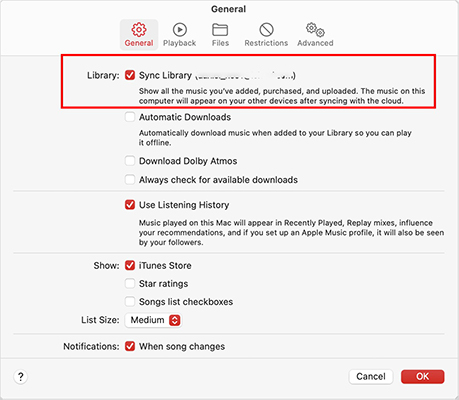
6. Re-sync Your Library.
Go to Settings, toggle "Sync Library" off and then back on to refresh your cloud connection.
Part 7. Pro Tips: Best Crossfade Settings on Apple Music
Key Takeaway:
If you're unsure where to start, set Crossfade to around 5 seconds and adjust only if your listening style changes. This simple setting works well for the majority of playlists without requiring constant tweaking.
While Apple Music lets you choose a Crossfade duration from 1 to 12 seconds, most users don't actually need to overthink it. In real-world listening, one range consistently performs better than the rest.
The 4–7 seconds range is widely considered the optimal setting. It creates a natural overlap where the outgoing track fades smoothly while the next song still has room to build its intro. This balance makes it suitable for most everyday listening without sounding too abrupt or overly blended.
Quick Apple Music Crossfade Settings Guide
- 4–7 seconds (Recommended): Best balance for pop, rock, R&B, and mixed playlists
- 1–3 seconds: Light transition, keeps original song structure mostly intact
- 8–12 seconds: Strong overlap, ideal for EDM, workouts, and party playlists
- 0 seconds (Off): Pure playback, best for albums and classical music
What Most Users Actually Choose
In practice, most Apple Music listeners settle around 5 seconds, since it delivers a smooth but controlled transition without distorting the original track flow. It also works well across different genres, making it the most practical default choice.
The Modern Apple Music Crossfade Alternative:
If you are using a newer device (iOS 26+ or macOS Tahoe+), you might want to try AutoMix instead of a fixed crossfade. Rather than applying a blanket 5-second timer to every song, AutoMix analyzes the tempo and structure of the tracks in real-time. It will automatically choose to do a quick 1-second fade for two drastically different songs, or a long DJ-style blend for two high-energy dance tracks.
Part 8. FAQs about Apple Music Crossfading
How to turn off Crossfade on Apple Music?
To turn off Crossfade on Apple Music, go to Settings on iPhone, open Music, switch the Crossfade off under Song Transitions. On Mac, Windows, or Android, you can disable it from the Playback or Settings by turning off "Crossfade Songs."
How to do Crossfade on Apple Music?
To use Crossfade on Apple Music, simply enable it in your device settings under Music or Playback options, then adjust the slider or toggle to activate smooth transitions between songs. Once turned on, Apple Music will automatically fade out one track while fading in the next.
What's the duration of Apple Music Crossfade?
The duration of Apple Music Crossfade usually ranges from 1 to 12 seconds, depending on your settings. Shorter durations create subtle transitions, while longer ones produce more noticeable, DJ-style blending between tracks.
Part 9. Summary
Apple Music Crossfade is a simple but powerful way to make your listening experience feel smoother and more continuous. Whether you prefer the classic Crossfade or the more intelligent AutoMix, both features help eliminate silence between tracks and create a more immersive flow of music.
With just a few settings changes on iPhone, Android, Mac, or Windows, you can easily customize how your music transitions based on your personal taste. If you enjoy uninterrupted playlists, experimenting with different Crossfade durations or switching to AutoMix can significantly improve how Apple Music sounds in everyday use.

 Home
Home





User Comments
Leave a Comment