





While almost all streaming music platforms allow you to listen to tracks, create playlists, and share music, finding the service that perfectly fits your listening habits requires a closer look. Both Apple Music and YouTube Music now boast libraries exceeding 110 million tracks, making the choice dependent on your hardware, your budget, and your tolerance for lower-fidelity audio.
Therefore, Apple Music vs YouTube Music, which streaming music service is better in 2026? Today, we are doing a detailed comparison of Apple Music and YouTube Music. This guide breaks down the technical specifications, ecosystem benefits, and the newly released AI tools of both platforms to help you decide which subscription deserves your monthly fee.
Part 1. Apple Music vs YouTube Music Price and Plans
The pricing landscape has shifted in recent years, with both platforms offering competitive tiers. Apple Music does not offer a free, ad-supported tier; it operates strictly on a premium model (often offering 1- to 3-month Apple Music free trials for new users). YouTube Music, conversely, allows users to listen for free with ad interruptions.
| Plan Type | Apple Music | YouTube Music Premium |
|---|---|---|
| Free Tier | None (Trial only) | Free (Ad-supported, no background play) |
| Individual | $10.99 / month | $10.99 / month |
| Student | $5.99 / month | $5.49 / month |
| Family (Up to 6) | $16.99 / month | $16.99 / month |
| Annual Plan | For subscribers only | $109.99 / 12 months |
| Best Value Bundle | Apple One ($19.95/month for Apple Music, Apple TV, Arcade, iCloud) | YouTube Premium ($13.99/month Ad-free YT + Music + downloads + background play) |
Tips:
If you are an iPhone user, avoid subscribing to YouTube Music through the iOS App Store. Due to Apple's commission fees, Google often charges $18.99 for YouTube Premium on iOS, whereas it is only $13.99 if you subscribe directly through a web browser.
Part 2. YouTube Music vs Apple Music Library Depth
While official catalogs of both platforms are nearly identical, the "hidden" library is where these services diverge. Your choice here depends on whether you value organized perfection or raw variety.
Apple Music: Apple Music Classical and Curation
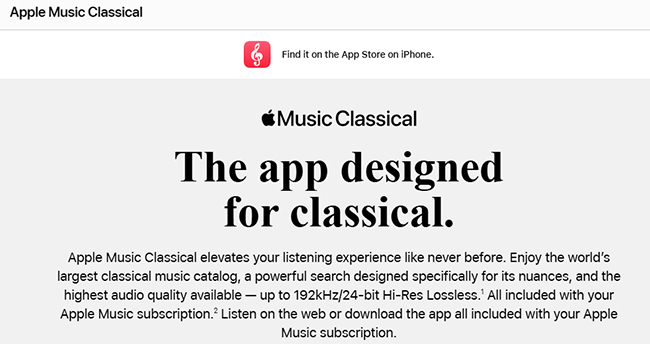
Powered by the legacy of the iTunes library, Apple Music offers over 100 million official songs. It is a polished ecosystem designed for official studio releases, exclusive live sessions, and deeply curated editorial playlists. The included Apple Music Classical app provides the world's most comprehensive metadata for orchestral works, making it the only choice for serious classical listeners. Furthermore, Apple's "Concerts Near You" feature now integrates directly with Ticketmaster to surface live shows based on your listening history.
YouTube Music: The Power of the "Bootleg"
While it also features over 100 million official tracks, its true advantage is the "Everything" Library. YouTube Music's greatest strength is its integration with the main YouTube video platform. This gives subscribers access to millions of unreleased remixes, mixtapes, live concert recordings, and user-uploaded covers that will never appear on official streaming services. If you frequently search for music that isn't on a major label, YouTube Music is the undisputed winner.
Part 3. YouTube Music vs Apple Music Sound Quality (High-Fidelity vs. Standard)
When it comes to pure sound quality, the gap between these two giants remains the most significant differentiator. Apple continues to lead the industry in high-resolution audio, while YouTube Music prioritizes accessibility over bitrate.
Apple Music: High-Resolution Lossless and Spatial Audio
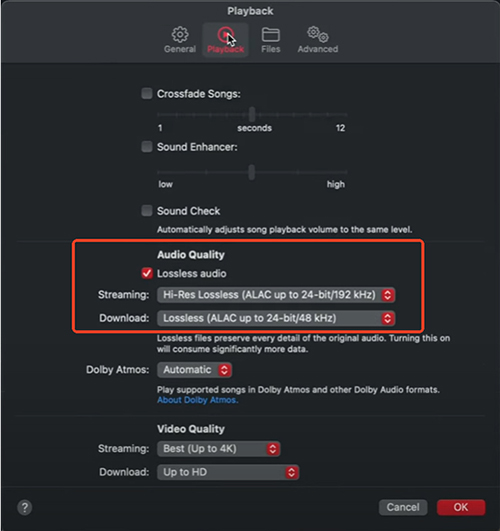
A clear winner in audio specifications. Apple Music offers Hi-Res Lossless tier (up to 24-bit/192 kHz) across almost its entire catalog at no extra cost, alongside Spatial Audio with Dolby Atmos at no additional cost for an immersive, multidimensional soundstage. Standard streaming sits at 256kbps AAC. For listeners with high-end wired headphones or a dedicated Digital-to-Analog Converter (DAC), Apple Music provides a studio-grade experience that YouTube Music cannot currently match.
The Bitrate Ceiling on YouTube Music
YouTube Music still caps its streaming quality at 256kbps AAC. While this is perfectly adequate for casual listening on standard Bluetooth earbuds, it lacks the depth and clarity found in Apple's Lossless files. YouTube's focus remains on the "video-first" experience, where the convenience of finding a rare live set often outweighs the need for high-fidelity audio.
Part 4. YouTube Music versus Apple Music AI Revolution
Curation has moved beyond simple algorithms. Both services have recently launched generative AI features that change how users interact with their libraries.
Apple's Generative Curation: Playlist Playground
With the release of iOS 26.4, Apple introduced Playlist Playground. This feature allows users to use natural language prompts—such as "Give me a 90s grunge mix for a rainy Seattle morning"—to generate instant, 25-song playlists. It combines Apple's historical focus on human editorial standards with generative speed.
YouTube's Interactive Experience: AI Music Host
YouTube Music has countered with the AI Music Host, a feature that provides radio-style commentary between tracks. Using Google's Gemini-powered backend, the host provides trivia about the artists and explains why a certain song was selected for your queue. If you prefer a "lean-back" experience that feels like a live radio station, YouTube's AI integration is superior.
Part 5. Apple Music or YouTube Music Discovery and Radio
Both apps utilize advanced algorithms to keep you listening, but they excel in different areas:
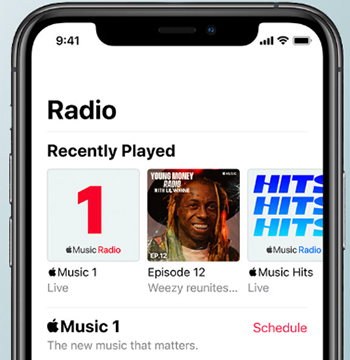
- Apple Music: Discovery is driven by the "Listen Now" tab and the newly integrated Playlist Playground, which uses AI prompts to build custom moods. Apple also boasts Apple Music 1 (formerly Beats 1), an exclusive, 24/7 global live radio station featuring high-profile DJs and artist-led shows.
- YouTube Music: Leverages Google's powerful search engine. You can find songs by searching vague lyrics or descriptions. The Ask Music feature allows for conversational playlist generation, and its algorithm is notoriously good at auto-playing highly relevant tracks based on a single song choice.
Extra Tips: How to Unlock Apple Music/YouTube Music Offline Playback
While both services allow offline downloading for premium subscribers, these downloaded files are encrypted with DRM (Digital Rights Management). This means you can only play them within their respective apps, and if you cancel your subscription, you lose access to your downloads. Here is how you can bypass these limitations to permanently archive your favorite tracks across any hardware device.
For Apple Music Users
Apple restricts its high-fidelity audio to authorized Apple devices and native apps. If you want to transfer your Apple Music library to an MP3 player, a car head unit, or a standalone device like a Raspberry Pi, you will need a dedicated conversion tool.
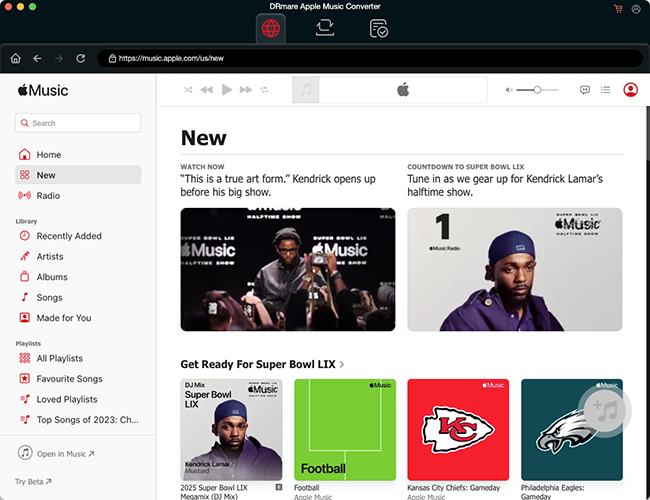
We highly recommend the DRmare Apple Music Converter. This software allows you to seamlessly convert protected Apple Music tracks into universal, lossless formats like MP3, FLAC, WAV, and AIFF. It preserves the original audio quality and all necessary ID3 tags, allowing you to build a permanent offline library free from platform restrictions.
For YouTube Music Users
If you are using the free tier of YouTube Music, or if you want to extract unique fan-made covers and live sessions into standard audio files without paying a monthly fee, you need a versatile recording solution.
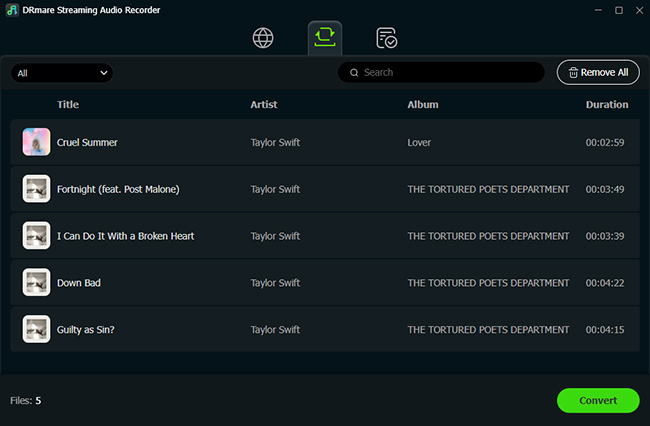
We recommend the DRmare Streaming Audio Recorder. This is an all-in-one music downloader equipped with a built-in YouTube Music web player. It can detect and download music streaming from YouTube Music (as well as Spotify, Amazon Music, and Tidal) and convert it into MP3, FLAC, WAV, or AIFF. It retains lossless audio quality, captures ID3 tags, and even saves lyrics, making it the perfect tool to build your personal, cross-platform media archive.
Final Verdict: Which Is Better: Apple Music or YouTube Music?
Choose Apple Music if: You own an iPhone and AirPods, value high-fidelity sound, and enjoy human-curated radio and classical music. It is a premium, polished experience built for the audiophile.
Choose YouTube Music if: You spend hours on YouTube and want to get rid of video ads. It is the better choice for those who love "finding" music - remixes, live sets, and obscure tracks, that don't exist in a traditional library.

 Home
Home





User Comments
Leave a Comment