





For years, the battle between Deezer vs Tidal was easy to categorize: Tidal was the expensive, premium choice for audiophiles, while Deezer was the quirky, feature-rich alternative with a solid free tier. Suppose you are trying to decide between Deezer and Tidal; you have come to the right place. This review will thoroughly compare Tidal and Deezer in terms of price, sound quality, music library, features, and compatibility to help you make an informed decision.
Executive Summary: The Quick Verdict
If you are short on time, here is the breakdown of how Deezer and Tidal platforms compare at a glance.
| Feature | Deezer | Tidal | Winner |
|---|---|---|---|
| Max Audio Quality | CD Quality (16-bit, 44.1 kHz FLAC) | Hi-Res Audio (24-bit, 192 kHz FLAC) | Tidal |
| Individual Price | $11.99/month | $11.99/month | Tidal |
| Availability | 180+ Countries | 60+ Countries | Deezer |
| Free Tier | Yes (Ad-supported) | No (Thirty-second preview) | Deezer |
| Best Discovery Feature | Flow (Personalized Mix) | Discovery & Rising | Deezer |
| Exclusive Content | Curated Playlists, Radio, Podcasts | Music Videos, Live Streams, Artist Exclusives | Tidal |
| DJ Integration | No Add-On | Yes ($9 Add-On Required) | Tidal |
Pricing & Subscription Plans (Tidal Price Increase)
Following its latest price increase, TIDAL now costs $11.99 per month, putting it at the same price as Deezer’s HiFi plan. However, TIDAL still offers the stronger audio specifications: Deezer is limited to CD-quality FLAC at 16-bit/44.1 kHz, while TIDAL supports Hi-Res FLAC and spatial audio. As a result, TIDAL is no longer the cheaper service, but it may still provide better value for listeners who prioritize high-resolution audio.
Tidal Plans and Pricing
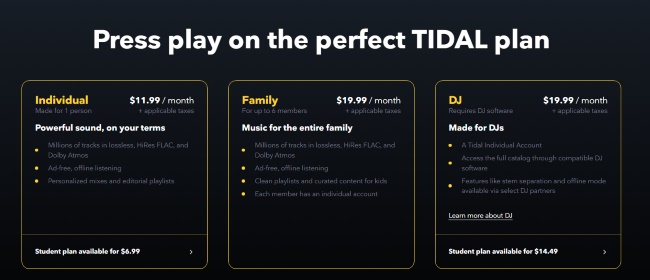
Tidal's Individual plan now costs $11.99 per month and includes its main listening features in one subscription: High-Res FLAC, Dolby Atmos, and lossless listening. TIDAL no longer provides a free, ad-supported listening tier, but you can still start with a 30-day free trial.
TIDAL Pricing Update for 2026:
TIDAL has introduced new monthly subscription prices for its Individual, Family, and Student plans. The updated rates will take effect on your first billing date on or after August 3, 2026:
- Individual: $11.99/month, previously $10.99
- Family: $19.99/month, previously $16.99
- Student: $6.99/month, previously $4.99
| Tidal Plan | Price (Per Month) | Key Features |
|---|---|---|
| Individual | $11.99 | Full Hi-Res FLAC & Dolby Atmos. |
| Family (Up to 6) | $19.99 | Full Hi-Res FLAC & Dolby Atmos for all members. |
| Student | $6.99 | 50% discount for eligible students. |
| DJ Extension | $9.00 Add-On | Required for DJ software integration (added to Individual plan only). |
Deezer Plans and Pricing

Deezer Premium generally costs around $11.99 USD/month (prices vary by region). This makes it slightly more expensive than Tidal for a standard subscription. However, Deezer retains a robust Free Tier. While it is ad-supported and restricts mobile users to shuffle-only mode (similar to Spotify Free), it is a vital entry point that Tidal lacks.
| Deezer Plan | Price (Per Month) | Max Audio Quality |
|---|---|---|
| Free | $0 (Ad-supported) | 128kbps MP3 (Limited on desktop) |
| Premium | $11.99 | 16-bit, 44.1 kHz FLAC (CD-Quality) |
| Duo (Up to 2) | $15.99 | 16-bit, 44.1 kHz FLAC |
| Family (Up to 6) | $19.99 | 16-bit, 44.1 kHz FLAC |
| Student | $5.99 | 16-bit, 44.1 kHz FLAC |
The Bottom Line: If you are willing to pay for music, Tidal provides higher specifications for a lower monthly price. If you refuse to pay, Deezer is your only option.
Deezer Quality vs Tidal: CD Quality vs. High-Res FLAC
For sound purists, the Tidal vs. Deezer sound quality debate often ends in this section. Both services sound excellent to the average ear, but the technical specifications favor one side.
Tidal: The King of Resolution
Tidal recently moved away from the controversial MQA (Master Quality Authenticated) format. It now relies on FLAC for its high-resolution streams.
- Max Quality: Up to 24-bit/192kHz (Hi-Res FLAC).
- Spatial Audio: Extensive support for Dolby Atmos.
Because Tidal uses open-source FLAC, it is easier for Tidal DACs (Digital-to-Analog Converters) to process the audio without requiring proprietary decoding hardware.
Deezer: Solid "High Fidelity"
Deezer HiFi offers CD Quality, which is standard lossless audio.
- Max Quality: 16-bit/44.1kHz (FLAC).
- Spatial Audio: Supports Sony 360 Reality Audio.
| Audio Quality | Tidal Max Fidelity | Deezer HiFi |
|---|---|---|
| Max Resolution | 24-bit, 192 kHz | 16-bit, 44.1 kHz (CD Quality) |
| Formats | Hi-Res FLAC, Lossless FLAC, Dolby Atmos | Lossless FLAC, Sony 360 |
| Price | Included in $11.99 Plan | Included in $11.99 Plan |
The Bottom Line: While 16-bit/44.1kHz is technically "perfect" reproduction for human hearing, audiophiles with high-end equipment often prefer the "headroom" provided by Tidal's 24-bit depth. Additionally, Deezer's reliance on Sony 360 Reality Audio is a niche choice compared to the industry-standard Dolby Atmos found on Tidal.
Music Library & Exclusive Content: Volume vs. Curation
Both services offer massive catalogs that cover 99% of commercially available music. The real difference lies in the "extras" that come with your subscription.
Deezer: The Only Hub for MP3 Uploads and Live Radio
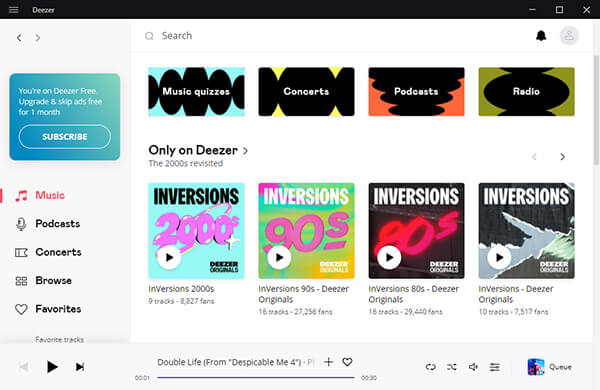
It distinguishes itself with two key features:
-
MP3 Uploads: Deezer allows you to upload up to 2,000 of your own MP3 files (such as obscure bootlegs or local demos) to a dedicated "My MP3s" section, seamlessly integrating them with your streaming library.
-
Audio Entertainment Hub: Unlike Tidal, Deezer includes a fully featured podcast and live radio platform within the app, making it a true "all-in-one" audio replacement.
Tidal: A Visual Experience with High-Def Music Videos
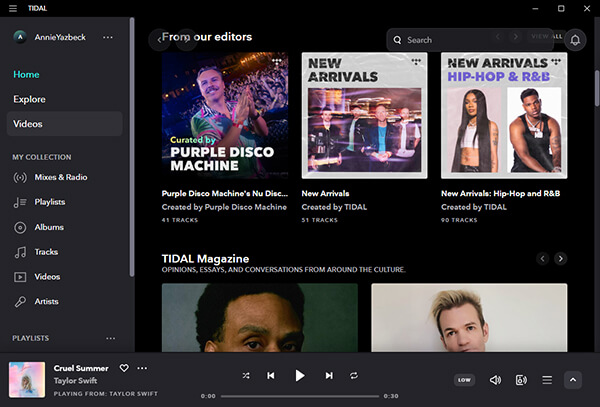
Tidal takes a "quality over quantity" approach to its extras. It has effectively removed podcasts to focus entirely on the music experience. Instead, it offers a rich library of over 650,000 music videos, exclusive artist documentaries, and "Tidal Rising" content designed to break new artists. If you want to watch a music video in high definition without leaving your music app, Tidal is the clear winner.
| Feature | Deezer | Tidal |
|---|---|---|
| Total Tracks | 120+ Million | 110+ Million |
| Non-Music Content | Podcasts, Live Radio, Audiobooks | Exclusive Music Videos, Documentaries |
| User Uploads | Yes (Up to 2,000 MP3s) | No |
| Artist Focus | Global, Wide Range | Hip-Hop, R&B, Rock, Artist-Centric |
| Lyrics | Real-time + Translation | Real-time available |
The Bottom Line: Choose Deezer if you need a versatile "all-in-one" hub that combines streaming with podcasts, live radio, and the rare ability to upload your own MP3 files. Conversely, opt for Tidal if you prefer a streamlined, music-first experience that trades podcasts for a rich library of high-definition music videos and exclusive artist documentaries.
Music Discovery and User Experience
While Tidal wins on specs, Deezer often wins on "vibes" and usability. The philosophy of the two apps is quite different.
Deezer "Flow" and App Interface
Deezer's user experience centers around Flow. This is an AI-powered infinite mix that blends your favorite tracks with new recommendations. It is exceptionally good at "reading the room" and requires zero effort from the user.
Furthermore, Deezer positions itself as an audio entertainment hub. It integrates podcasts and live radio stations directly into the app. If you want one app to handle your morning news, your workout playlist, and your evening radio, Deezer is the superior choice.
Tidal's Editorial Approach
Tidal feels more like a digital record store. Its discovery engine, My Daily Discovery, generates a set list of 10 tracks every day. It is excellent for deep diving, but it doesn't have the "set it and forget it" ease of Deezer Flow.
The Tidal interface is cleaner and more minimalist (dark mode is stunning), but it focuses almost exclusively on music and music videos. You won't find podcasts cluttering your home screen here.
The "Living Room" Test: Ecosystem and Connectivity
If you listen to music on Bluetooth headphones, both apps work great. However, if you listen to Wi-Fi speakers or a home stereo, there is a massive difference in functionality.
Tidal Connect is a standout feature. It allows you to cast music directly from the Tidal app to compatible hardware (like KEF, Naim, Bluesound, or Sonos) in full high-resolution. Your phone becomes a remote, not the source. It is seamless, reliable, and preserves battery life.
Deezer lacks a direct "Connect" equivalent for most hardware. To listen on external speakers, you generally have to rely on:
-
Chromecast or AirPlay: Which can be battery drains or suffer from connection dropouts.
-
Hardware Apps: You have to open the Sonos app or HEOS app and browse Deezer inside that clunky interface, rather than using the native Deezer app.
The Bottom Line: For anyone with a dedicated home stereo system, Tidal Connect makes Tidal the undisputed winner.
Tips:
Unlock Unlimited Listening: Use DRmare Streaming Audio Recorder to download music from Tidal and Deezer. By converting tracks to common formats like MP3, FLAC, and WAV, you can remove copy protection and enjoy your entire library on any device, completely restriction-free.
Final Verdict: Deezer vs Tidal: Which One to Choose?
The competition between Deezer and Tidal has tightened, but they now serve very different masters.
| Choose Tidal If You... | Choose Deezer If You... |
|---|---|
| Demand the best audio quality: You want Hi-Res FLAC (24-bit, 192 kHz) and Dolby Atmos for $11.99/month. | Need a Free option: You want an ad-supported tier to sample the service or listen casually. |
| Love Hip-Hop, R&B, and Exclusive Content: You want access to music videos, live streams, and artist documentaries. | Prioritize Music Discovery: You rely heavily on personalized features like the Flow mix. |
| Use High-End Audio Gear: You need the maximum audio fidelity to justify your sound system. | Live in an un-served country: Tidal is not available in your region. |
| Are a DJ (willing to pay the $9 add-on). | Want to Upload Your Own MP3s to integrate with your streaming library. |
Ultimately, Tidal has successfully repositioned itself as the high-value option for music lovers, while Deezer remains a versatile, fun, and accessible platform for the general public.

 Home
Home




User Comments
Leave a Comment