





Mixxx does not natively support Apple Music streaming or direct library imports. If you try to drag Apple Music songs into Mixxx, they will not load because Apple Music subscription tracks are protected and are not available as standard audio files.
To use your Apple Music tracks in Mixxx DJ set, you must first convert them into standard, high-quality audio formats supported by Mixxx, such as MP3 or FLAC, using a specialized processing tool like DRmare Audio Music Converter. This guide explains exactly why this incompatibility exists and provides a reliable, step-by-step workflow to prepare your Apple Music playlists for Mixxx seamlessly.
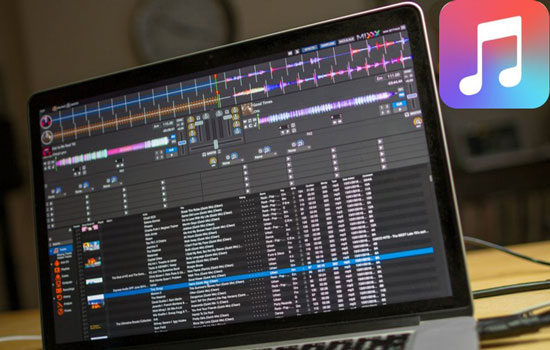
Part 1. Why Doesn't Apple Music Work Directly with Mixxx?
Is There an Mixxx Apple Music Integration?
No. Mixxx does not currently support direct Apple Music integration. Currently, Mixxx offers native streaming integration exclusively with SoundCloud Go+. This means that you cannot:
- Stream Apple Music directly inside Mixxx
- Import Apple Music subscription downloads into Mixxx
- Drag Apple Music library tracks into Mixxx decks
Why You Can't Use Apple Music With Mixxx Directly?
The main reason is that Apple Music and Mixxx are designed for different purposes. Apple Music is a streaming service that provides access to a licensed music catalog. Songs downloaded through an Apple Music subscription are protected by Apple's FairPlay technology and are intended to play only inside supported Apple Music applications.
Mixxx, on the other hand, is professional DJ software that works with standard audio files stored locally on your computer. Because Mixxx does not have an official Apple Music integration, it cannot access or authenticate Apple Music subscription content. Besides, this format compability restricts the files from being read or decoded by Mixxx.
To bridge this gap, you must convert your Apple Music tracks into an open audio format compatible with Mixxx's mixing engine.
| Platform / Tool | Supported Audio Formats | Format Limitations |
|---|---|---|
| Mixxx | MP3, M4A (AAC), WAV, AIFF, FLAC, Ogg Vorbis, Opus | Cannot read protected files |
| Apple Music | ALAC, AAC (Protected offline downloads) | Restrained to authorized Apple apps |
| DRmare Apple Music Converter | MP3, FLAC, WAV, M4A, AIFF, M4B | Outputs standard, unencrypted local files |
Part 2. How to Prepare Apple Music Tracks for Local Mixing in Mixxx
The most effective way to bridge the gap between Apple Music and Mixxx is to save them locally in a standard audio format that Mixxx fully supports, such as MP3 or FLAC. DRmare Apple Music Converter can handle this process for you.
It's specially designed to process your Apple Music library and convert Apple Music to MP3, FLAC, WAV, M4A, and other regular audio files on your computer. Instead of relying on clunky, deprecated desktop application connections, modern versions of DRmare feature an integrated web player module. The entire conversion queue runs directly inside an internal browser pipeline, unlocking faster speeds and a highly stable environment. It retains original audio parameters and preserves essential ID3 metadata (such as artist, album, track title, and artwork).
How to Download Apple Music to Mixxx-supported Files
- Step 1Load Apple Music songs, playlists, or albums to DRmare
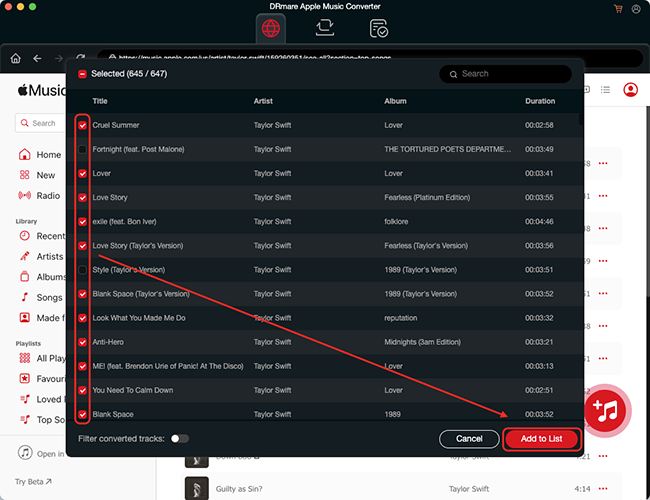
Open DRmare Apple Music Converter on your desktop, and you will see the integrated Apple Music Web Player. Click the "Sign In" button to log in to your Apple Account. Browse your Apple Music library within the DRmare software, find the Apple Music tracks you want to DJ with Mixxx, and simply click the "+" > "Add to List" button to add it to your conversion list.
- Step 2Change Apple Music format and quality for Mixxx
- For macOS users: Look at the top-left corner of your screen. Click on the "DRmare Apple Music Converter" menu bar and select "Preferences" to open the settings.
-
For Windows users: On the main screen, click the "menu" icon at the top-right corner and choose "Preferences" to open the settings window.
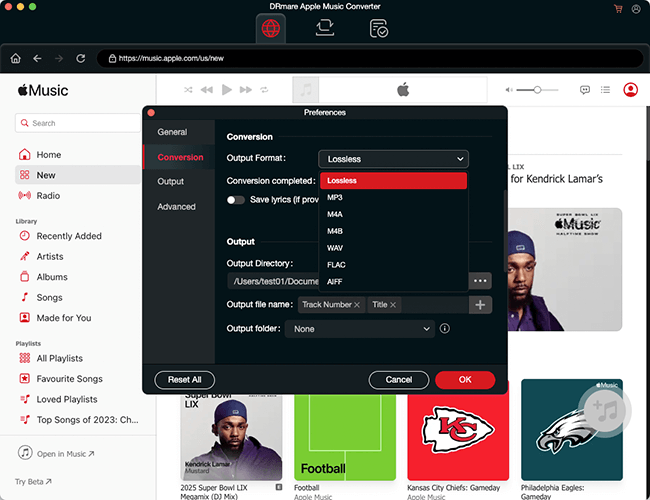
Within the settings, you can customize the output parameters to ensure the best compatibility with Mixxx. For high-quality, universally compatible files, you can choose MP3 or FLAC as the output format. You may also want to adjust the bitrate and the sample rate for optimal sound quality. After making your selections, click "OK" to apply the changes.
- Step 3Convert and download Apple Music songs for Mixxx
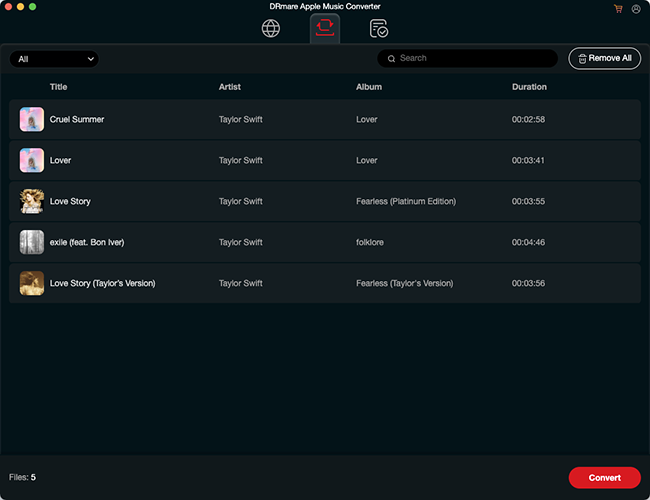
Now, click the big "Convert" icon to start the conversion. The process relies on how many Apple Music audios you added before. When it is finished, a red spot will appear in the "Converted" section. Click it to locate converted Apple Music files in the designated folder on your computer.
Pro DJ Tip: Verify Your Audio Fidelity
Club sound systems and high-end DJ monitors will ruthlessly expose poor-quality audio conversions. To ensure your files haven't suffered from quality loss, pass your exported files through a free spectral analysis tool like Spek or MediaInfo.
A genuine 320kbps MP3 or lossless FLAC will display a full frequency response reaching up to 20 kHz – 22 kHz. Checking your spectrum guarantees your tracks are truly club-ready.
Part 3. How to Use Apple Music with Mixxx
Now that you have Mixxx-compatible audio files, it's time for the final and most exciting step: adding your Apple Music to the Mixxx library and DJ with Apple Music.
Step 1. Open Mixxx on your computer.
Step 2. On the left side of the screen, you will see the Library panel. Click on "Computer" to browse your local files, just like using Windows Explorer or macOS Finder.
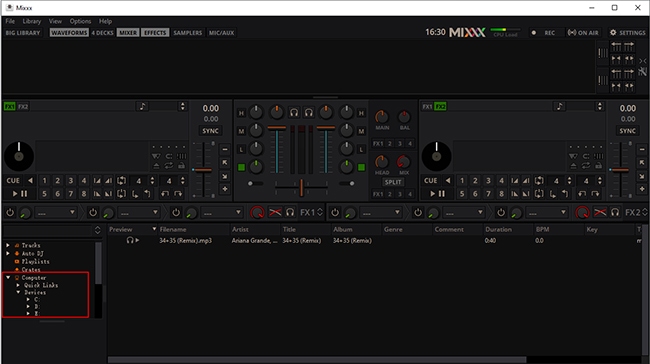
Step 3. Navigate to the output folder where you saved your converted Apple Music tracks in the previous section. You should see all of your audio files listed.
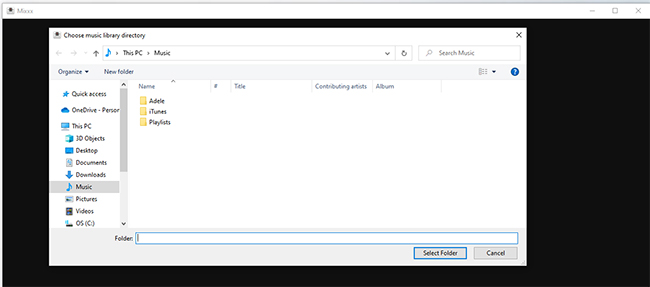
Step 4. To load an Apple Music song, simply click and drag it from the file list onto one of the virtual decks (Deck 1 or Deck 2). To organize your music for future sets, you can create a new "crate" or "playlist" within Mixxx and drag all of your converted files into it.
Part 4. DJ Tips After Importing Apple Music into Mixxx
Importing your tracks is only the baseline. Before hitting the stage or recording a mix, proper library optimization is essential to prevent trainwrecks and ensure flawless transitions. Follow this checklist to prepare your music for the decks:
Batch Analyze BPM and Waveforms: Let Mixxx fully process your new files before loading them onto a live deck. This allows the software's engine to accurately map out:
- BPM & Beatgrids: Crucial for precise manual beat-matching, quantitative syncing, and clean looping.
- Visual Waveforms: Helps you identify audio transients, track lengths, drops, and breakdowns at a glance.
Structure Your Library with Crates and Playlists: Avoid scrolling through a massive, chaotic folder mid-performance. Segment your audio assets into distinct, accessible categories:
- Crates (Attribute-based): Group tracks dynamically by genre, mood, or set times (e.g., Warm-up Minimal, Peak Hour Techno).
- Playlists (Sequence-based): Build fixed arrangements for specific gigs, workout routines, or performance concepts.
Audit and Normalize ID3 Metadata: High-stress live mixing requires lightning-fast search indexing. Ensure every processed file contains pristine tags for:
- Core Identity: Accurate Artist, Title, and Album tags to prevent missing file errors.
- Search Filters: Unified Genre formats and custom comment tags (e.g., key energy cues) to streamline on-the-fly track selection.
Part 5. FAQs about Using Mixxx with Apple Music
Does Mixxx support Apple Music directly?
No. Mixxx does not currently provide native Apple Music integration. You cannot connect your Apple Music account to Mixxx or stream Apple Music songs directly inside the software.
Why can't I drag Apple Music songs into Mixxx?
Apple Music subscription tracks are protected and designed to work within Apple Music-supported applications. Mixxx requires standard local audio files, such as MP3, WAV, AIFF, or FLAC, so Apple Music subscription content cannot be loaded directly.
Can I use Apple Music playlists in Mixxx?
Not directly. Apple Music playlists cannot be imported into Mixxx. If you create Mixxx-compatible audio files, you will need to organize those tracks again inside Mixxx using its own playlist and library features.
Can I use songs purchased from iTunes with Mixxx?
Yes. Songs purchased from the iTunes Store are stored as standard audio files. These files can usually be imported into Mixxx because they are in a supported format.
Can I use MIXO to import Apple Music to Mixxx?
No. MIXO can import your library structure and metadata, but it cannot import or stream actual music from the Apple Music subscription catalog.
What are Apple Music alternatives for Mixxx DJs?
Although Mixxx does not support Apple Music directly, DJs have several other ways to build a music library that works better with DJ software. The best option depends on how you use Mixxx.
- Option 1. Use Purchased or DRM-Free Music Files
- Option 2. Use DJ Platforms with Official Streaming Integrations
- Option 3. Build a Hybrid DJ Library
Part 6. In Conclusion
While Mixxx and Apple Music integration don't work together out of the box, the barrier is far from insurmountable. By using DRmare Apple Music Converter to create an unprotected copy of your library, you can easily import all of your essential Apple Music tracks and start crafting your next DJ set. Now, you can finally combine the vast catalog of Apple Music with the creative power of Mixxx.
Disclaimer:
DRmare Apple Music is intended for personal backup and educational DJ use only. Please respect your local copyright regulations and utilize the software in compliance with intellectual property guidelines.

 Home
Home





User Comments
Leave a Comment