





If you've recently switched to Apple Music, you might have noticed a glaring omission: there is no simple, built-in switch to connect your Apple Music directly to Last.fm. However, you can absolutely still scrobble your plays. Because Apple Music relies on device-specific apps and APIs rather than a direct service-to-service connection like Spotify, the setup just looks a little different depending on whether you are using an iPhone, Mac, Windows PC, or Android device. Here is how to scrobble Apple Music to Last.fm and get your listening history tracking flawlessly.
Quick Answer: Does Apple Music Work with Last.fm?
Yes, but not through a direct native account link like Spotify. Because Apple Music lacks a built-in Last.fm integration, scrobbling relies on companion apps running on your devices:
- iPhone & iPad: The official Last.fm iOS app can scan and submit your listening history, but only for songs added to your library. For automatic background tracking and non-library tracks, use dedicated third-party Apple Music scrobblers like Finale, FastScrobbler, Marvis Pro, or Scrobbly.
- Mac & Windows: Desktop helper tools (such as NepTunes or Scrobbles for Last.fm on Mac, and AMWin-RP on Windows) monitor active playback and send scrobbles to Last.fm. Web Scrobbler tracks your Apple Music Web Player streams.
- Android: Scrobbling requires notification-reading apps (such as Pano Scrobbler), though reliability varies depending on system permissions.
Bottom Line: Apple Music scrobbling works well, but it depends on device permissions and local history scanning rather than seamless cloud-to-cloud synchronization.
Part 1. How to Scrobble Apple Music to Last.fm on iPhone
For iPhone users, there are two practical approaches to connect Apple Music to Last.fm: use the official Last.fm app to scan your Apple Music history, or use a dedicated Apple Music scrobbler when you want more automatic tracking.
Method 1: Connect Apple Music to Last.fm via the Official App
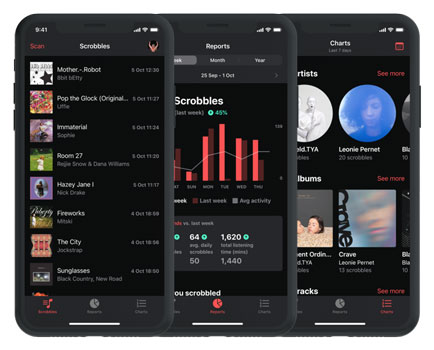
The official Last.fm iOS app provides a straightforward way to scan Apple Music listening history and submit eligible tracks. This approach is useful if you don't mind occasionally opening Last.fm to synchronize your listening history.
- Install the Last.fm app on your iPhone or iPad and sign in to your Last.fm account.
- Allow the app to access your Apple Music/media library when requested.
- Play music through Apple Music as usual.
- Open Last.fm and use its scanning function to look for recent Apple Music plays.
- Review the detected tracks and submit the scrobbles.
Note:
It generally only registers tracks if you have explicitly added them to your local library before playing them. If you are exploring new playlists, listening to algorithmic stations, or just streaming an album you haven't saved, those plays vanish into the void without logging a single scrobble.
Method 2: Connect Apple Music to Last.fm via Third-Party Apple Music Scrobblers for iOS
If you want automatic background tracking and the ability to scrobble tracks outside of your library, you can use a dedicated Apple Music scrobbling app. It can reduce the amount of manual scanning involved, detect Apple Music playback in the background, and/or retrieve recent listening history when you open the app.
- FastScrobbler: Focuses heavily on listening-history import and recovering missed plays.
- Marvis Pro: A full-featured third-party player offering seamless background scrobbling for non-library tracks and deep customization.
- Finale: A robust, Last.fm-centric app that handles background scanning and manual batch scrobbling.
- Scrobbly: A newer option offering live scrobbling and background history synchronization.
| Apple Music Scrobbler | Main Approach | Best Suited to |
|---|---|---|
| Last.fm | Manual history scanning | Users who want the official option |
| FastScrobbler | Automatic detection + history recovery | Users concerned about missed plays |
| Marvis Pro | Full third-party music client with integrated background scrobbling | Power users wanting an advanced replacement player and deep Last.fm customization |
| Finale | Background and manual scrobbling | Users wanting a mature dedicated scrobbler |
| Scrobbly | Live scrobbling + history synchronization | Users wanting a newer Apple Music-focused option |
- Download FastScrobbler, Marvis Pro, Finale, or Scrobbly from the App Store.
- Authenticate your Last.fm account within the app's settings menu.
- Enable background app refresh to keep your stats updating seamlessly, allowing Live Activities to display your current track on the Dynamic Island.
Note:
During our testing in the recent iOS 27 betas, we sometimes experience aggressive background task management hiccups, which can occasionally pause background tracking in Marvis.
Part 2. How to Scrobble Apple Music on Mac
Mac users have several dedicated options for Apple Music scrobbling. Apps such as NepTunes and Finale can monitor Apple Music playback and submit scrobbles to Last.fm. NepTunes, for example, is designed as an Apple Music companion with Last.fm scrobbling and an offline queue.
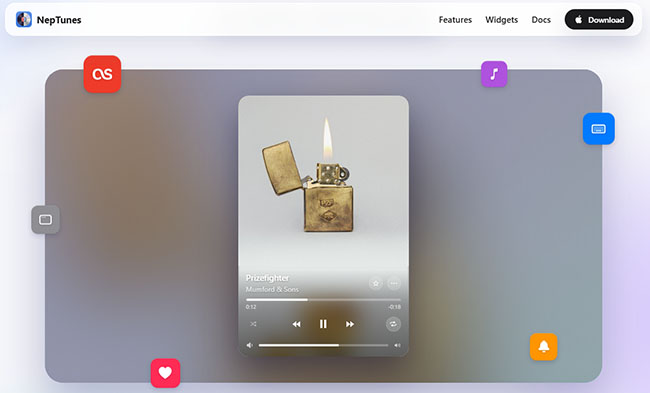
Another option, Scrobbles for Last.fm, tends to offer a much smoother, native-feeling experience. It sits quietly in the macOS menu bar and seamlessly logs your streams, including those elusive tracks from Apple Music Radio stations. You can also pin its modern macOS widgets directly to your desktop. This gives you quick visual confirmation that your music is logging correctly without having to open any full-screen applications.
Pro Tips:
If you're using iTunes on an older Mac setup, Last.fm's Desktop App can automatically scrobble what you play in iTunes. For the current Apple Music app on macOS, compatibility is less straightforward, so a dedicated Apple Music scrobbler for Mac may be a better choice.
Part 3. How to Scrobble Apple Music on Windows PC
The current Apple Music app for Windows makes this more complicated because the traditional Last.fm desktop workflow was not designed specifically around the newer Apple Music application. For Windows users, third-party applications can bridge the gap.
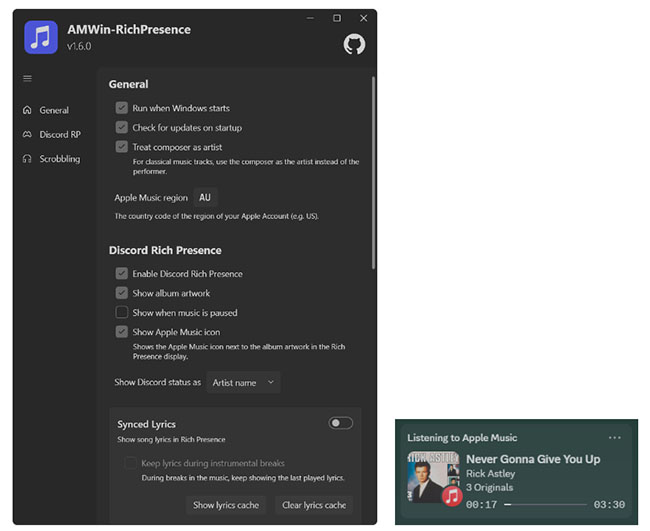
AMWin-RP is one Apple Music-focused option for Windows 11. It can detect playback from the Microsoft Store Apple Music app and submit scrobbles to Last.fm. However, its documentation notes a limitation with offline playback, so it may not be suitable if you frequently listen without an internet connection.
Another open-source option uses Windows' System Media Transport Controls to detect Apple Music playback. It also provides an offline queue, which can be useful when network connectivity temporarily interrupts scrobbling.
Note:
If you're using iTunes or another supported native media player on Windows, Last.fm's Desktop Scrobbler can automatically update your profile with what you're playing in the background. For the current Apple Music app on Windows, however, support is less straightforward, so you may need a dedicated third-party Apple Music scrobbler for Windows instead.
Part 4. How to Scrobble the Apple Music Web Player
If you prefer listening to Apple Music directly through your web browser at work or on a shared computer, you will quickly notice that desktop scrobbling apps (like NepTunes or AMWin-RP) cannot detect playback inside a browser tab.
To track your streams from the Apple Music Web Player, you need a dedicated browser extension. Web Scrobbler is the undisputed champion here. It is a free, open-source extension that reads the metadata directly from the active tab and submits it seamlessly.
- Supported Browsers: Google Chrome, Microsoft Edge, Firefox, and Safari (via a port).
- Install the Web Scrobbler extension from your browser's web store.
- Click the extension icon in your toolbar and authenticate it with your Last.fm account.
- Open a new tab, navigate to Apple Music Web Player, and start playing a track.
- The Web Scrobbler icon will turn red, indicating that it has successfully recognized the Apple Music web player and is actively logging your scrobbles.

Pro Tip:
Web Scrobbler also features built-in metadata editing. If an Apple Music web track has a weird title format (like "Song Name - Remastered 2026"), you can click the extension while the song is playing and edit the track info before it submits to Last.fm, keeping your listening charts perfectly clean.
Part 5. How to Scrobble Apple Music on Android
Scrobbling Apple Music on Android is notoriously locked down. While universal scrobblers like Pano Scrobbler or Simple Last.fm Scrobbler can sometimes read the notification playback data, compatibility frequently breaks with app updates.
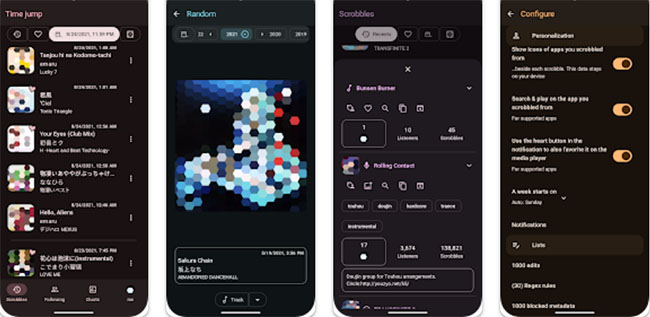
If Apple Music is your main Android player, check the scrobbler's current Apple Music support before relying on it for your complete listening history. A solution that works with Spotify or another Android music player does not necessarily have access to Apple Music's playback information.
Part 6. The Universal Workaround: Scrobble Apple Music via Spotify (Any Device)
If you want a universal, rock-solid method that works across every device, there is a clever workaround: convert your Apple Music tracks for offline playback and route them through Spotify's native Last.fm integration. Since Spotify links directly to Last.fm in the cloud, any local Apple Music file played inside Spotify will automatically scrobble, no background-scanning hacks required.
Convert Apple Music to Local Audio Files
To play Apple Music tracks inside Spotify, you first need to download them as local files. DRmare Apple Music Converter provides a seamless solution for Windows and Mac, converting streaming tracks into universal audio formats while preserving original quality and full ID3 tag metadata.
- Format Options: Export to MP3, FLAC, WAV, M4A, AIFF, and M4B.
- Lossless Audio Quality: Retains pristine quality and original track information.
- Built-in Web Player: Direct web player access ensures smooth, high-speed conversion without external player dependencies.
Step 1. Open DRmare Apple Music Converter on your Mac or Windows PC. Access your library directly through the built-in Apple Music Web Player.
Step 2. Search or browse your playlists within the web player interface, then click the Add to List icon to load tracks into the conversion queue.
Step 3. Open the Menu > Preferences > Conversion to set your preferred format (e.g., MP3 or FLAC), sample rate, and bit rate. Click OK to save changes.
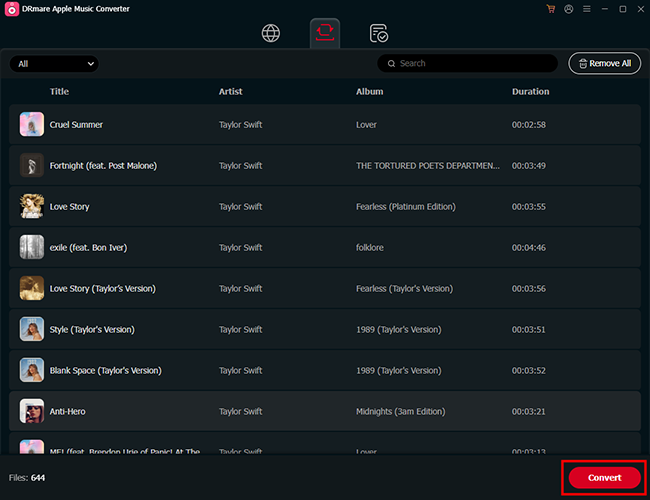
Step 4. Click the Convert button to batch-download your selected tracks locally. You can view the output files in the Converted history panel once completed.
Import Local Tracks to Spotify for Flawless Scrobbling
Once your converted Apple Music files are stored locally, you can stream and scrobble them effortlessly through Spotify on any device.
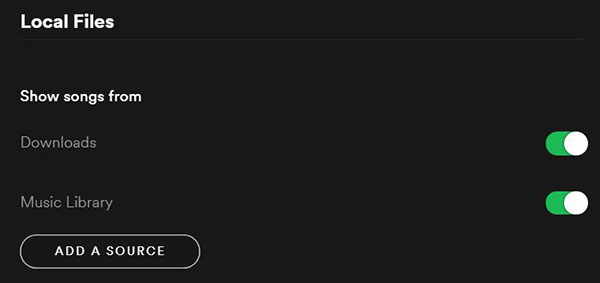
Step 1. Open the Spotify desktop app. Go to Settings > Local Files and toggle on Show Local Files. Click Add a Source and select the folder where your converted DRmare files are saved. You can add these tracks to a dedicated Spotify playlist.
Step 2. In your Spotify app or account page, navigate to Settings > Applications. Locate Spotify Scrobbling and click Connect to authorize access for your Last.fm account.
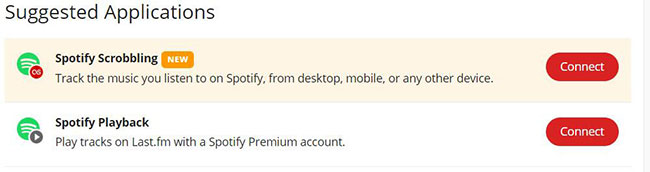
Step 3. Play your imported Apple Music songs directly inside Spotify on your desktop, mobile, or smart speaker setup. Last.fm will instantly register every play without missing a track.
Part 7. How to Fix Last.fm Not Scrobbling Apple Music
If your Apple Music tracks aren't showing up, or if they're showing up twice, run through this quick checklist:
- Check the 50% Rule: Last.fm requires a track to be longer than 30 seconds and played for at least half its duration (or 4 minutes) to count. Skips don't scrobble.
- Kill the Duplicates: Duplicates happen when you have multiple apps tracking the same source. If you use FastScrobbler to import history and the official app to scan live, you'll get double scrobbles. Pick one automatic method per device and stick to it.
- Verify Permissions: On iOS, ensure your scrobbler still has access to "Media & Apple Music" in your iPhone's Privacy settings.
Part 8. Last.fm + Apple Music FAQs
Why doesn't Apple Music scrobble directly to Last.fm like Spotify?
Apple Music lacks native, server-side cloud integration. While Spotify links directly within Last.fm settings, Apple Music requires local companion apps to read device notifications, media permissions, or system playback history.
Can I scrobble tracks without adding them to my library?
Yes, but only with third-party scrobblers. The official Last.fm iOS app strictly requires songs to be saved in your library, whereas apps like Finale or FastScrobbler can detect unadded streams through Apple's recent listening APIs.
Can I recover past Apple Music listening history?
Partially. Some third-party apps can fetch recent history from Apple's "Recently Played" data, but this window is limited and may lack exact timestamps. It cannot reconstruct your complete historical listening history.
Why are my Apple Music scrobbles duplicating?
Duplication occurs when multiple apps log the same playback (for example, live tracking on a Mac alongside background history recovery on an iPhone). Disable automatic scrobbling on all secondary apps and keep one designated scrobbler active.
Part 9. Final Takeaway
Switching to Apple Music means losing Spotify's native Last.fm sync, but it's far from a dealbreaker. From my testing, the golden rule is simplicity: pick one solid Apple Music scrobbler for your setup (like Marvis Pro on iOS or Scrobbles on Mac) and stick with it. Stacking multiple tracking apps only leads to duplicate scrobbles and background permission headaches. Set it up once, verify your first few plays log correctly, and let it handle the rest in the background.

 Home
Home





User Comments
Leave a Comment