





Which is better: Apple Music or Amazon Music Unlimited? Both platforms offer over 100 million tracks and top-tier lossless audio, effectively making them equal on the baseline requirements. Whether you prioritize high-fidelity audio, ecosystem integration, or budget-friendly plans, the the right choice depends on your specific hardware and listening habits.
This detailed comparison breaks down the pricing, audio quality, and features of Apple Music vs Amazon Music. You can learn the key differences between Apple Music and Amazon Music and decide which one earns a spot on your home screen.
Part 1. Apple Music vs Amazon Music Pricing and Plans
For many listeners, the monthly bill is the deciding factor. The competitive landscape of 2026 has created an interesting dynamic where Apple, traditionally the premium brand, holds a surprise advantage for individual subscribers not already committed to Amazon Prime. Here is the current monthly breakdown of Apple Music vs Amazon Music costs:
Individual and Student Plans
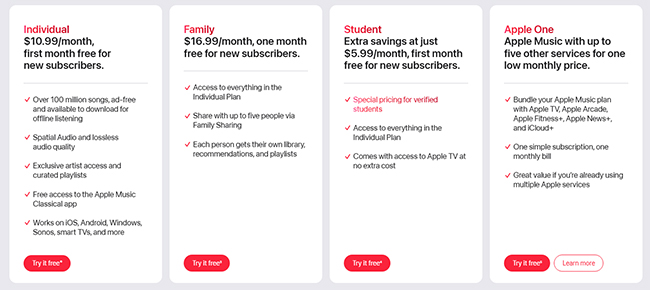
Apple Music offers a straightforward individual plan at $10.99 per month. Their Apple Music student plan is highly competitive at $5.99 per month and often includes access to Apple TV+ as an added bonus. Notably, Apple Music does not offer a free, ad-supported tier.
Amazon Music Unlimited pricing depends heavily on your relationship with Amazon. If you are not an Amazon Prime member, an individual subscription costs $12.99 per month, making it more expensive than Apple. However, Amazon Prime members receive a discount, bringing the price down to $11.99 per month. Their student plan matches Apple at $5.99 per month.
Amazon holds a unique niche with its "Single Device" plan for $5.99 per month. This plan grants full access to Amazon Music Unlimited but restricts playback to a single Echo or Fire TV device. It is an excellent, low-cost option if you only listen to music via one smart speaker in your home.
Family Plans and Bundles
For households, Apple Music's Family plan is $16.99 per month, covering up to six people, each with their own private account and library. Apple's ultimate value proposition lies in the Apple One bundle. Starting at roughly $19.95, this bundle includes Apple Music, Apple TV+, Apple Arcade, and iCloud+ storage, making it an unbeatable deal for users heavily invested in the Apple ecosystem.
Amazon Music Unlimited's Family plan is $21.99 per month for up to six accounts. While more expensive than Apple's standalone offering, Amazon attempts to sweeten the pot for Prime members with integration features, though they lack a single cohesive entertainment bundle that competes directly with Apple One's value.
Finally, standard Amazon Prime membership includes Amazon Music Prime. While this gives you access to the full catalog of songs ad-free, it is almost entirely limited to shuffle play. You can select and play specific albums or playlists on demand only from a very limited, curated selection. This is a complimentary perk, not a true competitor to full streaming services.

| Plan | Apple Music | Amazon Music Unlimited |
|---|---|---|
| Individual | $10.99/mo | $12.99/mo ($11.99 for Prime) |
| Family (up to 6) | $16.99/mo | $21.99/mo |
| Student | $5.99/mo | $5.99/mo |
| Single Device | N/A | $5.99/mo (Echo or Fire TV only) |
| Bundle | Apple One ($19.95/mo) | Amazon Music Prime |
Genuine Value Tip:
If you are already an Amazon Prime member and only need a basic streaming option, the included Amazon Music Prime might suffice. If you have an iPhone, Mac, and iPad, the Apple One bundle offers significantly more value for a slightly higher cost.
Part 2. Amazon Music vs Apple Music Audio Quality
In 2026, the battle for audiophiles is a draw in terms of raw specifications, but the execution differs. Both services now offer high-resolution audio as standard within their main subscription tiers.
The Apple Music Audio Experience
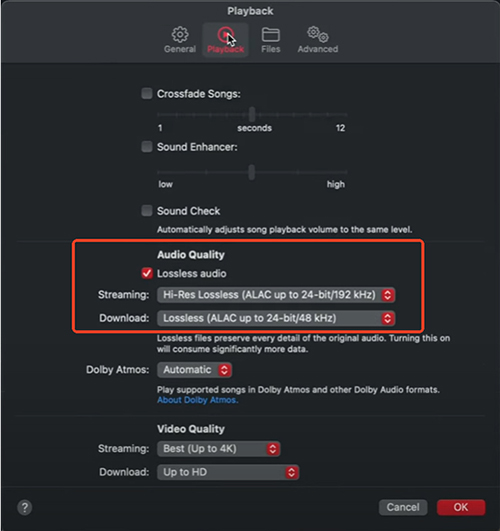
Apple Music streams its entire catalog in its proprietary ALAC (Apple Lossless Audio Codec) format. This ranges from CD quality (16-bit/44.1kHz) up to "High-Resolution Lossless" (24-bit/192kHz).
Where Apple Music truly shines is its integration of Spatial Audio with Dolby Atmos. Apple has been the driving force behind this technology, and it provides an incredibly immersive, three-dimensional listening experience. This feature works seamlessly and automatically with almost all Apple hardware, including AirPods Pro, AirPods Max, and the HomePod.
The Amazon Music HD/Ultra HD Difference
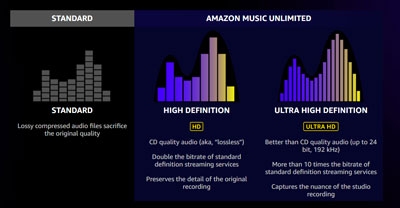
Amazon Music provides similar fidelity using the open-source FLAC format. Their "HD" tracks match CD quality, while "Ultra HD" tracks offer up to 24-bit/192kHz, identical to Apple's top end.
Amazon also supports spatial audio, utilizing both Dolby Atmos and Sony's 360 Reality Audio. While quality is superb, user experiences often suggest that the spatial library is slightly less optimized and expansive than Apple's. It pairs best with specialized Amazon hardware like the Echo Studio.
Expert Insight on Audio:
While both technically offer 24-bit/192kHz streaming, the reality is that most consumers lack the external hardware (DACs and high-impedance wired headphones) required to actually hear the difference between "Lossless" and "High-Resolution Lossless." For wireless listening, Apple's seamless AirPods integration makes Spatial Audio more accessible to the average listener.
Part 3. Amazon Music or Amazon Music Catalog Size and Music Discovery Features
Both platforms boast catalogs exceeding 100 million songs, ensuring that almost any track you search for will be available. The real differentiator is how they help you discover new music.
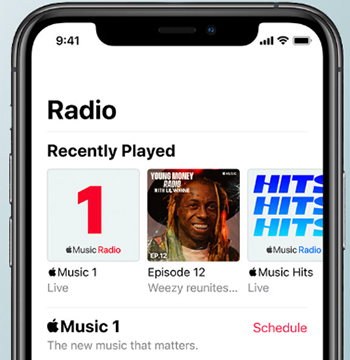
Apple Music champions a human-centric approach. Its primary focus is on expert curation, high-profile editor-created playlists, and live, anchored radio stations like Apple Music 1. If you enjoy the feeling of having a knowledgeable DJ recommend music or appreciate deep-dive editorial content about artists, Apple Music has the superior discovery engine. Apple also includes the standalone Apple Music Classical app for free, offering a highly specialized and superior experience for classical music listeners.
Amazon Music takes an algorithm-first approach. Discovery relies heavily on machine learning based on your listening history and voice requests to Alexa. While functional, multiple user reports and sources in 2026 criticize the Amazon Music app interface as being less intuitive, more cluttered with podcasts and upsells, and generally a more frustrating experience to navigate than Apple's clean, focused design.
Part 4. Amazon Music or Apple Music User Experience and Hardware Ecosystem Integration
This is often the ultimate tie-breaker. The "best" service is frequently the one that "just works" with the devices you already own.
The Apple Ecosystem Lock-in
If you own an iPhone, iPad, Mac, and AirPods, Apple Music is undeniably the best choice. The integration is flawless. You can use Siri to play any song hands-free, and your entire library syncs effortlessly via the iCloud Music Library. This feature allows you to upload up to 100,000 of your own owned music files and mix them seamlessly with the streaming catalog, a massive benefit for collectors.
Tips:
For those looking to break free from the Apple ecosystem, DRmare Apple Music Converter is an essential tool. It enables you to download and convert Apple Music tracks into universal, unrestricted formats, including MP3, FLAC, and AIFF. By removing compatibility barriers, DRmare ensures your favorite playlists work seamlessly on any device, giving you total control over your library even without an active Apple Music app.
The Amazon Alexa Smart Home
Amazon Music is designed for the Alexa-powered smart home. If you primarily listen to music through multiple Amazon Echo devices scattered throughout your house, Amazon Music offers superior voice integration. Asking "Alexa, play some upbeat jazz" will almost always route through Amazon Music, and managing multi-room audio is exceptionally streamlined within the Alexa ecosystem.
Tips:
To enjoy your Amazon Music library across all devices without the restrictions of a subscription or specific app, you can use a tool like DRmare Streaming Audio Recorder. It allows you to download and convert Amazon Music, Tidal, Apple Music, Spotfy, etc. into universal formats like MP3 or FLAC. It ensures your streaming music stays yours even if you decide to switch services later.
Part 5. Comparison: Difference between Apple Music and Amazon Music
Both services are mature, feature-rich, and sound excellent. However, they serve two distinct master user intents.
| Feature | Apple Music | Amazon Music Unlimited |
|---|---|---|
| Individual Cost (No Prime) | $10.99 (Winner) | $12.99 |
| Individual Cost (With Prime) | $10.99 | $11.99 |
| Family Cost | $16.99 (Winner) | $21.99 |
| Top Audio Quality | 24-bit/192kHz (ALAC) | 24-bit/192kHz (FLAC) |
| Spatial Audio | Dolby Atmos (Winner) | Dolby Atmos & Sony 360 |
| Music Discovery | Human Curation & Radio | Algorithmic & Alexa-focused |
| Hardware Harmony | iPhone, Mac, AirPods (Winner) | Amazon Echo/Alexa (Winner) |
Part 6. Final Verdict: Which Is Better: Amazon Music or Apple Music?
You should choose Apple Music if:
- You already own multiple Apple devices (iPhone, Mac, iPad, AirPods).
- You want a Family plan for the best standalone price.
- You prefer human-curated playlists, editorials, or listen to classical music.
- You have a large personal music collection you want to upload and sync via iCloud.
You should choose Amazon Music if:
- Your home is filled with Amazon Echo devices, and you want the best possible Alexa voice integration.
- You are an Amazon Prime member looking to save $1 on your individual monthly streaming bill compared to non-Prime rates.
- You are looking for the cheapest entry point to a full library (the Single-Device plan at $5.99).

 Home
Home





User Comments
Leave a Comment