





If you own an Nvidia Shield, you know it is arguably the best streaming device on the market. It handles 4K AI upscaling, Dolby Atmos, and heavy gaming without breaking a sweat. Naturally, you want it to be your central music hub, too.
But the experience of using Spotify on Nvidia Shield can be surprisingly frustrating.
I have spent hours troubleshooting why the app sometimes refuses to play sound, why my phone can't "see" the Shield, and why I can't simply download my "Driving Playlist" to the device for offline listening. The reality is that the official Android TV app has limitations that the mobile version doesn't.
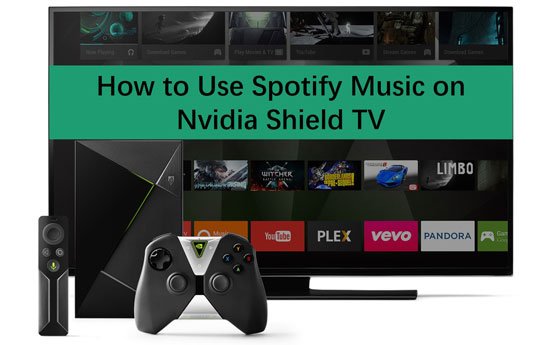
In this guide, I will break down the three best methods to listen to Spotify on your Shield, fixing the common bugs along the way so you can finally enjoy the music experience you paid for.
Method 1: Play Spotify on Nvidia Shield via Official App
This is the default route for most users. You go to the Google Play Store on your TV, install Spotify, and log in. It gives you that familiar "big screen" interface with large album art and easy remote navigation.
However, this method comes with a notorious bug: the dreaded "No Sound" issue.
How to Fix Nvidia Shield Spotify No Sound Issue
Many users launch the app, see the music playing visually, but hear absolute silence. This usually happens because the Shield tries to force Spotify's 2-channel stereo music into a 5.1 surround sound format, and your receiver or TV gets confused.
Here is how I fixed it:
Step 1. Navigate to the Shield's main Settings (the gear icon at the top right).
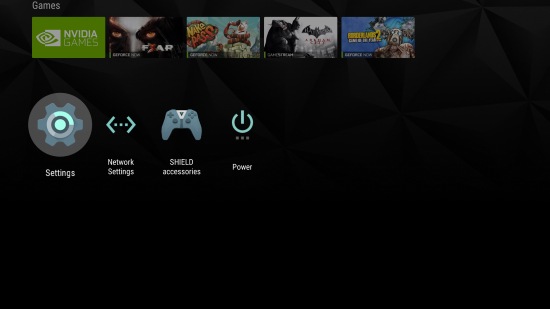
Step 2. Select Device Preferences and then open Display & Sound.
Step 3. Scroll down to Advanced Sound Settings and select Surround Sound.
Step 4. Find the toggle for "Upmix stereo to 5.1 PCM" and turn it OFF.
Once you disable this, restart the Spotify app. The audio should pass through correctly as stereo, and your receiver will handle it from there.
Tips:
If you still hear nothing, try disabling "Dolby Audio Processing" in that same menu, though the stereo upmix is usually the culprit.
Method 2: Spotify Connect & Casting (Best for Convenience)
Sometimes the TV interface is just too clunky to navigate with a remote. That is where Spotify Connect comes in. You simply use your phone or tablet to find the song, tap the "Devices" icon, and select your Nvidia Shield.
This feels like magic when it works, but on the Shield, it often disconnects or fails to "wake" the device from sleep mode.
Fixing the "Unavailable" Device Issue
If your Nvidia Shield constantly disappears from your phone's Spotify list when the TV is off, it is likely because the Shield is entering a deep sleep mode that cuts off the network.
Step 1. Go to Settings > Network & Internet.
Step 2. Scroll down to find Network Control (sometimes labeled as IP Control depending on your version).
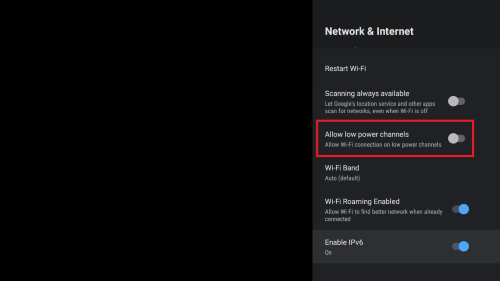
Step 3. Switch on "Allow Low Power channels".
This ensures the Shield keeps a low-power connection active, allowing Spotify Connect to wake it up instantly.
Note:
Be aware that "Casting" (Google Cast) and the Native App are not identical. Casting often defaults to the AAC codec (around 256kbps), whereas the Native App (Method 1) streams in Ogg Vorbis (up to 320kbps for Premium). If you are critical about audio quality, Method 1—or better yet, Method 3—is superior.
Method 3: Play Spotify Offline on Nvidia Shield
Here is a frustration many Premium users face: You cannot download songs on the Spotify Android TV app.
The "Download" toggle you see on your phone is completely missing on the Shield version. This means if your internet flickers, your music stops. It also means you cannot store your high-quality library locally on the Shield's ample storage or an external USB drive.
To solve this, we need a workaround that bridges the gap between Spotify's library and the Shield's powerful hardware.
Using Local Files via USB
The solution is to convert your Spotify playlists into standard local audio files (like MP3 or FLAC). Once they are local files, you can put them on a USB drive, plug it into the Shield, and play the Spotify files using superior media players like Plex, VLC, or Kodi.
To do this, I use a tool called DRmare Spotify Music Converter. It essentially lets you "record" your own playlists effectively, removing the format restrictions that tie them to the Spotify app.
How to Set It Up
- Step 1Log In & Customize Settings
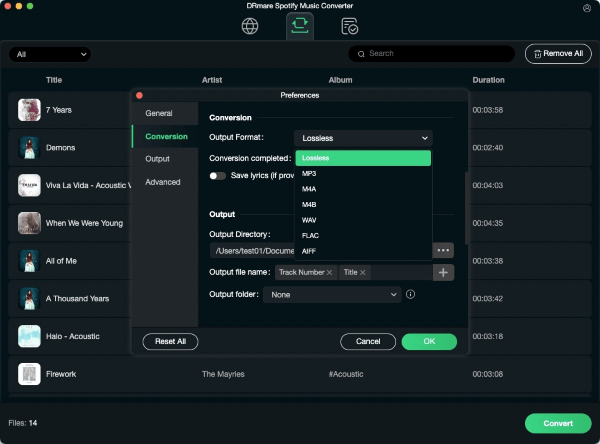
Launch DRmare on your computer and log into your account using the built-in Spotify web player. Before starting, click the Menu icon (top-right) > Preferences > Conversion to set your output format to MP3 or FLAC and adjust audio quality.
- Step 2Drag & Drop Music to Convert
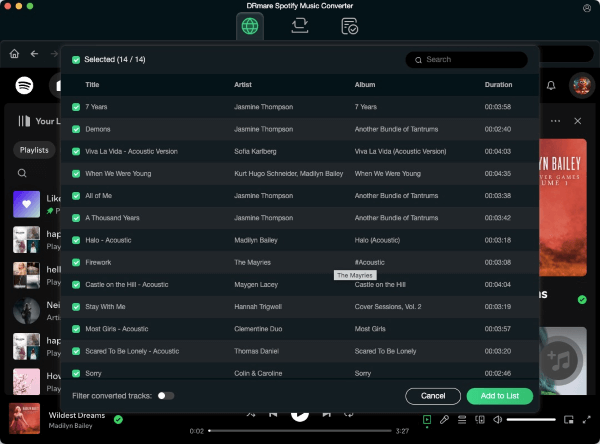
Browse the built-in web player for the playlists or albums you want. Simply drag and drop the tracks directly onto the Green Music Icon (+) at the bottom-right of the screen, then click "Add to list" to confirm your selection.
- Step 3Convert & Transfer to Shield
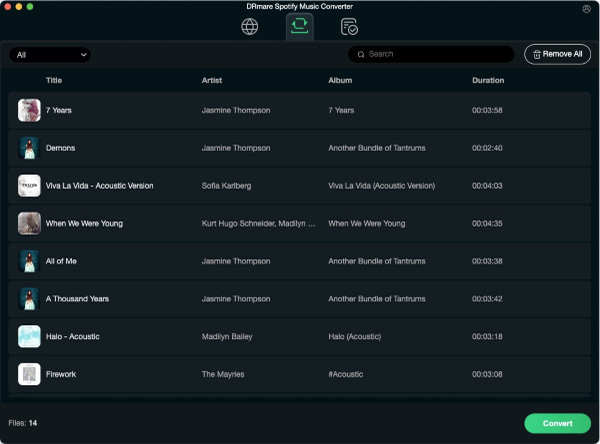
Click the "Convert" button. DRmare will batch-download the tracks to your computer at high speed. Once finished, check the "Converted" tab to locate your offline files, then copy them to a USB drive to play on your Nvidia Shield.
Why Is This Method Worth It?
- True Offline Playback: Your music works perfectly even if your Wi-Fi is down.
- Zero "No Sound" Bugs: Local files don't suffer from the stereo upmix conflict mentioned in Method 1.
- Better Players: Apps like Plexamp or Kodi offer visualizers and equalizers that the basic Spotify app lacks.
Summary: Which Method Should You Choose?
The Nvidia Shield is versatile, so the "right" way depends on how you use it. Here is a quick breakdown to help you decide.
| Method | Best For... | Primary Drawback |
|---|---|---|
| Native App | Visual browsing on the TV screen. | Common "No Sound" bugs; no offline mode. |
| Spotify Connect | Controlling music from your phone. | Can fail to wake the Shield; slightly lower bitrate. |
| Local Files (DRmare) | Offline listening, highest audio stability, and archiving. | Requires a PC for the initial conversion. |
For daily casual listening, I usually stick to Method 2 (Casting) purely for convenience. But when I want to really sit down and listen to an album without risking buffering or audio glitches, I switch to Method 3, playing my local FLAC files through Plex.

 Home
Home




User Comments
Leave a Comment