





 "I got an Apple HomePod at my home, and I try to sync the Audible audiobooks to it. I have no idea how to play Audible on HomePod. Could you please help me? "
Smart speakers are designed to make home entertainment effortless, but getting Amazon's audiobook to communicate with Apple's audio hardware can be frustrating. If you want to listen to Audible on HomePod, you will quickly realize that the two tech ecosystems do not seamlessly integrate out of the box. Fortunately, there are several highly effective workarounds to bridge this gap. Whether you own the original HomePod speaker or you want to play Audible on HomePod mini, you have a few reliable options at your disposal to get your audiobooks streaming loud and clear.
Part 1. Can HomePod Play Audible Natively
No, you cannot directly stream Audible on your HomePod using native integration. Apple restricts direct smart speaker access primarily to its own in-house services, like Apple Music and Apple Podcasts. There is no built-in app available within the Apple Home app since Amazon owns the Audible platform. This limitation forces users to rely on external wireless streaming protocols or third-party software tools to achieve the desired result.
To help you choose the best approach for your specific listening habits, we have broken down the top 4 methods below. Here is a quick comparison of the different ways you can get Apple HomePod Audible playback working in your home.
| Playback Method | Setup Time | iPhone Required | Best For |
|---|---|---|---|
| AirPlay | Instant | Yes | Quick, everyday streaming directly from your mobile device. |
| Handoff | Instant | Yes | Seamlessly transitioning audio when you walk through the front door. |
| Siri Control | Moderate | No | Building a completely voice-activated, phone-free smart home setup. |
| Apple Watch | Quick | No | Leaving your phone charging in another room while you relax and listen. |
Part 2. How to Stream Audible on HomePod Mini with AirPlay
Using AirPlay is the most straightforward way to listen to your favorite audiobooks. This built-in Apple protocol acts as an invisible wireless bridge, allowing you to cast media from your iOS device to your speaker. It is incredibly reliable and works perfectly whether you want to stream to a standard HomePod speaker or play Audible on HomePod mini. Before starting, ensure your iPhone and your speaker are connected to the same Wi-Fi network.
Step 1. Launch the Audible app on your iPhone and navigate to your "Library". Select the specific audiobook you want to hear and tap the "Play" button to begin the narration.
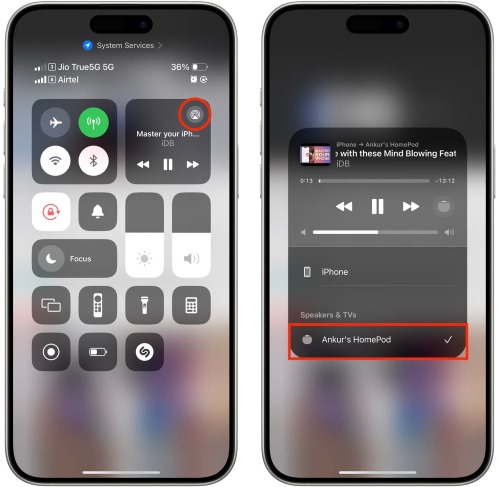
Step 2. Swipe down directly from the top right corner of your screen, access your device's "Control Center" to locate the main media playback tile.
Step 3. Tap the "AirPlay" icon, and a list of available smart devices will immediately appear on the screen. Select your HomePod or HomePod mini from this list, and the audiobook will seamlessly transition from your phone to your smart speaker.
Part 3. How to Transfer Audiobooks to HomePod Using Handoff
If you want a smoother experience, Apple's Handoff feature is the perfect solution. This utilizes the ultra-wideband chip inside your devices to instantly migrate the active audio output when they physically interact. It is incredibly convenient for users who are listening to a story on their commute and want to instantly transfer the sound to their living room upon walking through the door.
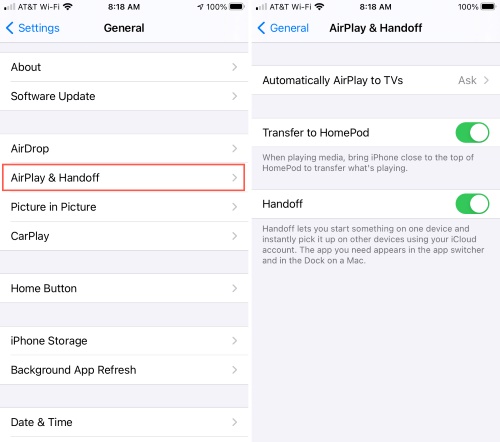
Step 1. Open your iPhone's Settings application and scroll down until you locate the "General" menu. Tap on it, and then select the "AirPlay & Handoff" option to access your device's audio routing preferences.
Step 2. Look for the "Transfer to HomePod" option and verify that the toggle switch next to it is in the active, green position.
Step 3. Start your audiobook playback on your phone, unlock the screen, and simply hold the top edge of your iPhone near the glowing touch panel on top of the speaker.
Part 4. How to Play Audible on HomePod via Siri Control
While the wireless streaming methods above are convenient, they completely rely on having an active iOS device nearby. If you want true hands-free Siri control, the most effective solution is to integrate your audiobooks directly into your iTunes library using the DRmare Audible Converter. This powerful desktop software effortlessly bypasses format restrictions, allowing you to convert your Audible into MP3, or files like FLAC and M4A. By preserving the original lossless audio quality and retaining essential ID3 tags, DRmare ensures your narrations are perfectly formatted to upload to iTunes, finally giving you the freedom to command your HomePod, or any other smart speaker.
- Step 1Load Audible Audiobooks to DRmare Program
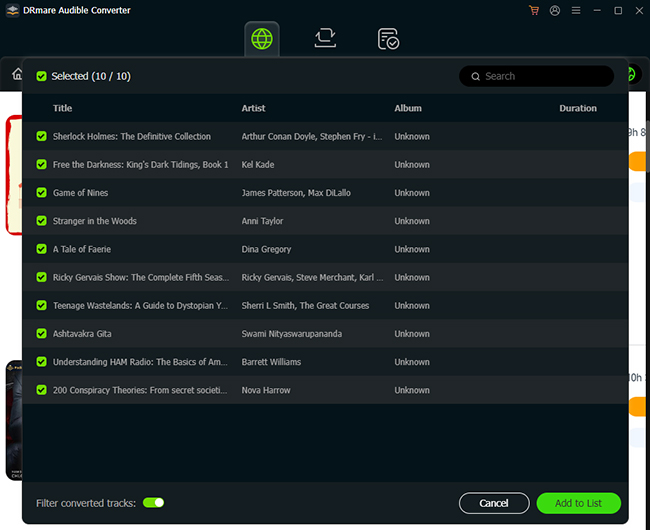
Please download the Audible audiobooks on your computer. Then Launch the DRmare Audible Converter. Click the first "Add" > "Add to List" button to import the Audible books to the DRmare window. Or you can open the folder where Audible books stay. Then drag and drop them to the DRmare software.
- Step 2Customize Output Format for HomePod
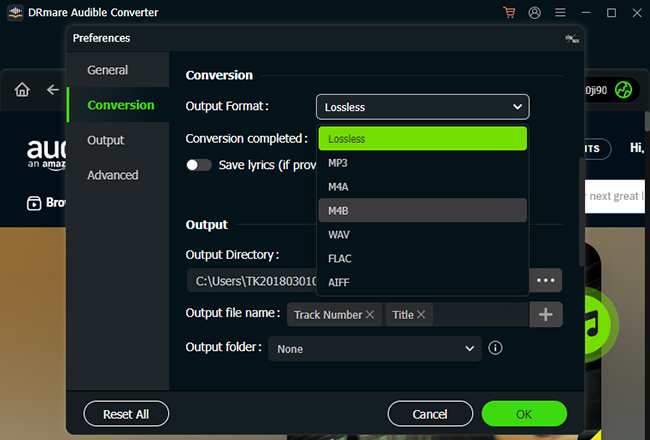
Hit the "Menu" button at the top. In the new "Preference" > "Conversion" window, please select the output format you want. Also, please set the codec, channel, bit rate, and sample rate to get the perfect output files. On each uploaded Audible file, you can decide to split the books from Audible.
- Step 3Start to Download Audible Audiobooks
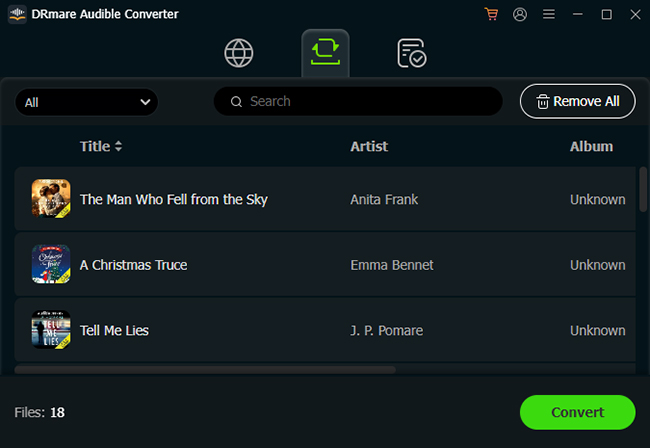
Press the big pink "Convert" button. The DRmare Audible Audiobook Converter will download the files at once. All of the converted Audible files should be for personal use. When the conversion is done, please get the files in the output folder.
- Step 4Transfer Audible Audiobooks to iTunes Library
It's time to transfer Audible books to the iTunes library. There are two ways offered to you. Once the Audible files have synced, you can ask Siri to play Audible audiobooks on HomePod from the iTunes library.
Method 1. Open the folder of the converted Audible books on your computer. Send them to the iTunes library. Wait for the ending of the transfer process.
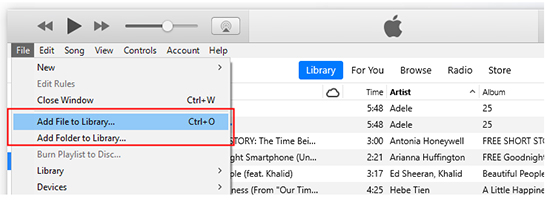
Method 2. Launch the iTunes app. Tap on the "Files" > "Add to Library" option on the menu bar. Browse the folders and find the folder of Audible books. Hit the "Open" button to add Audible files to the iTunes library.
Part 5. How to Listen to Audible on HomePod with Apple Watch
Utilizing your smartwatch is a fantastic, often-ignored strategy for casting your favorite Audible audiobooks to your HomePod. Your Apple Watch can function as a completely independent streaming hub. Instead of relying on your mobile device, your wearable tech can handle the wireless audio routing entirely on its own. This method grants you the freedom to move around your house without interrupting your listening session.
Step 1. Verify that the Audible application is downloaded to your wearable device. Launch the software directly from your wrist and press play on the specific title you wish to hear.
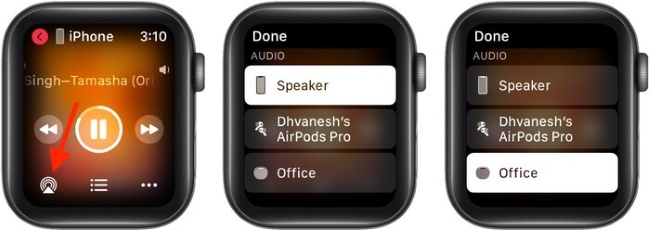
Step 2. Navigate to the active media playback interface on your smartwatch display. Locate the AirPlay symbol and tap it to open your routing options.
Step 3. Choose your HomePod from this roster to immediately shift the audio output from the watch to your room.
Note:
- Firmware Requirements: Ensure your device runs watchOS 11.0 or later to maintain a stable, uninterrupted connection with your speaker.
- Untethered Playback: Download audiobooks directly to your watch for a completely phone-free experience. The watch can cast audio to your HomePod independently, even if your iPhone is powered off.
- Wrist-Based Control: Once connected, your watch acts as a dedicated remote. Simply spin the "Digital Crown" to adjust the volume or tap the screen to navigate between chapters.
Part 6. Fix Common Audible on HomePod Playback Issues
Even the most premium smart home setups occasionally experience wireless hiccups or software glitches. Addressing these minor inconveniences quickly ensures your listening session is not ruined by technical difficulties. Below are the quickest fixes for the most common streaming errors.
Fix HomePod Not Working as an AirPlay Speaker
When your audio suddenly disconnects or the HomePod refuses to appear in your iOS Control Center, the issue is almost always a localized communication error. Apple's AirPlay protocol requires a seamless handshake between your hardware and your home network. A quick settings check will usually resolve these visibility problems.
Step 1. Verify that your iPhone and your HomePod are currently connected to the exact same Wi-Fi network.
Step 2. Open your iOS Control Center and double-check your AirPlay devices to confirm the HomePod is actively selected as the primary output.
Step 3. Check the Apple Home app to ensure both your iPhone and your smart speaker have the latest software updates installed, as outdated firmware frequently causes AirPlay bugs.
Fix Siri Not Playing Audible on HomePod
If you are using the converted iTunes method and Siri is unresponsive or plays the wrong media, the problem often stems from voice recognition limitations or account conflicts. Siri relies on absolute clarity and an active cloud connection to fetch your requested files.
Step 1. Say the exact audiobook title or playlist name clearly. If the title is complex, try renaming the file in your iTunes library to something simpler, like "My Current Book".
Step 2. Ensure the HomePod's microphone is not physically obstructed by walls or clutter, and verify in the Home app settings that Siri is actively configured to listen for your voice.
Step 3. Check that you do not have an active Audible or Apple Music stream running on another device, as strict account limits will automatically block concurrent playback.
Conclusion
While the lack of native Audible support on HomePod can be frustrating, bridging the gap between these two ecosystems is entirely achievable. Free Apple features like AirPlay, Handoff, and independent Apple Watch streaming offer quick, reliable workarounds for everyday listening. However, if you want to unlock a truly hands-free smart home experience, using the DRmare Audible Converter to integrate your library directly into iTunes remains the ultimate, permanent solution.

 Home
Home





User Comments
Leave a Comment