





 "Exporting detailed information, such as Title, Artist, Album, Year, and Genre, from my Spotify playlists to an Excel spreadsheet is a tedious process. Copying and pasting manually is incredibly time-consuming. Is there a more efficient way to complete this task?"
While Spotify does offer a "Request your data" option in its privacy settings, this official method takes several days to process and delivers your history in complex JSON code files rather than a clean spreadsheet. There is no native "Export to Excel" button inside the Spotify app.
Fortunately, there are far more convenient ways! This guide introduces efficient methods to convert your Spotify playlists into CSV or Excel formats. Moreover, we'll provide an extra bonus method to not only extract the metadata but also download your Spotify playlists to local audio files for offline access.
Quick Answer (TL;DR):
To export Spotify playlists to Excel for free, use API-based web Spotify to CSV converters, like Exportify (best for pure CSV) or Chosic (best for track metadata and audio features). If you need to migrate playlists across streaming services, use TuneMyMusic. To convert and save actual audio files for offline playback, a dedicated utility like DRmare Spotify Music Converter is required.
Part 1. How to Export Spotify Playlist to Excel Online Free
If you manage dozens of Spotify playlists and want to bypass manual copying, the fastest solution is a free online Spotify playlist to Excel exporter. These tools leverage the Spotify Web API to read your library and download song data into a structured file format (typically CSV, which imports seamlessly into Excel). The most popular and reliable Spotify-to-Excel converters are Exportify, Spotlistr, and Chosic. Unlike commercial apps that cap exports at 500 songs behind a paywall, these are open-source and completely free.
| Tool | Primary Benefit | Key Feature | Require Spotify Account |
|---|---|---|---|
| Exportify | Purest CSV Export | Simple, secure, and focused solely on exporting playlists to CSV files. | Yes |
| Chosic | Advanced Track Analysis | Exports comprehensive data, including technical track metrics like BPM, Key, and Mood (excellent for DJs or data analysts). | No |
| Spotlistr | Data Manipulation | Can export to CSV/Plaintext and also offers tools to remove duplicates and generate stats. | Yes |
How to Export Spotify Playlist to Excel via Exportify
Step 1. Navigate to the Exportify website or visit the Exportify's GitHub repository and and click "Get Started" to log in via Spotify.

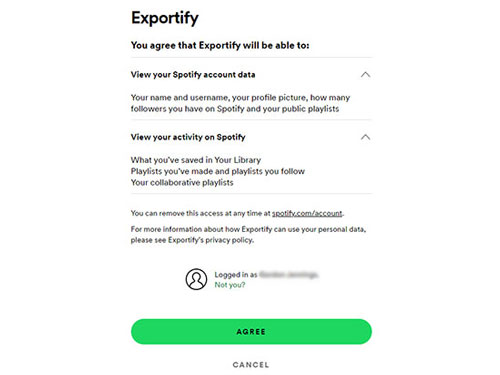
Step 2. You will see a prompt asking you to grant Exportify premission to read your library. Click "Agree" to proceed.
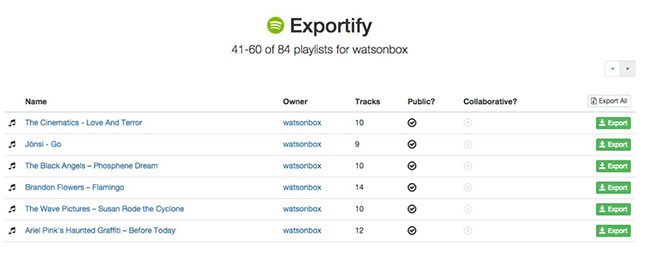
Step 3. Once loaded, you will see a dashboard listing all your Spotify playlists, including your "Liked Songs."
- To download a single playlist, click the "Export" button next to it.
- To download your entire library, click "Export All" in the top right corner.
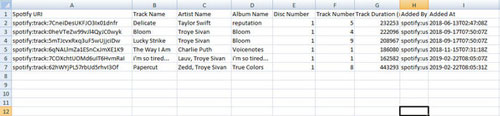
Step 4. Find the CSV file on your device and open it to visit your Spotify Excel file.
How to Convert Spotify Playlist to Excel via Chosic Spotify Playlist Exporter
Step 1. Open your Spotify desktop app or web player and copy the Spotify playlist link. Navigate to the Chosic Spotify Playlist Exporter webpage, paste the playlist link in the main input box, and click the "Start" button.

Step 2. Chosic will then fetch all the tracks and display various charts, graphs, and statistics about your playlist's genre, mood, and audio features.
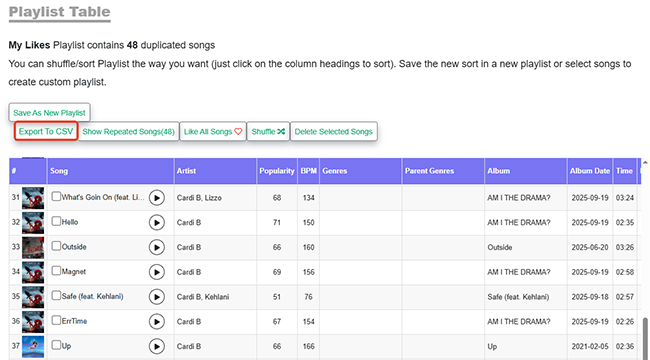
Step 3. Within the "Playlist Table" section, you will find an "Export to CSV" button. Tap it to instantly download CSV files to your device.
How to Convert Spotify Playlist to CSV Excel via Spotlistr
Step 1. Navigate to the official Spotlistr Export Spotify Playlist website. Tap the "Log in with Spotify to begin" button, and you will be redirected to Spotify's secure login page. You need to grant Spotlistr permission to read your library and private playlist data.
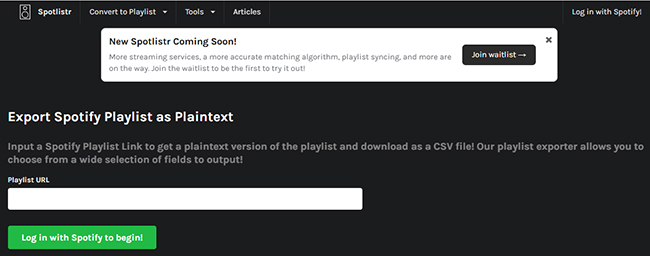
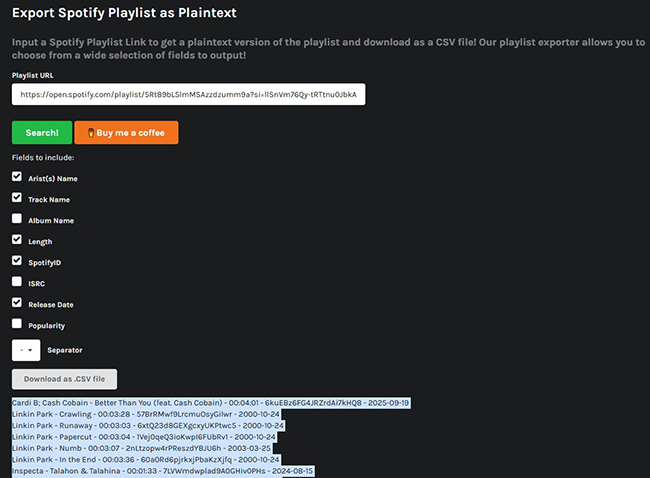
Step 2. Tap the Spotify playlist URL into the address bar, and click the "Search" to load all Spotify songs with detailed information.
Step 3. You can customize the data fields you want to export (e.g., Track Title, Artist, Album, Duration, Track Number, Date Added, etc.). After that, click the "Download as .CSV file" button to convert your playlist data into a customizable CSV file, which can then be opened directly in Microsoft Excel or Google Sheet.
Part 2. How to Export Spotify Playlist to Excel via Playlist Transfer
If your primary goal is to migrate your Spotify playlist to another streaming service (like Apple Music or Tidal) or if you prefer a highly polished, professional interface for data management, dedicated playlist transfer tools are the industry standard.
While these tools are designed for service-to-service migration, most also offer an export function to create CSV/Excel files. The professional three Spotify playlist transfers are TuneMyMusic, Soundiiz, and FreeYourMusic, which can also export Spotify playlist to text easily. Here, we will take TuenMyMusic as an example to finish the process.
| Platform | Primary Function | Free Version Limitation | Pricing |
|---|---|---|---|
| TuneMyMusic | Robust cross-platform transfers. | Transfer up to 500 songs for free. | $4.5/month, $24/year |
| Soundiiz | Comprehensive playlist management and synchronization. | Transfer playlists an unlimited number of times for free, but select up to 200 songs at a time. | $5/month, $39/year |
| FreeYourMusic | High-speed, dedicated transfer app. | Transfer up to 600 songs but only one playlist for free | $14.99/quarter, $39.99/year, $199.99/lifetime |
How to Export Spotify Playlist to CSV File
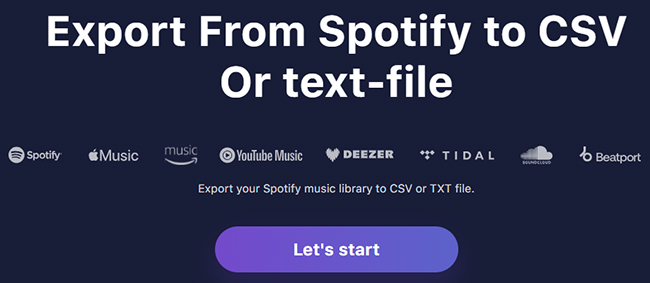
Step 1. Go to the TuneMyMusic Spotify to file website and select "Let's Start" button.
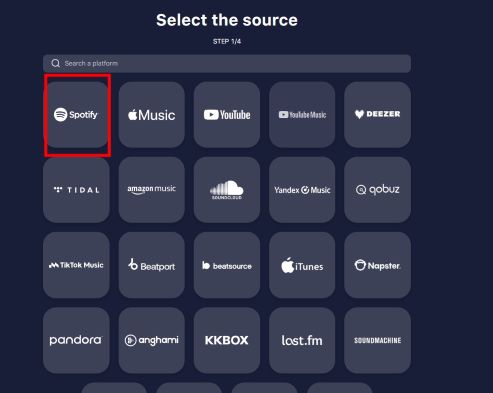
Step 2. Select "Spotify" as your source platform and log in your Spotify account and passwords.
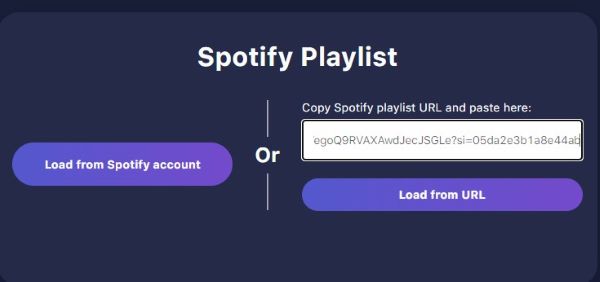
Step 3. Choose the specific playlists you want to export by clicking the "Load from Spotify account" option. Alternatively, you can paste a specific playlist URL and click the "Load from URL" button to load them.
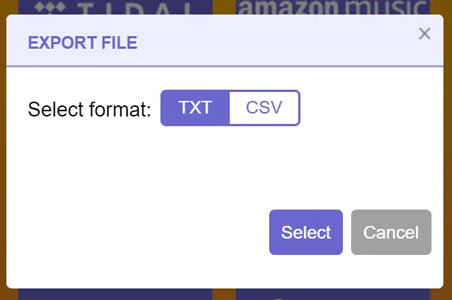
Step 4. When asked to select a destination, scroll until you see the "Export to File" option and select "CSV". Confirm your selection and click "Export". Once finished, the Spotify CSV file will download to your device.
Part 3. Beyond Excel: How to Export Actual Spotify Music Files
While the methods above successfully export song information to Excel, they do not provide the actual music files. Spotify Premium allows offline downloads, but these files are DRM-encrypted and restricted to the Spotify app. If your goal is true offline ownership—such as playing tracks on portable music players or car stereos, you need to convert Spotify to MP3, FLAC, or other common files.
The most effective solution for this is DRmare Spotify Music Converter. It features a built-in Spotify Web Player that lets you safely download tracks without external app sync dependencies, converting them to FLAC, WAV, or MP3 at up to 15X speed. Furthermore, you can edit Spotify music info manually, though the tool can preserve it automatically.
How to Download Spotify Playlist for Offline Listening with DRmare
DRmare Spotify Music Converter supports both Windows and Mac OS. Now you are offered a concrete tutorial to save Spotify playlists for offline listening. With just a few clicks, you can easily copy Spotify playlists to your devices for your entertainment.
- Step 1Add Spotify Playlists to DRmare
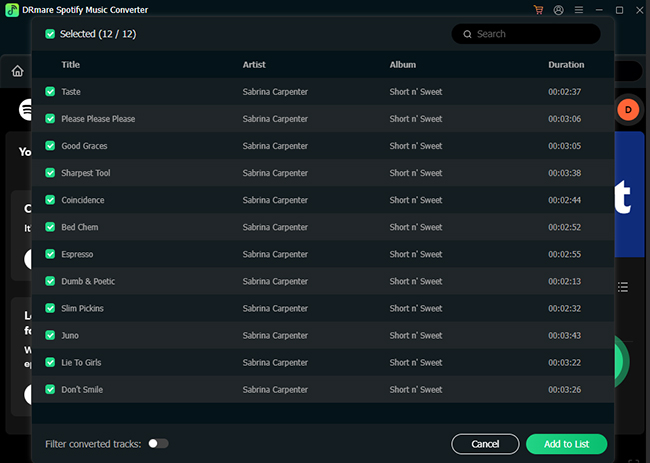
Launch the DRmare Spotify Music Converter after you install it on your computer. You can see a clear interface with the integrated Spotify Web Player. You can select the songs you plan to convert and drag them to the "+" button. Tap the "Add to List" button to load them.
- Step 2Set Spotify Music Output Download Parameters
Click the "Menu" on the top right of the window and choose the "Preferences" option to open the settings window. You can set the output format of Spotify tracks as you like. The DRmare Spotify Music Downloader also permits you to customize the channel, bit rate, and sample rate.
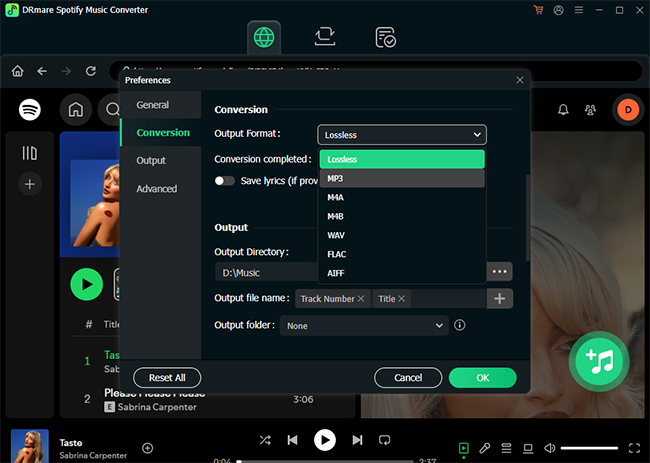
- Step 3Download Spotify Playlists to Your Computer
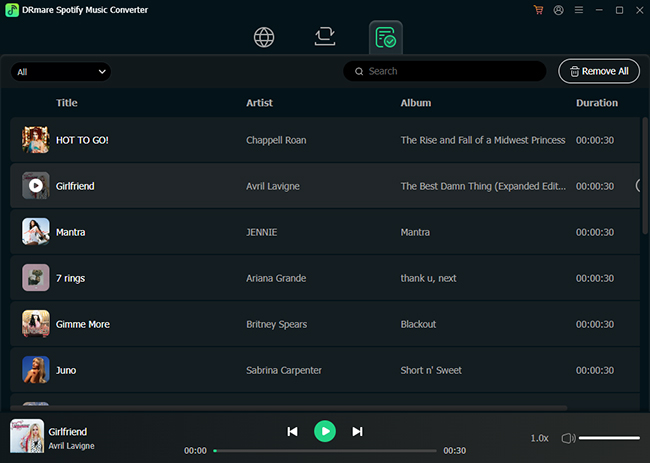
Click the 'Convert' button, and the conversion will begin. The process will not last for a long time. The transferred Spotify files can be found in the output folder after the conversion is finished. Now, you can import the converted Spotify playlists on your devices and listen to Spotify music offline without Premium.
Part 4. FAQs about Converting Spotify Playlist to Excel
Can I just copy and paste songs from the Spotify Desktop App?
Previously, you could select all songs (Ctrl+A) in the desktop app and paste them into Excel. However, Spotify has updated their client, and this functionality is often inconsistent or disabled in newer versions. Using an API tool like Exportify is currently the only reliable method.
Does exporting remove the songs from my Spotify account?
No. Exporting is a "read-only" action. It creates a copy of the data (song titles, artists, links) but does not delete or modify anything in your actual Spotify library.
What columns of data will I get in Excel?
When you export using these methods, you generally receive comprehensive metadata. This includes Track Name, Artist Name, Album Name, Release Date, Duration (in milliseconds), and the Spotify URL for the track. This makes it excellent for sorting your library by release year or duration.
How to open the CSV in Excel correctly?
You can find the CSV files in your device's default downloads folder. Simply double-click your new CSV file, and Excel will likely open it using default settings. Excel will automatically separate the data into columns and rows, providing you with a clean, fully detailed spreadsheet of your Spotify playlist.
Part 5. In Conclusion
Exporting your Spotify playlist to Excel doesn't have to be a frustrating task. By utilizing the right tool for your specific goal, you can easily transition from annoying manual data entry to instant, structured spreadsheet data or universally playable music files.
Whether you are seeking pure analytical data for your library or require the actual audio files, the methods detailed in this guide provide a complete roadmap for taking control of your Spotify playlists. Choose the method that best aligns with your needs and start managing your Spotify music library more efficiently today!

 Home
Home





User Comments
Leave a Comment