





Want to export an iTunes playlist to MP3? The best method depends on what type of songs are stored in your library. If your music files are unprotected, you can use the built-in conversion feature in iTunes or the Apple Music app. However, Apple Music downloads and some older protected iTunes purchases cannot be converted directly.
Before downloading and converting your iTunes playlist, it is important to understand the difference between iTunes Store purchases, Apple Music downloads, and imported music files. Each type uses different formats and has different conversion limitations.
This guide explains how to export iTunes library to MP3 on Windows and Mac, how to check whether your songs can be converted, and what options are available when the built-in method does not work.
Part 1. Quick Answer: Can You Export an iTunes Playlist to MP3?
Yes, you can export an iTunes playlist to MP3 if the songs are compatible with conversion. Not every song in your iTunes library is the same. The conversion process depends on where the music came from and whether the file contains usage restrictions.
| Music Type | Common Format | How to Convert to MP3 |
|---|---|---|
| Imported CDs or personal files | Unprotected MP3/AAC/WAV/AIFF | iTunes or Music app |
| iTunes Store purchases after 2009 | Unprotected AAC (.m4a) | iTunes or Music app |
| Older protected iTunes purchases | Protected AAC (.m4p) | Third-party converter |
| Apple Music downloaded songs | Protected AAC (.m4p) | Third-party converter |
The built-in iTunes and Apple Music conversion tools only work with compatible, unprotected audio files. If your playlist contains protected songs, you will need another solution.
Part 2. How to Download and Convert iTunes Playlist to MP3 via iTunes/Music App
If your iTunes songs are not protected, the easiest way to convert them to MP3 is to use Apple's built-in conversion feature. The process does not require additional software and keeps your original files unchanged. iTunes or the Apple Music app simply creates a new MP3 copy while keeping the original song in your library. Here is a quick guide.
Note:
1. Converting from AAC to MP3 may reduce audio quality because MP3 is another compressed format.
2. Converting lossless formats such as WAV or AIFF to MP3 will also remove some audio information.
3. If you buy iTunes songs before 2009, they have DRM copyright protection added, this method will not work.
Convert iTunes Playlist to MP3 on Windows via iTunes or Music App
Step 1. First and foremost, you will need to download iTunes or Music app on your Windows PC.
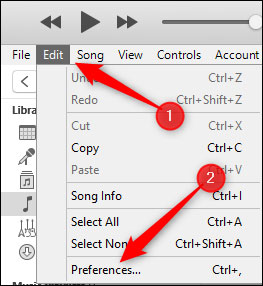
Step 2. Open iTunes or Music app and go to the main menu bar at the top of the screen. Click on "Edit" and then select "Preferences".
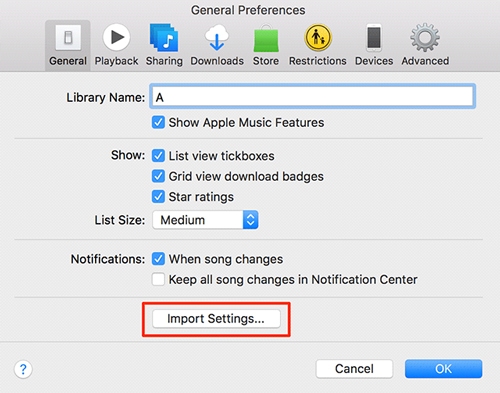
Step 3. Now, click on "General" and hit on the "Import Settings..." option.
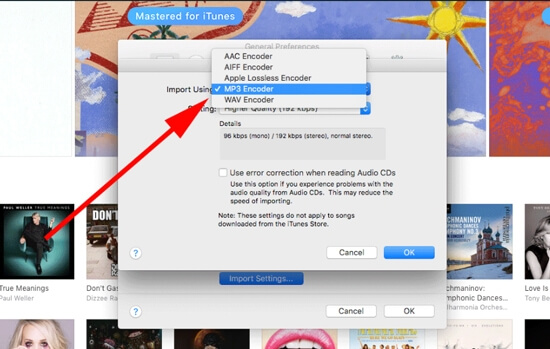
Step 4. Then change the "Import Using" option to "MP3 Encoder" and then click on the "OK" button to save the changes.
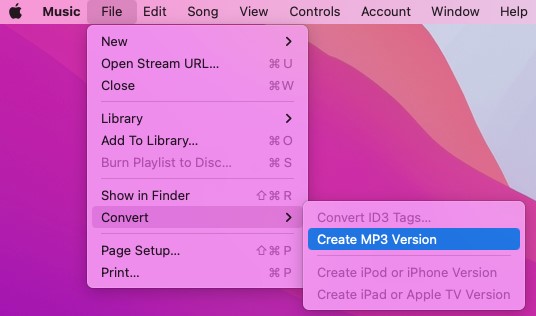
Step 5. Finally, head to your iTunes Library and select the song you want to convert. Then click the "File" menu > "Convert" > "Create MP3 Version" to change iTunes playlist to MP3. This way, iTunes will retain a copy of the original songs and, at the same time, create an MP3 audio file for you.
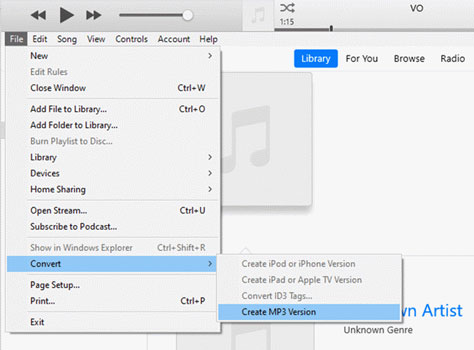
Download iTunes Playlist to MP3 on Mac via Music App
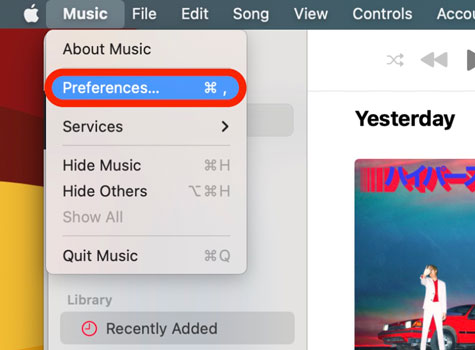
Step 1. First, open the Music app on your Mac computer or Windows 11 and Windows 10 PC computer. Next, click on "Music" > "Preferences".
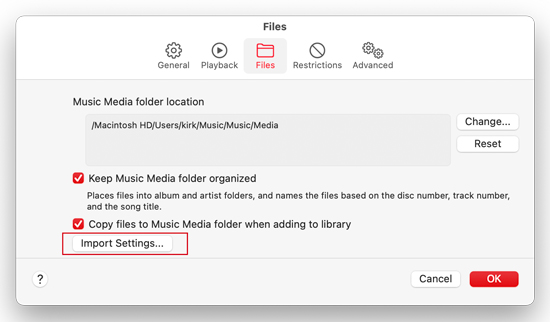
Step 2. Select the "Files" option at the top of the window. Next, hit the "Import Settings" button.
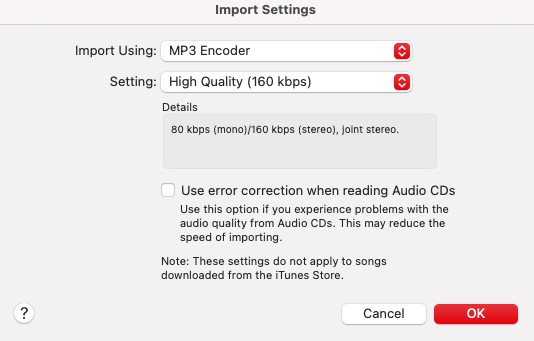
Step 3. Choose "MP3 Encoder" to personalize the audio quality. Then click on "OK".
Step 4. Finally, select the iTunes songs from the library. Then, hit "File" > "Convert" > "Create MP3 Version" to export music from iTunes to MP3. The MP3 files of your song will appear in your library next to the original files.
Pros and Cons of Using iTunes/Apple Music App
Pros
-
 No need to install extra apps
-
Free
-
Support MP3, AAC, AIFF, WAV, Apple Lossless
Cons
-
 DRM-protected songs are not supported
-
Reduce output quality
-
Slow conversion speed
Part 2. How to Export Entire iTunes Library to MP3 with an Alternative Way
The built-in iTunes and Apple Music conversion features work well for small collections of unprotected songs. However, they have limitations when you need to process a large music library, convert many playlists at once, or handle audio files that cannot be converted directly. Besides, they doesn't work with protected songs.
For users who want to export a larger iTunes library to MP3 or other common formats, a dedicated audio conversion tool can provide additional format options, batch processing, and better library management features. DRmare Apple Music Converter is designed for uses to convert entire iTunes library, including Apple Music playlists and protected iTunes songs to MP3, FLAC, AIFF, M4B, WAV, etc. with original sound quality. Compared with the built-in iTunes conversion feature, it provides more output settings and supports larger batch conversion workflows.
How to Download and Export Apple Music Playlist to MP3
- Step 1Install and launch the DRmare Apple Music Converter
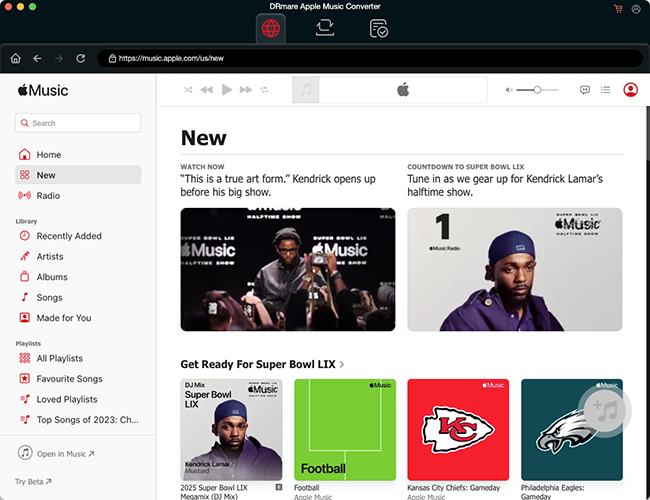
- From the official DRmare website, download and install the DRmare Apple Music Converter. Or you can directly click on the "Download" button above to get its free trial version. Then run the software on your computer and you will see some icons as shown above.
- Step 2Add iTunes playlists to DRmare Apple Music Converter
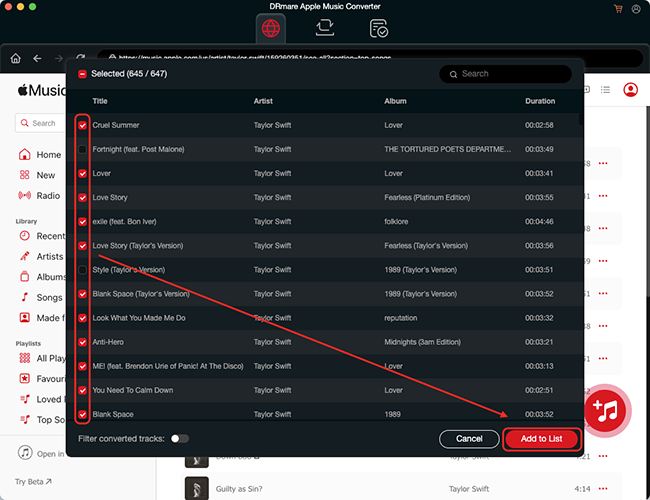
- Find your favorite songs in Apple Music Web Player, and hit the "+" buttons located at the bottom-right corner to upload the iTunes songs. Before clicking "Add to List" button, you can select certain songs for conversion. You can import as many songs as you want because this software supports batch conversion.
- Step 3Customize output settings for iTunes playlists
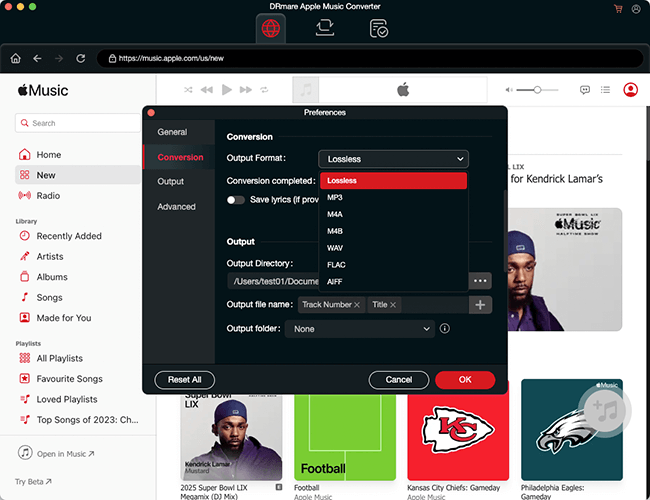
- On the main interface of DRmare Apple Music Converter, click on "DRmare Apple Music Converter" > "Preferences" option to launch the audio settings window. You can select the audio output format for iTunes playlists from the available option as you want. Besides, you can tweak the output codec, bit rate, sample rate, and more. Once you have made the changes, hit the "OK" button to save the changes.
- Step 4Download and convert Apple playlist to MP3
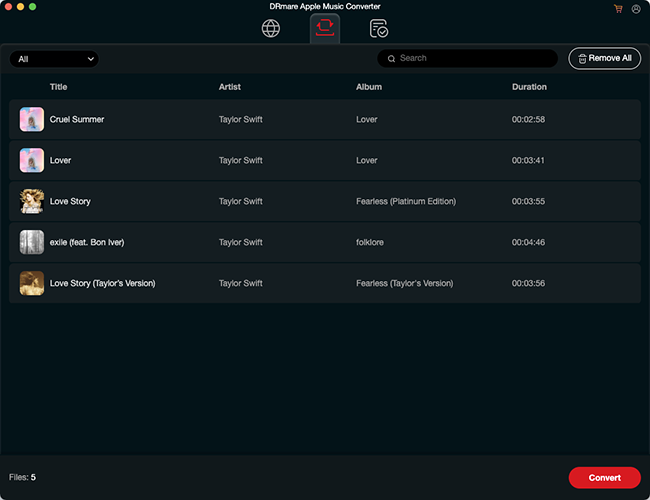
- Finally, hit on the "Convert" button to download Apple playlist to MP3. Once it is complete, hit the "Converted" icon to find the converted iTunes songs on your computer. Then you are able to listen to them offline with any music player or move them to other devices for playing. You can get Apple Music for free forever.
Pros and Cons of Using DRmare Apple Music Converter
Pros
-
Support any iTunes music and other plain audio files
-
Keep original sound quality and ID3 tags
-
Work at 30 times faster
-
Customize the output parameters
-
Support MP3, FLAC, AIFF, M4A, M4B, WAV
Cons
-
Need to install DRmare Apple Music Converter
-
Free trial only converts the first 30 seconds of each song
Part 3. iTunes Conversion vs Alternative Converter: Which Method Is Better?
Choosing the right method depends on your music source and what you want to achieve.
| Feature | iTunes / Apple Music App | DRmare Apple Music Converter |
|---|---|---|
| Price | Free | Paid software with trial version |
| Extra installation | No | Yes |
| Works with unprotected iTunes songs | Yes | Yes |
| Work with protected Apple playlists | No | Yes |
| Handles large playlists | Limited | Better for batch processing |
| Output formats | MP3, AAC, AIFF, WAV, Apple Lossless | MP3, FLAC, WAV, AIFF, M4A, M4B |
| Metadata management | Basic | More customization options |
| Conversion settings | Basic | More advanced options |
For users with a small collection of DRM-free songs, Apple's built-in tools are usually enough. For larger libraries that require more control over output formats and organization, a dedicated converter may be more convenient.
Part 4. FAQs about Exporting iTunes Playlist to MP3
Why Is 'Export to MP3' Greyed Out in iTunes?
If 'Export to MP3' is greyed out, it means that the song you selected is not available for conversion. This is because the music you are converting is DRM protected and iTunes cannot convert protected music. To check if your specific song is DRM-protected: Open your iTunes library, click the song, then choose 'Song Info/File' > 'Kind'.
If the song is protected, you can use DRmare Apple Music Converter to solve the issue. With it, you can convert protected and unprotected iTunes music, Apple Music, and Audible to MP3 or other common-used formats.
Can I Export My iTunes Playlist to Other Audio Formats Besides MP3?
Yes. With iTunes or Apple Music, you can convert playlists between compressed and uncompressed formats including MP3, Apple Lossless, AIFF, and WAV. With DRmare Apple Music Converter, you can convert iTunes playlist to MP3, AAC, M4A, M4B, WAV, and FLAC.
Does Converting iTunes Library to MP3 Reduce Quality?
It depends on the method you use. If you use iTunes or Apple Music, the music quality will suffer. If you use DRmare Apple Music Converter, the sound quality is 100% lossless.
How to Transfer Music from iTunes to MP3 Player?
Transferring an iTunes playlist to an MP3 player involves two main steps: first, exporting the songs from iTunes to MP3 format by following the above steps, and then copying them to your MP3 player. Here's a step-by-step guide to export iTunes playlist to MP3 player:
- Plug your MP3 player into your computer using a USB cable. Your computer should recognize it as an external storage device (like a flash drive).
- Go to your iTunes Music folder to find the newly converted MP3 files. The folder is usually located at:
- On a Mac: Music > iTunes > iTunes Media > Music
- On Windows: This PC > Music > iTunes > iTunes Media > Music
- You can also right-click a song in iTunes/Apple Music and select Show in Finder (Mac) or Show in File Explorer (Windows) to quickly locate the MP3 files.
- Drag and drop the MP3 files from your iTunes folder to the MP3 player’s music folder. Safely eject the MP3 player from your computer after the files have been transferred.
Part 5. In Conclusion
There are two ways to export iTunes playlist to MP3. One way is to use iTunes/Apple Music, which is convenient because you don't need to install extra apps and it's free. However, there are some disadvantages, such as unsupportable protected songs, lowered sound quality, and slow conversion speed.
If you are concerned about these issues, a better option is DRmare Apple Music Converter. This is specialized software that allows you to download and export your entire iTunes library to MP3 or other formats while maintaining lossless sound quality.
Before choosing a method, check the type of music stored in your library. Knowing whether your songs come from iTunes purchases, Apple Music downloads, or imported files will determine which conversion option works best.

 Home
Home





User Comments
Leave a Comment